
Your guide to the 2026 city of Salem election
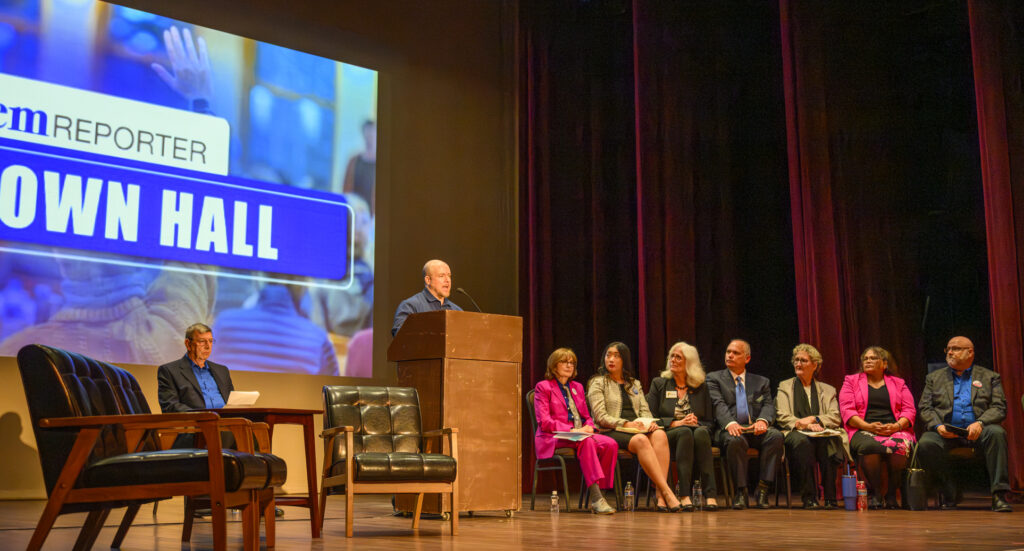
Salem voters on May 19 will elect a mayor and four city councilors to guide the city in the coming years.
Here’s a guide to who’s running, what’s at stake and how to make your vote count. Read all our city election coverage here.
Key dates
- April 28: Last day to register to vote in the May election or change party affiliation
- April 29: Ballots will begin to be mailed to voters
- May 19: Election Day
City government basics
City councilors are the elected leaders of city government. They typically meet twice per month on Monday evenings to vote on major city policy, hear reports from city leaders and listen to comments from the public.
The mayor of Salem sits on the city council and has one vote like other councilors, but has a few other powers. She runs meetings, gets an office in City Hall and appoints fellow councilors and community volunteers to some city boards and commissions.
Most of the day-to-day decisions about how the city is run are made by the city manager, a non-political employee who reports to the council and is responsible for executing their vision for Salem. Councilors and the mayor usually work closely with the city manager and other leaders, like fire and police chiefs, to guide city policy and set broad priorities.
For example, the city manager proposes an annual city budget in the spring. Councilors and citizen volunteers on the budget committee then discuss it and can make changes — like pulling money from the city’s savings to pay for a program or cutting specific jobs. They can also ask city leaders for more information about particular programs or how money is spent. After weeks of meetings and discussions, which often include changes and compromises, the council votes to adopt a budget.
Councilors vote directly on many issues that affect your pocketbook and the services available in Salem.
They:
- Vote to set city water and sewer rates, garbage fees and the monthly operations fee that’s included on utility bills
- Can decide whether to create, expand or cut city initiatives and programs, like the fire department’s new mental health crisis team or downtown paid parking
- Vote on whether to subsidize with city money projects like affordable housing developments and commercial airline service
- Hire, fire and supervise the city manager
Councilors also shape the direction of Salem in more subtle ways. They can vote to have city employees research particular issues, like business fees or renter protections, or propose programs to address concerns. The questions they ask or concerns they raise with the city manager can shape the choices city employees make. A group of councilors who sit on the Legislative Committee decide on which bills and issues they want Salem’s lobbyist to try and influence when state lawmakers meet.
Councilors can also answer questions for constituents or ask city employees to respond with information about things like a particular sidewalk project, traffic concerns or other neighborhood issues.
Salem Reporter is examining several major issues affecting the city and how the elections might shape them. Read the first piece on homelessness here.
No. City council and mayor are unpaid volunteer positions.
Councilors serve a four-year term. The mayor serves a two-year term.
About the council races
Councilors represent a specific geographic area, called a ward. Only people who live in the ward can vote for the council seat. Find which ward you live in using this city map.
The mayor of Salem represents the entire city and will be on the ballot for every voter in city limits.
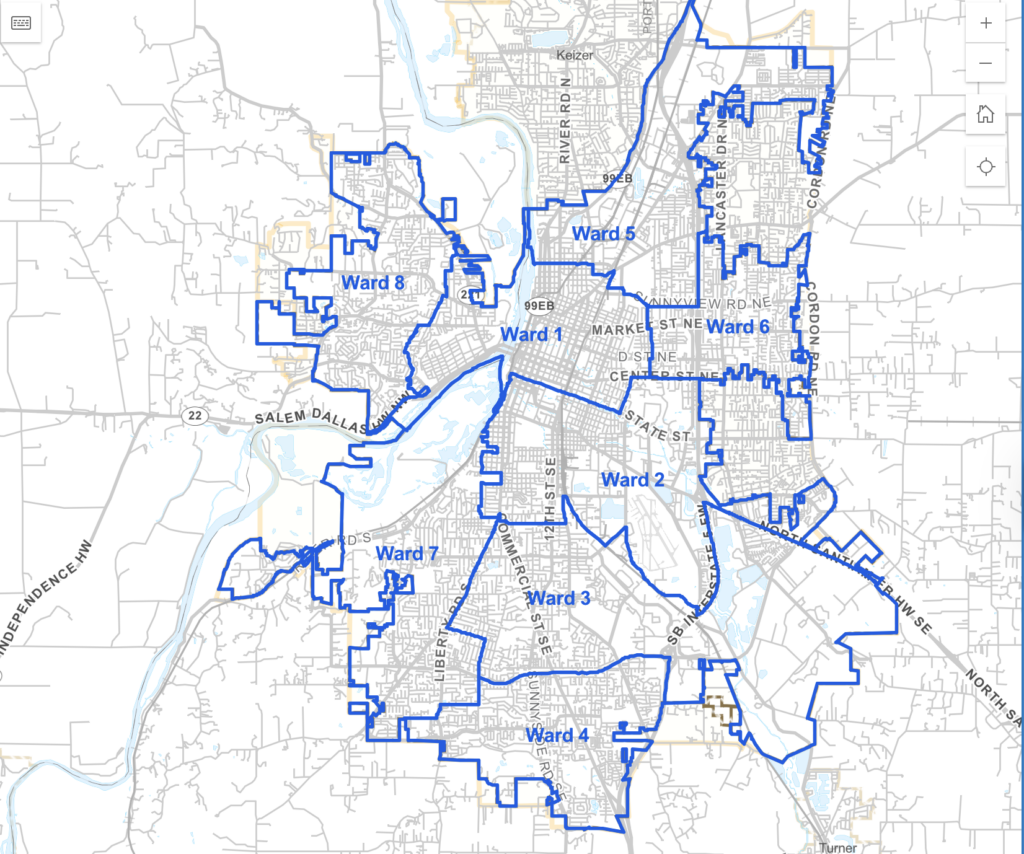
Each race has two candidates, one endorsed by progressive organizations and one conservative.
Read more about the candidates running for city council in these articles:
- Differing approaches on homelessness, development come into focus at chamber council debate
- Salem council candidates make their pitches to voters at Town Hall
Mayor: Mayor Julie Hoy and Councilor Vanessa Nordyke

Read more about the mayoral candidates in these articles:
- Nordyke casts herself as transparent, compassionate alternative in mayor’s race
- In campaign, Hoy doing “God’s work” while Nordyke vows to fight for Salem’s poor
- Hoy, Nordyke spar on ethics, homelessness during chamber mayoral debate
- Hoy, Nordyke usually vote together. Here’s where they’ve been at odds on the Salem council.
- VOTE 2026: In her reelection bid, Mayor Julie Hoy ducks the spotlight
- VOTE 2026: Councilor Vanessa Nordyke says she has the people on her side in mayoral bid
Ward 2: Councilor Linda Nishioka and Manny Martinez

Ward 4: Councilor Deanna Gwyn and Dave Inbody

Ward 6: Councilor Mai Vang and Betsy Vega

Ward 8: Councilor Micki Varney and Chris Cummings

Hoy, Martinez, Gwyn, Vega and Cummings are campaigning together as the conservative slate.
Nordyke, Nishioka, Inbody, Vang and Varney are campaigning together as the progressive slate.
Read more about the candidates here, and watch them address a question at Salem Reporter’s city election Town Hall here.
On paper, no. Council seats and the mayor’s office are nonpartisan. That means candidates don’t declare affiliation with a political party.
In practice, council races in Salem have become functionally divided along ideological lines. Typically, candidates are supported by one of two political action committees: Progressive Salem, which focuses on electing progressive Democrats, or Marion + Polk First, which focuses on electing conservatives. This year, as in previous races, candidates endorsed by each group are campaigning as a “slate” with each other.
Progressives have held a majority of city council seats for nearly a decade in Salem. Currently, councilors who were backed by Progressive Salem hold six of the council’s nine seats: Paul Tigan, Linda Nishioka, Irvin Brown, Mai Vang, Vanessa Nordyke and Micki Varney. Nishioka, Vang and Varney are seeking reelection this year.
The conservatives on council are Mayor Julie Hoy and Councilors Shane Matthews and Deanna Gwyn. Hoy and Gwyn are seeking reelection.
Almost always. The May election is technically a primary in city races, but as a practical matter, it nearly always determines the winner.
Under city charter, if a candidate wins more than 50% of the vote in the May election, they’re considered “nominated” for that office and will appear solo on the November ballot. While they could technically lose to a write-in candidate, that hasn’t happened in recent Salem memory.
If no candidate wins a majority, the two who received the most votes in May appear on the November ballot. That typically only happens when there are more than two candidates seeking a seat, or if a race is close enough that write-in votes put both candidates below 50%. That last occurred in 2022, when now-Councilor Deanna Gwyn lost the primary by six votes and went on to be elected in November.
Salem Reporter generally refers to the candidates who win the May election as mayor-elect and councilor-elect unless more than one advances to the November election.
If Nordyke wins the mayor’s seat, her city council seat representing Ward 7 would become vacant when she takes office in January 2027.
Ward 7 voters would elect a new councilor in a special election at the next available date, generally May 2027.
A special election for council most recently happened when Hoy took office as mayor in January 2025, vacating her Ward 6 seat. Vang won the seat in a three-way race.
Register to vote online or by visiting Marion County Elections at 555 Court St. N.E., Ste. 2130 in downtown Salem by April 28. Call the elections office at 503-588-5041.
For West Salem voters needing help, the Polk County Clerk is located in Dallas, 850 Main St. #201. Call the clerk’s office at 503-623-9217.
Check your voter registration here.
This page was written by Salem Reporter Managing Editor Rachel Alexander with help from city reporter Joe Siess. It was last updated Friday, May 1, 2026. Questions or comments? Email [email protected].