The Oregon Parks and Recreation Commission wants to reopen its rulebook to make a few changes that park officials hope will save the agency millions of dollars in the coming years.
Members of the Oregon Parks and Recreation Commission voted in November to reopen the agency’s rules on park rates, seeking ways to fill a budget shortfall that is now projected at $8 million this biennium, and could be higher for the next biennium.
Proposed changes are focused on four areas: refunds for canceled reservations, the introduction of dynamic pricing for campgrounds, changes to the agency’s Special Access Pass and flexibility for the cost of day-use parking permits.
Most of the changes are designed to improve the long-term financial sustainability of the state parks system, the agency said. The changes in the reservation system are an attempt to eliminate the vexing problem of empty campsites at highly-competitive campgrounds — an issue that has long troubled Oregon State Parks.
Members of the public are invited to comment on the proposed rule changes from Dec. 1 to Jan. 15, with a virtual public hearing planned for Dec. 15. Comment can be submitted by email at [email protected]. The parks commission will revisit the proposal at a February meeting. If approved, the new rules will go into place March 1, 2026.
Here’s what changes could be in store at Oregon State Parks:
As it stands, anyone who cancels a state park campground reservation within three days of the reservation date gets a full refund. According to park officials, that has become a big problem.
With campsites becoming increasingly busy, especially at Oregon coast parks, people have been snatching up spots as soon as possible (six months in advance) and then canceling them last-minute when other plans arise. That behavior led to empty campsites at otherwise competitive campgrounds — an outcome that has rankled campers.
Roughly 30% of Oregon state park reservations end up being canceled, according to Katie Gauthier, government relations and communications manager for the state parks department, who presented before the parks commission in November. And while the department has recently tried to alleviate that hit by adding same-day reservations that allow people to snatch up canceled spots, it’s high time for a stronger rule, she said.
The proposed rule change would eliminate all refunds for no-show campers and would offer a tiered refund system for those who cancel their reservations in advance. The refund amount would be based on how soon a camper is canceling before the reservation date, and how long they’ve held onto the reservation, the agency said. Park officials have yet to release any specifics for those tiers, but said it would be clearly outlined for anyone making a reservation.
The Oregon Parks and Recreation Department currently has a Special Access Pass program that offers free camping to disabled veterans from any state, as well as Oregon foster families and adoptive foster families.
Those programs will remain, but park officials are looking to scale back how many camping nights and campsites are offered to recipients.
Veterans currently get 10 free nights of camping per month, as well as free day-use passes. The proposed change would cut that back to 10 free nights of camping per year, with no free day-use passes, and would limit the program to Oregon veterans only.
Foster families currently get 14 free nights of camping per month at up to two campsites. That would be reduced to 10 free nights of camping per year at one campsite, and would limit the offer to Oregon residents.
The Special Access Pass program currently provides camping to 41,398 veterans, 652 foster families and 1,923 adoptive foster families, according to the agency, most of whom don’t take advantage of the full benefits. The proposed changes would save an estimated $2.2 million per biennium, officials said.
In the November commission meeting, park officials made it clear that there are no current plans to raise camping or parking fees, both of which were raised earlier this year. But the agency is looking for the flexibility to change those prices in the future.
Under a proposed rule change, parks would be able to introduce a dynamic pricing model that could vary by the season, day of the week or based on demand. The proposed rate ranges would keep the base rates the same but would further raise the ceiling on campsite prices, which were raised this past summer.
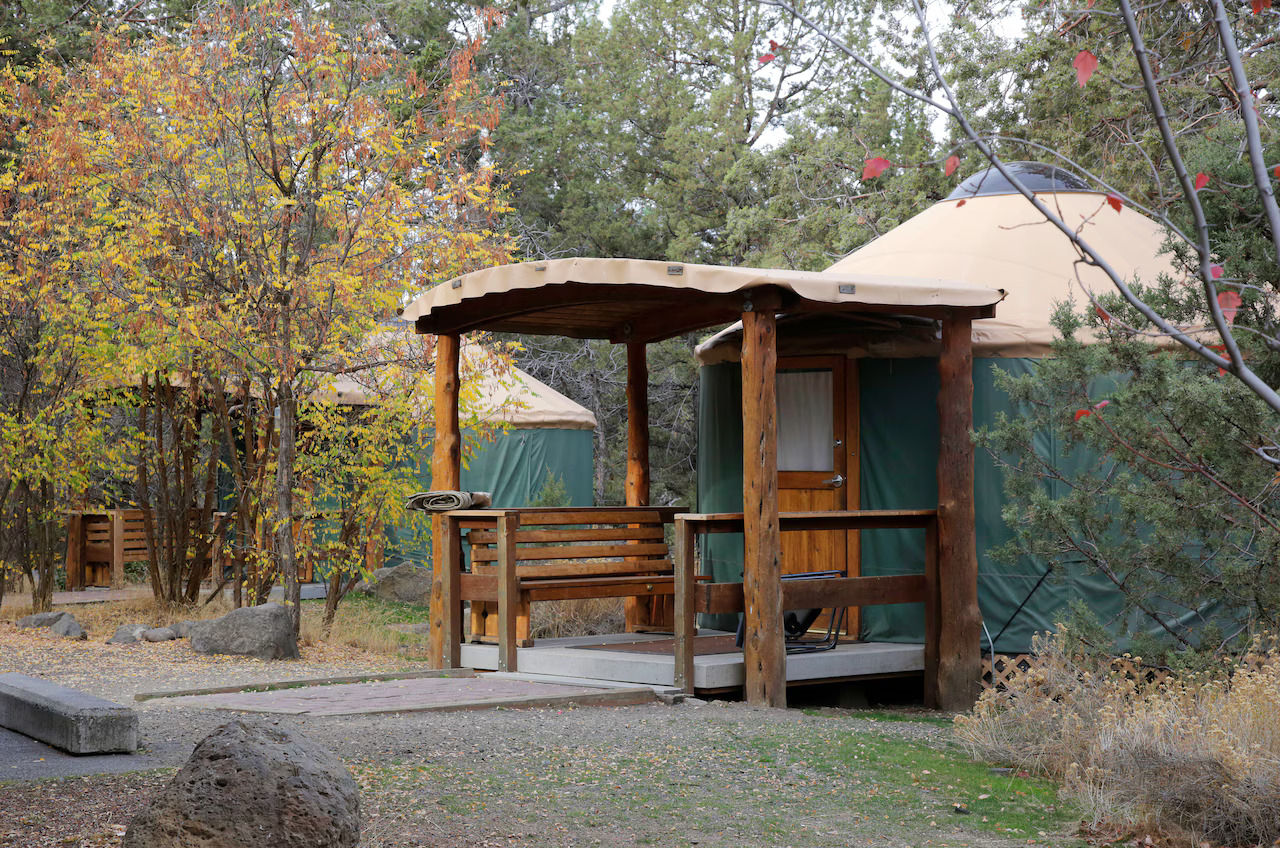
Under the proposal, RV sites would cost $31 to $80 per night, while tent sites would cost $10 to $45 per night. Nightly rates for rustic yurts and cabins could peak as high as $105 and $115, while deluxe cabins and yurts could cost as much as $190 per night.
Day use parking fees could theoretically cost as much as $25 per vehicle under the proposed rule changes, with annual passes costing up to $100 per year, though officials have no current plans to charge those prices, they said. The increase would simply give the department the flexibility to do so in the future, Gauthier said.
The higher ceiling for camping and parking costs allows the agency to make more money when parks are in demand, officials said, which could be a big revenue boost down the line. It would also allow the agency to be more reactive to changes in inflation.
Elizabeth Hill, chair of the Oregon Parks and Recreation Commission, voiced concern over the dynamic pricing plan at the November meeting, asking if some lower-income families might get priced out of their summer vacations.
“There’s places that if rates go supremely high, up to $80 a night for full hookups, does that limit your average family from Burns that wants to go to the coast in the summer and stay for a week, and be able to plan ahead for something like that, with a decent rate versus a last-minute dynamic pricing?” Hill asked.
“That’s a challenge that we have to keep balancing: the demand, the revenue stability needs and access for Oregonians,” Gauthier responded. “It’ll be a continuing conversation that we’ll keep having with you and with Oregonians as they review these rate ranges.”
Jamie Hale is the outdoors and travel reporter for The Oregonian/OregonLive, helping guide Pacific Northwest travelers to the region’s best trails, towns and attractions. Contact him at [email protected].
STORY TIP OR IDEA? Send an email to Salem Reporter’s news team: [email protected].
A MOMENT MORE, PLEASE– If you found this story useful, consider subscribing to Salem Reporter if you don’t already. Work such as this, done by local professionals, depends on community support from subscribers. Please take a moment and sign up now – easy and secure: SUBSCRIBE.