
Salem Reporter sues Bethell, Marion County to obtain public records
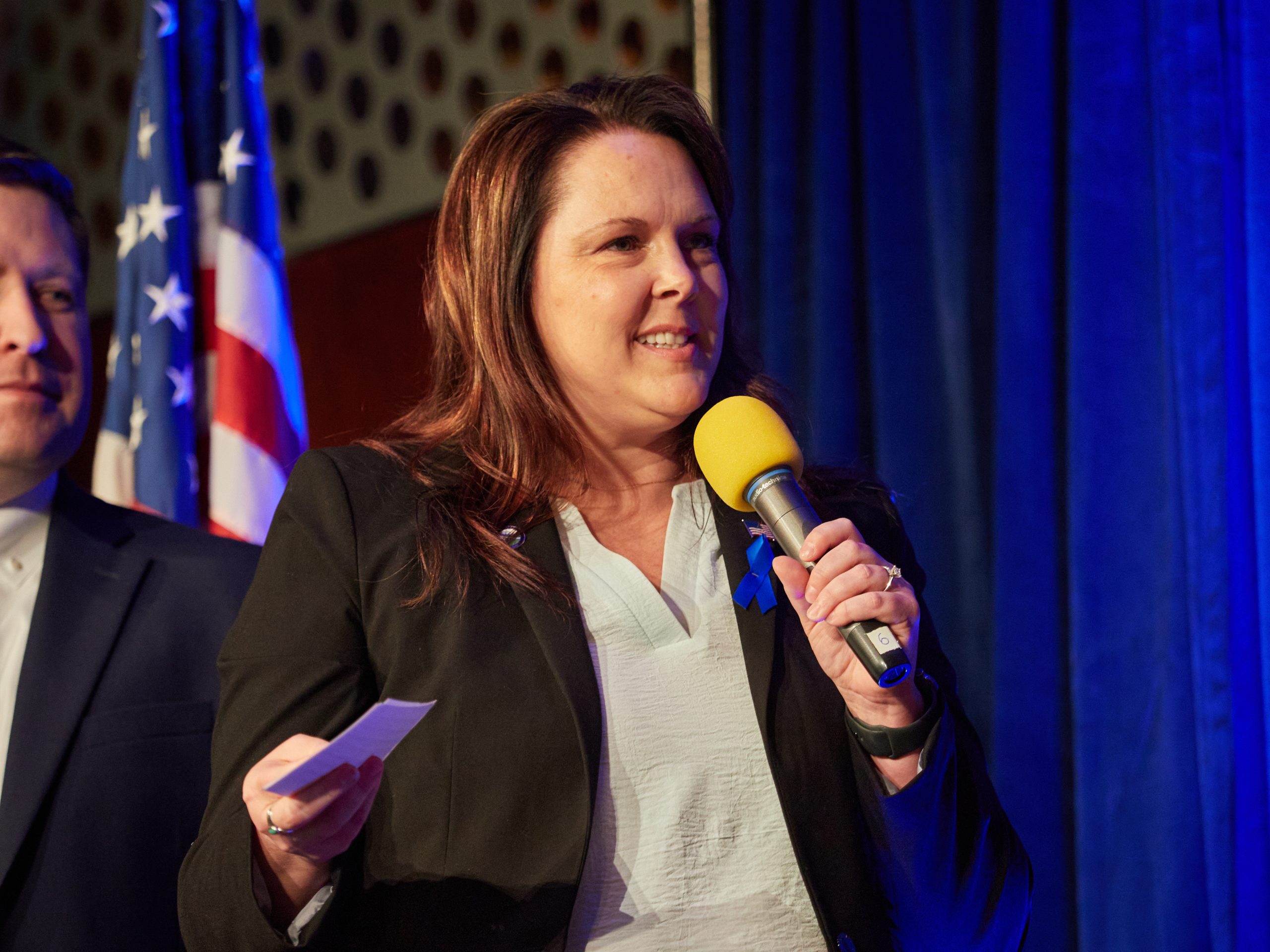
For nearly six months, Marion County Commissioner Danielle Bethell violated state law by ignoring a public records request by Salem Reporter, according to a lawsuit by the news organization.
Salem Reporter is now suing Bethell for failing to comply with laws upholding the public’s right to access government information.
Filed Wednesday, June 24, in Marion County Circuit Court, the suit describes repeated requests for emails and texts about public business in Bethell’s possession. There was no response or acknowledgement, according to the complaint. Marion County is also named in the case.
The complaint asks a state judge to order Bethell and the county to turn over public records and reimburse Salem Reporter for its legal costs. Steve Wilker of the Portland law firm of Tonkon Torp is representing the news organization.
Bethell recently campaigned for the Republican nomination for Oregon governor, touting her commitment to accountability.
The suit stems from requests by Les Zaitz, Salem Reporter’s editor and founder, for Bethell’s communications related to an ongoing state ethics investigation. The state inquiry is focused on whether Bethell attempted to leverage her position as a commissioner to get her daughter out of a traffic citation.
In the Jan. 28 request, Zaitz asked Bethell to provide texts, emails and memos about the traffic stop between her and Marion County Sheriff Nick Hunter, County Counsel Steve Elzinga and Commissioners Colm Willis and Kevin Cameron, according to a copy of the request. That included public records from her personal email accounts and phones.
Bethell did not respond. Elzinga, however, emailed Zaitz on Feb. 3 to acknowledge the “requests to Marion County” and provide one responsive record, a copy of the email shows.
Zaitz responded the same day clarifying that his request was to Bethell individually, not the county, and that she was still required to respond to his request. Zaitz also asked Elzinga to clarify whether he represented Bethell.
Elzinga didn’t respond, the lawsuit said.
On Feb. 23, Zaitz again emailed Bethell, asking her to reconsider her failure to respond to the request, saying her lack of response “blunts the public’s ability to monitor your performance as a public body in Oregon.”
On April 1, Zaitz appeared before the Marion County Board of Commissioners, with Bethell in attendance, to ask her publicly to meet her obligations for disclosure. Bethell remained silent.
Zaitz subsequently proceeded to petition the Marion County District Attorney Paige Clarkson on May 28 for a review of the records request and an order for the county to produce the responsive texts and emails.
On June 1, the district attorney’s office denied the petition because it has no authority over elected officials such as Bethell, and directed Zaitz to Marion County Circuit Court to appeal the county’s response.
READ IT: Salem Reporter lawsuit
The suit argues that Bethell herself is responsible for responding to public records requests sent to her, and that Elzinga’s response falls short of complying with state law.
Under public records law, local governments have to address requests from the public within five business days. This often includes an acknowledgement that the official, agency or department received the request.
Governments generally then have 10 more business days to provide records to the person, or the next reasonable date, the law reads.
Any citizen can request government records. Similarly, all public officials are subject to the law and responsible for responding to requests, under a 2022 ruling by the Oregon Court of Appeals.
That means, although governments have designated records staff who accept requests, local and state elected officials are required by law to address requests sent directly to them.
“These people oversee huge budgets, and important services that are crucial to the communities and individuals they serve,” said Nick Budnick, Freedom of Information Chair for Oregon’s chapter of the Society of Professional Journalists, a nonprofit that advocates for government transparency and records access.
“Transparency helps ensure that the public understands what’s happening and … deters bad behavior. If they’re unwilling to provide basic information, our system of government is not working the way it’s supposed to,” Budnick said.
This applies to Bethell through her role as a county commissioner, a role she has served since 2021. She is one of three commissioners who decides how to spend the county’s current $791 million budget.
She first served as an elected official on the Salem-Keizer School Board, a position she held for two years until 2022.
Public officials undergo ethics training on topics that include public records and meetings.
Salem Reporter’s legal action comes as journalists in Oregon and around the U.S. push back against attempts to block the public from accessing government information.
Earlier this year, Gov. Tina Kotek vetoed a change to state law that would have made it easier for elected officials to privately discuss public business.
Zaitz said the suit was necessary to push for the public’s right to information and due to continued silence from Bethell.
“At the end of the day, citizens must depend on public officials being open and transparent about how they are using their power and the taxpayers’ money. Oregon has made it difficult to hold officials like Commissioner Bethell accountable for being faithful to the public records law. A lawsuit is never the preferred course because it is terribly expensive. But the commissioner left us no choice (but) to act on behalf of the people of Salem and Marion County,” he said.
Requests for comment for this story were sent to Bethell and Willis, who currently serves as the county commission’s chair. Neither responded by the publication’s deadline.
Elzinga and Marion County spokesman Jon Heynen also were asked for comment. Neither responded.
The right and freedom to access government information is a fundamental part of not only Oregon public records law, but maintaining a meaningful democracy, according to Kate Titus, the executive director of Common Cause Oregon, a democratic watchdog nonprofit.
Record requests can be crucial in providing voters information to base their decisions on when it’s time to vote for officials like Bethell.
“The reporting itself and the tracking down the information, whether it’s through public information requests or even if you have to go to the extent of lawsuits, is an invaluable service to the public,” Titus said in an interview Thursday.
The issue of public information being withheld is not unique to Oregon, with public officials around the country finding ways to either ignore or obstruct access to public records.
One way officials can do so is by using personal email accounts or phones to carry out government discussions or decisions, according to Gunita Singh, an attorney with the Reporters Committee for Freedom of the Press, a national organization providing legal services for journalists.
“It makes records retrieval that much more difficult when their correspondence is properly subject to a records request, and it creates mistrust among constituents who want to trust that government business is being conducted transparently & appropriately,” Singh said in a Thursday email.
Despite variations in state laws around the country, many people face “pernicious” delays in receiving public records that are within the public interest, according to Singh.
“Agencies across the board need to be investing in transparency literally and figuratively; as in, we need to make sure we have enough staff who are trained to comply with public records statutes, and we need to be creating a real culture of transparency across government at all levels,” Singh said.
Lawsuit origin
Last December, a complaint by a Marion County Sheriff’s Office deputy put Bethell at the center of a state ethics investigation.
Salem Reporter wrote at the time about how the deputy’s filing led the Oregon Government Ethics Commission to find she used her position to try and get her daughter out of a traffic violation.
Deputy Ron Cereghino filed his complaint roughly nine months after conducting a traffic stop on Natalie Bethell, the commissioner’s daughter, after he spotted her using a phone while driving, Salem Reporter previously reported. The violation and stop happened Dec. 31, 2024. He filed his complaint after a local court acted on the citations.
Cereghino recalled that during the stop the younger Bethell holding up her phone with Danielle Bethell on the line.
“Commissioner Bethell began telling me what I was and wasn’t going to do in regards to her daughter’s citation/court appearance,” Cereghino wrote in his complaint.
She eventually told the deputy that her daughter couldn’t go to court in Marion County due to her role as a commissioner, and told Cereghino to “please be thoughtful” about which court he sent the traffic violation to.
Bethell’s daughter was cited for unlawful use of a mobile electronic device, failure to yield to an emergency vehicle and failure to carry proof of insurance and faced a fine of $795.
The deputy said he learned later that Bethell had called Sheriff Hunter the same evening of the traffic stop, and “chewed on” Hunter about the stop for around 20 minutes.
Part of Salem Reporter’s initial request sought records of communication between Bethell and Hunter following the incident.
READ IT: Ethics commission report
“It appears that Danielle Bethell attempted to use her position to avoid having her daughter cited for traffic violations,” an October 2025 report by the ethics commission said.
The commission then decided to open a full investigation into Bethell. That investigation remains ongoing.
Bethell wrote the commission she wasn’t using her county position to influence the deputy.
“I work very hard to be transparent,” she wrote the commission.
Bethell voiced support for transparency during her candidacy for governor. She promoted herself as the one to bring honest and accountable leadership to the state.
“Governing here requires balance, accountability and respect for people with very different needs,” her campaign website reads. “It requires honesty. Plainspokenness. A willingness to tell the truth even when there’s a cost to doing so.”
She ended up losing the nomination to state Sen. Christine Drazan in the May 19 election.
The public body Bethell is part of — the Marion County Board of Commissioners — lists online that it also takes transparency seriously and prioritizes communication with the public.
The board’s publicly listed goals reads that Marion County will “communicate timely and accurate information” to the public, including reporters, staff and county citizens. This is to ensure “openness and transparency in government,” the website reads.
Oregon has proven itself to be a state where the freedom of information and disclosing public records is not just normal, but favorable.
In a June 17 decision, the Oregon Court of Appeals ruled that when records are originally assembled for reasons unrelated to a criminal investigation, but later become part of one, they are still public records. Oregon law generally prohibits the release of documents which are part of criminal investigations.
In their written decision, the appeals judges ruled that when a reasonable understanding of an exemption “favors disclosure, that construction must prevail.”
Both in general consensus and in legal understanding, elected officials in Oregon are held legally responsible for addressing public records requests submitted to them.
“Elected officials, as leaders of their public bodies, create and enact the policies that affect everyone’s lives, and so … it’s as, if not more, important to understand the information they’re working with to figure out if (everyone) agrees if the government is functioning the way that they want it, or to just really understand the reasoning behind decision making,” Todd Albert, the state’s public records advocate said in an interview Thursday.
The public often only sees the final results of the decisions or work officials put into the services or policies the public engages with. Public records, which Albert referred to as the “people’s records,” allow the public to see “everything underneath” that work, he said.
RELATED COVERAGE:
Marion County commissioner running for governor faces ethics investigations
Contact reporter Madeleine Moore: [email protected].
SIGN UP: “I love and respect what Salem Reporter does for our community.” Salem Reporter covers the people, issues, and stories shaping our city. Stay connected to Salem. Subscribe today.

Madeleine Moore joined Salem Reporter in 2024 and reports on a variety of topics including public safety, addiction, treatment and the criminal justice system. She came to Salem after graduating from the University of Oregon in June 2024 with a bachelor’s degree in journalism.
One comment
Leave a Reply
You must be logged in to post a comment.


Consider making public information requests for documents related conversations/contacts she had with judges, court administration and court staff. It would probably be better if County Council has limited involvement. This might be a good situation for a transfer of venue. At a minimum the court needs to at least bring a judge from another county to manage the case.