
No undercover license plates for ICE, Oregon Gov. Tina Kotek orders
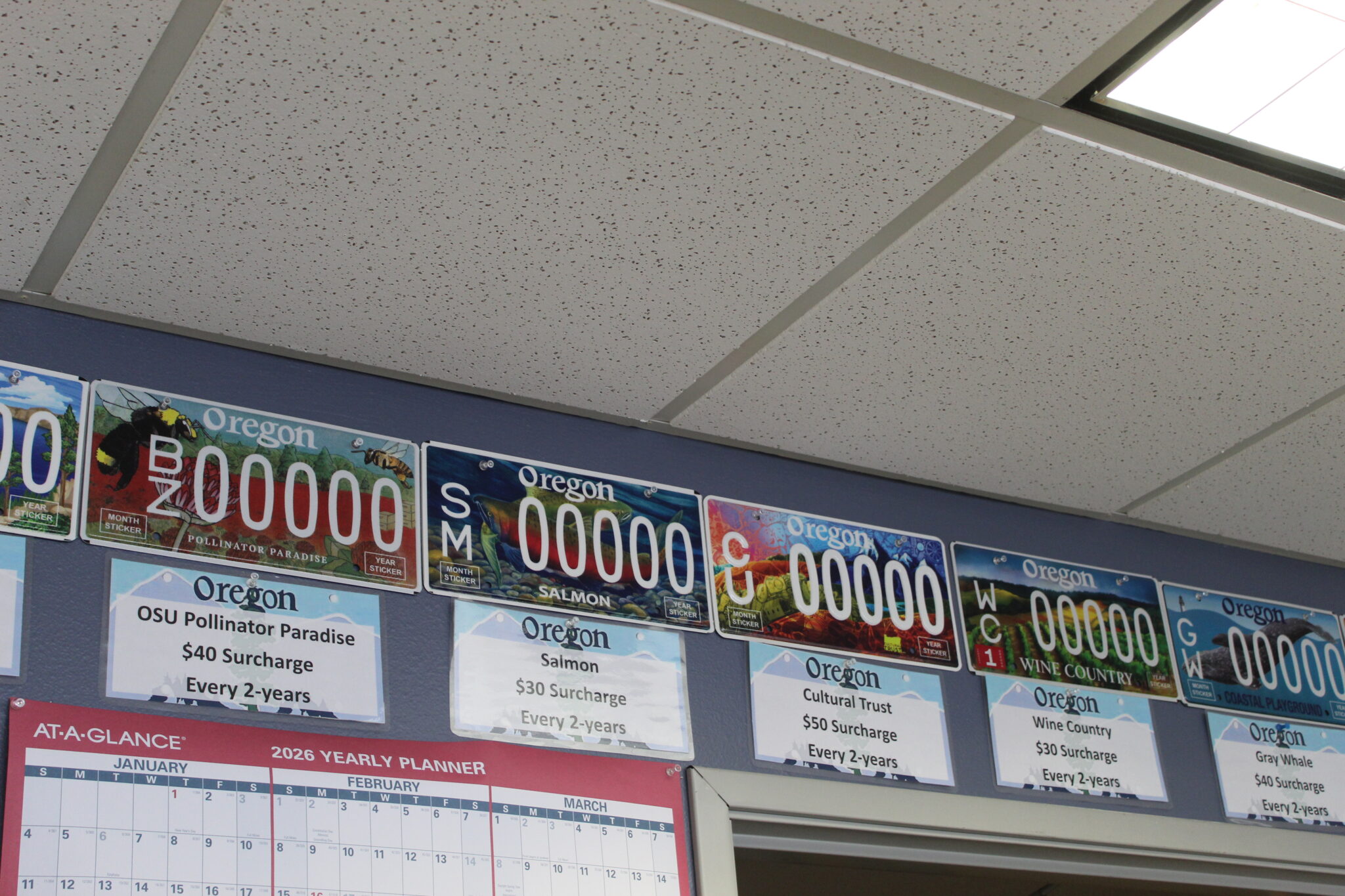
Oregon Gov. Tina Kotek ordered state transportation officials Monday to cease issuing undercover license plates to U.S. Immigration and Customs Enforcement agents, citing “repeated violations of state and federal law by ICE agents and the need to protect community trust and public safety.”
“ICE agents have repeatedly engaged in illegitimate activities, causing unwarranted chaos, sowing fear and damaging the relationship between law enforcement and our communities,” Kotek said in a statement. “Oregon will follow state law and ensure we do not aid these unlawful immigration enforcement efforts.”
Kotek’s announcement came days after the Trump administration sued Oregon and three other Democratic-led states over their refusal to issue the plates. The Oregon Driver and Motor Vehicle Services Division stopped providing all federal agencies with undercover plates on April 15.
The Oregon DMV has said it is conducting a review of its undercover license plate program to ensure compliance with state law, which for decades has ensured that state and local law enforcement and public agencies do not assist in immigration enforcement without a judicial warrant.
Kotek on Monday offered more details on what could come following that review. She said the agency must continue to refuse undercover plates to ICE after the review’s completion, but could resume providing them to federal agencies that “do not primarily conduct immigration enforcement and are not violating Oregon law.”
“We cannot expend state resources to assist in federal immigration enforcement,” DMV Administrator Amy Joyce said in a statement. “The prospect of litigation in this area is real. We need to follow state law and protect taxpayers from legal risk. Where there is not risk of breaking state law, Oregon DMV will continue to partner with federal law enforcement agencies like the FBI, DEA and U.S. Marshals Service.”
Kotek’s office has stressed that the policy change does not impact state or local law enforcement and that federal law enforcement can continue to use previously issued undercover plates. The state’s vehicle code does not apply to federal vehicles, which state officials say can continue to employ their own plates identifying them with a federal fleet. Currently, 45 federal agencies are part of the program, with about 1,260 undercover plates in use, according to the governor’s office.
The Trump administration, meanwhile, has asserted with minimal public data that its officers have been subject to a dramatic increase in assaults, threats, harassment and doxing when justifying its need for the undercover plates for federal agencies and immigration enforcement. Kotek’s office rejected that claim, writing: “The use of non-undercover license plates will not increase the risk of ‘doxing,’ as individual agents are not tied to agency vehicle registrations.”
Norman Williams, a professor of law at Salem’s Willamette University, said it’s possible that Oregon is trying to use its undercover license plates “as leverage” for federal agents to agree to guardrails about immigration enforcement tactics. He pointed to a 1997 U.S. Supreme Court case in which the justices authorized bargaining for cooperation between different levels of law enforcement.
“It’s entirely appropriate for the federal and state governments to find avenues of cooperation in law enforcement matters and to negotiate the terms of that cooperation,” he wrote in an email. “Indeed, that’s how federal and state law enforcement have engaged in cooperation for decades.”
An unnamed spokesperson for the U.S. Department of Homeland Security said in a statement that Oregon’s policy is unconstitutional and thanked the Justice Department for “standing with the men and women of law enforcement by fighting back against these unlawful actions.”
Oregon Capital Chronicle is part of States Newsroom, a network of news bureaus supported by grants and a coalition of donors as a 501c(3) public charity. Oregon Capital Chronicle maintains editorial independence. Contact Editor Julia Shumway for questions: [email protected]. Follow Oregon Capital Chronicle on Facebook and Twitter.
STORY TIP OR IDEA? Send an email to Salem Reporter’s news team: [email protected].

Shaanth Kodialam Nanguneri is a reporter based in Salem, Oregon covering Gov. Tina Kotek and the Oregon Legislature. He grew up in the Bay Area, California and went on to study at UCLA, reporting for the Daily Bruin until graduating in March 2025. Previously, he was a reporting intern covering criminal justice and health for CalMatters in Sacramento, California. He is always eager to tell stories that illuminate how complex and intricate policies from state government can help shape the lives of everyday Oregonians.
3 Comments
Comments are closed.



Thank you, Governor Kotek, and thank you, Amy Joyce!
Let the brave people in law in forcement do their job. Oregon needs to get control of the folks committing crime. We spend more time,money and emotional feelings on the people who take advantage of our state and country. Protect the identity of those that protect us. More respect is needed.
I truly appreciate Salem Reporter for the presentation of this issue.