


This story is part of a series digging into what leaders in Salem think is at stake in the upcoming city election on May 19. Salem Reporter interviewed former elected officials, community leaders and local political experts to hear how they think the outcome of the city council race and the political makeup of the council could shape the city’s future on key issues. Read all our city election coverage here.
With housing costs increasing, guiding how Salem develops is a top issue for many Salem voters.
Both progressive and conservative candidates agree the city needs to build more housing with streamlined permitting in order to meet state and local goals and help make it more affordable to live in Salem.
Renting an apartment in Salem is over 50% more expensive than it was a decade ago, and almost 40% of residents pay their landlords more than a third of their incomes, according to data from the city’s 2025 Housing Production Strategy.
Home prices have also skyrocketed in recent years, making it harder for people to afford a mortgage.
How Salem develops impacts the city and its residents in profound ways, and the two slates of candidates asking voters for a chance to guide that growth will ultimately help decide which course to take.
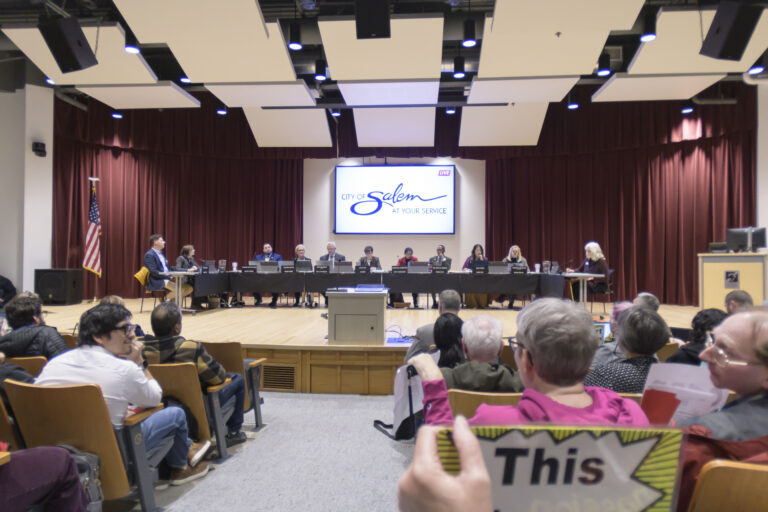
The current nine-person city council is majority progressive, but the upcoming election could shift the council to the right if enough conservative challengers win seats.
The general consensus among local developers, city planning commission members, former elected officials and city staff who spoke with Salem Reporter is that both sides want to see more development.
“I think the current council, even the progressives on the council, understand that we have to create some housing for our residents,” TJ Sullivan, a former city councilor and the president of the Salem Main Street Association, said. “Everyone is kind of on the same page.”
Many also said that while politics can certainly impact growth and development, it is only one part of a much broader and more complicated picture. Market conditions and a patchwork of state and federal regulations, as well as local code and standards, all influence what gets built.
Some developers said they saw the city’s issues as a problem of bureaucracy more than a political issue that the council directly controls.
Where the two slates differ is on how to find a happy medium between ensuring development has a positive impact on both the community and the environment, while making sure Salem is a lucrative and attractive place for investment as it pursues its housing goals.
Conservatives argue too much environmental regulation and red tape will scare away developers wary of inflated costs and longer timelines. Progressives in the council race have expressed that they want a careful and calculated approach that takes into consideration how a new apartment complex will impact traffic on a nearby road, or ensure building taller and denser is only done in appropriate parts of the city.
While elected officials certainly can impact how the city grows, many of the processes required to move projects forward are coordinated by the city’s Community Planning and Development Department which must adhere to established regulations.
SIGN UP: “Thank you for your fair, thorough, and fearless reporting.” Subscribing to Salem Reporter helps sustain in-depth, local reporting that Salem depends on. Invest in your community’s news. Subscribe today.
When it comes to political fundraising, the chamber, the Oregon Home Builders Association and the Oregon Realtors Political Action Committee typically support conservative candidates both financially and through endorsements.
“When you put a conservative majority in city council, you are saying that those votes are going to be coming from that perspective and with that backing,” said former city Councilor Virginia Stapleton, who’s currently running for a state Senate seat as a Democrat. “I struggle with that, because for a really long time here in Salem, the conservatives have ruled the day, and the chamber is very, very powerful. And the developers are very, very powerful. And I don’t know if I can trust that the common good is what would be the outcome of that, because I haven’t seen that.”
Out of the four challengers running for council, the three conservative-backed candidates all have backgrounds as small business owners and have pitched themselves as friendly to business and development.
Chuck Adams, a longtime conservative political consultant, said that having business owners on council brings experience balancing budgets and getting projects done. Conservative candidates are also seen as more likely to elevate developer concerns to city staff in an effort to facilitate a process that is widely regarded as slow and cumbersome.
“A lot of times on the Republican side, you have people who come out of an arena of being small business owners. Or they have some business connection, they’ve had employees, and they understand all the impact of regulatory issues, whether they’re a dentist or a contractor,” Adams said. “There’s just a different experience level that causes people to think differently about solutions.”

The city’s influence over how Salem grows comes from its authority over zoning; its ability to grant permits, tax breaks and development grants; and its obligation to ensure compliance with city code and standards.
Councilors set broad policy that helps guide Salem’s growth in the long-term.
They typically aren’t involved in approving individual projects like a new apartment complex or subdivision. But the council can review a decision made by city employees to grant a particular permit or approve a project.
Councilors can also approve city subsidies or property tax breaks for certain types of developments.
And they vote on annexing new land into the city, often to support housing development.
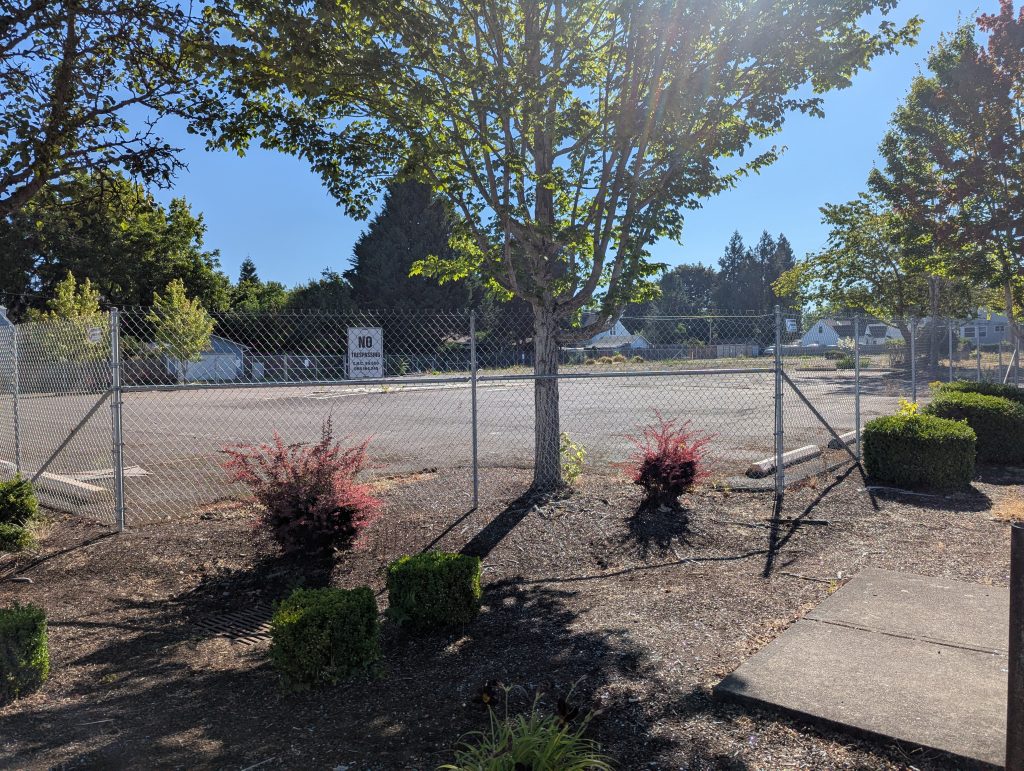
On Monday, April 13, the council voted 7-1 to annex nearly 20 acres of land in east Salem for housing developments where city staff said they expect hundreds of multifamily and single family homes to be built.
The city also establishes development goals and implements strategies such as the “Our Salem” plan for the city’s growth, and its Housing Production Strategy designed to increase accessible housing for residents and address barriers faced by builders and developers.
Those policies and goals are largely crafted by the city’s Community Planning and Development Department, with council approval.
Unless a development moves forward without any complication, a developer seeking specific accommodations under city code must go before the city’s planning commission, a nine-member body tasked with reviewing site plans and approving land use applications.
Councilors appoint members to the planning commission. It’s a process that typically receives little public attention but has a larger direct role on development than many council decisions.
The commission serves an advisory role to the city council, and will make recommendations on approval or denial on specific projects. The commission is generally wary of deviating from city code and the vast majority of the time the council will accept the commission’s recommendations.
Marissa Theve, a progressive member of the commission who’s also a soil scientist, said the current group on the commission leans more progressive than conservative.
She said the friction between the two sides emerges when it has to do with ensuring compliance with environmental regulations. Where progressives want to go above and beyond on the environment, conservatives like to say, “We just need to build this thing,” Theve said.
Commercial real estate investor Nate Levin is also on the planning commission but leans more to the right. He owns Nathan Levin Co., a Salem commercial real estate firm, and agreed the environmental question is the biggest point of friction during commission meetings.
“The issue that I have is, ‘How do you put profitable businesses and developments in place to be successful when you are going, ‘Oh no, we need additional parkland instead of parking for people that are going to use the complex?’” Levin said. “The reason why I went back on the planning commission is that I didn’t see anybody on the planning commission that had a perspective that employed business, development or construction as an important part of contributing to our community.”
Levin said despite his feelings on the matter he believes everything must be balanced politically.
“The issue that we have seen in national politics, is that there is this abrasive wall that is being put up that says, ‘It’s my way or the highway,’” Levin said. “The reality is, on a local level, if we aren’t capable of working together and adjusting our perspective to allow for reasonable growth and profit and development, then nothing will happen.”
Theve said the group largely works in harmony as it does important legwork.
“When the rubber hits the road there hasn’t been any huge split in votes along lines…we are all just getting things through,” Theve said. “What the code says goes before any of our opinions …We are not going to be strong-arming people to build extra sidewalks somewhere or something like that because there’s the chance that we would get sued or appealed.”
The only recent instance Theve recalled of the council rejecting the commission’s recommendation was in October 2024. Councilors voted to allow a developer building an 11-lot residential subdivision on Southeast Creekside Drive to save hundreds of thousands of dollars by forgoing adding sidewalks.
Theve said lately there hasn’t been much coming before the commission because higher interest rates have made it less attractive to invest. Regardless, she said the importance of the commission as it relates to Salem’s growth cannot be understated.
“The city we have now is the effect of planning commissions of the past,” Theve said.
Local Salem developers like Dane McKinney of Stack Asset Group said development challenges are more about red tape and the slow city permitting process than about politics. He said it takes several months, sometimes as long as a year, to get city permits for projects.
He didn’t fault the city or politicians and said the issue is more systemic than anything else.
“Everybody wants to help, it’s almost just a structural thing that creates the problems. It’s like you built the foundation upon something that doesn’t make development happen quickly and then you have all of these people that are part of a system that want it to happen quickly, but they still have to follow the rules,” McKinney said. “I don’t think there is anybody malicious at the city level. I don’t think there is anybody malicious that is getting into office, I think everybody wants to see the same thing.”
McKinney said high interest rates have slowed down development in Salem, so it is perplexing to him that getting approvals takes such a long time.
“The more that you slow down the speed at which a business venture can get done, the less likely it is to happen,” McKinney said.
McKinney said the debate shouldn’t be about whether or not the city should develop sustainably. It’s more about how to get projects to the finish line quicker.
“We have already implemented really strict design codes and it’s still not working. So, maybe what if we were a little looser on all that stuff?” McKinney said. “Salem was able to grow much quicker, our tax base was way higher, and then it’s like, ‘OK, now we have a little bit of extra money to build the third bridge. Now we have a little extra money to make a road in West Salem wider. Now we have a little bit of extra money to make Commercial wider.”
Community Planning and Development Director Kristin Retherford said the city is working diligently to streamline processes and maintain a line of communication with developers, but only so much can be done given the regulatory framework that undergirds the entire system.
Development in Salem has to follow Oregon’s state land use policy and the city council’s approved comprehensive plan. That’s a long-term plan which sets out what types of structures can be built where and lays out a broad vision for the city’s growth.
Salem’s current plan is only a few years old and Retherford said real change on the ground in accordance with the plan will take time to manifest.
Developers seeking city approval on projects are working within that established framework regardless of who is on council.
If councilors “are not happy with what is in those plans, it is within their authority as a council to change code and make different policy,” Retherford said, using the city’s sign code policy as an example. “They can direct staff to start a sign code project and revise sign code and bring that back for adoption. In absence of that, staff is going to implement sign code as it is and it is the same thing with all of our codes.”
Retherford said she regularly meets with the Homebuilders Association of Marion & Polk Counties to talk about how to speed up projects that get bogged down in the system. She said forums with city staff help figure out how to streamline and improve processes. A lot of the holdups on projects are due to the nature of property in Salem, Retherford said.
“Projects are all unique…and the developers can tell you, there are no easy properties left in Salem. Every property, every project has a lot of hair on it. It’s got complications,” Retherford said. “Each one has its own unique situations or challenges that you have to collaborate on with the development team to work through those issues.”
She said timelines and processes vary tremendously depending on what type of project is being considered. Factors like topography complicating how sewer and water infrastructure is installed is an example of a major consideration which takes a significant amount of engineering and back and forth between the developer and city staff.
Retherford said that she has heard from developers that Salem actually has too many unoccupied housing units because market rate rents are simply too high for people to afford. Some developers are turning to the state for Low-Income Housing Tax Credits and other affordable housing programs to strike a balance between affordability and profitability.
“It is getting harder and harder to get projects to pencil. So you take the city timeline out of it, there’s this whole other factor that’s making projects very challenging. Project costs have just gone through the roof,” Retherford said.
Josh Kay of First Commercial Real Estate is also no stranger to the time and money required to bring a ground-up project across the finish line. He said he doesn’t think things would change much on the development front regardless of who’s on council.
Despite that, he said, everything has a political component, development included. Where any individual councilor or mayor could move the dial is by being brave enough to “stick their necks out” to push for real change to how the city deals with development.
He said the real question is: what does that change actually look like?
“Right next to homelessness, I think housing is a huge component of what we are facing and challenged with locally — all types of housing, not just one type … What does it mean to change? How do you improve the efficiency of housing? How do you create a more clear path, cleaner path, easier path?” Kay said. “The question comes down to: how hard does a council or a mayor want to push for innovation or progress, because any change from status quo requires engagement. Politics is a contact sport and there’s risk associated with changing the status quo.”
Abbey McDonald contributed reporting.
Contact reporter Joe Siess: [email protected].

Joe Siess is a reporter for Salem Reporter. Joe joined Salem Reporter in 2024 and primarily covers city and county government but loves surprises. Joe previously reported for the Redmond Spokesman, the Bulletin in Bend, Klamath Falls Herald and News and the Malheur Enterprise. He was born in Independence, MO, where the Oregon Trail officially starts, and grew up in the Kansas City area.
Comments are closed.





Good article. I appreciate all the different perspectives. I think some people feel that land development is a business like any other. But plans and codes are in place not because planners like to drive with the brakes on, but because the risks are so high if it is done poorly. My experience is that development review takes a long time because it isn’t just about the engineering and the look and whether the market research says it will be successful. It’s about systematically thinking through all the possible impacts so that nothing really bad happens down the road as a result of that development. If that happens, the city — and us taxpayers, too — is handed a huge and expensive problem to deal with. So that review is not something I want to shortcut, whether it’s about the environment, or infrastructure capacity, or emergency services response time, or tax base, or community character.
The highlight in this article for me is about how many rental units are empty right now because of unaffordable rates; I see them in my neighborhood.
Yes, I would also like more information about the number of vacant apartments and rental houses. I know of one in my neighborhood that has had a For Rent sign on it for months.
““Salem was able to grow much quicker, our tax base was way higher, and then it’s like, ‘OK, now we have a little bit of extra money to build the third bridge. Now we have a little extra money to make a road in West Salem wider. Now we have a little bit of extra money to make Commercial wider.””
Define a “little bit of extra money please”. Every project here would cost millions to billions (bridge). Time to give up that ghost please. Building the tax base through infill would reap more income for Salem without all the expensive inputs of expanding city infrastructure where it doesn’t exist yet. Let’s please start there.