In over two decades of work in juvenile justice, Christina Puentes has seen 95 kids die by gang violence.
The number is “way too many,” she said. It’s why she’s continued her work trying to get youth to put down their weapons.
Puentes retired about two years ago from her career working with young people involved in gangs who were in Oregon Youth Authority custody.
In July, she started a version of the program, called Street Smarts, for youth in the Marion County Juvenile Department.
There, she works with preteens and teenagers tied to gangs to get them to confront dangerous behavior and relationships. It’s intended to help youth before they’ve been convicted of a serious crime.
“My goal is to get them to change their behavior, and in turn, if that gets them to walk away from the gang, then that’s a win-win. But that’s not my ultimate goal with these kids. It’s to get them to stop the negative behavior that is going to get them hurt or get others hurt,” she said.
The first students to finish the county program graduated last week, according to Puentes.
Troy Gregg, Marion County juvenile director, started talking with Puentes about bringing her experience to the department soon after she retired from the Oregon Youth Authority, she said. Before starting the program in July, Puentes provided anger management classes in the department.
There has been a growing need for resources like Street Smarts as Salem and Marion County have seen an increase in youth involved in murders, gun charges and gangs over recent years, Gregg said.
In 2023, a Salem police analysis found that the number of teenagers involved in serious assaults tripled since 2020. The city is starting to see a decrease in shootings, and it’s expected for the decrease to continue in the next few years, Salem Police Chief Trevor Womack told Salem Reporter in an interview last month.
“This is one that’s just been continually growing and growing at an alarming rate, and … if we can offer something that can get these kids out of it, then not only the kids are better off, but the community’s better off too,” Gregg said.
Puentes worked with the Youth Authority for 27 years. Her interest in youth involved in gangs started while studying juvenile justice in college.
“The biggest thing, I think, that motivates me with these kids these days, is so many people see them as a disposable population. They’re bad, they’re evil kids,” she said. “Yes, they do bad things, but they’re not evil kids. How do we fix that? You don’t throw away the kid.”
Marion County’s program is the first time Street Smarts has been brought outside of a correctional facility, she said.
“Getting kids that maybe are just touching on stuff as they enter into the system, being able to reach that intervention early on just helps to prevent a life of sitting in (an) institution,” Gregg said.”If we can stop that and we can save a life in the community and then you save the life of the person that commits the act because they’re not long-term having to deal with incarceration… overall, it’s one of those things, the earlier the better.”
The Oregon Youth Authority stopped running the Street Smarts program in its facilities around the same time Puentes retired from the agency, according to OYA spokesman Will Howell.
The agency now runs a similar program for youth affiliated with gangs to work on decision making and managing their emotions, he said in an email.
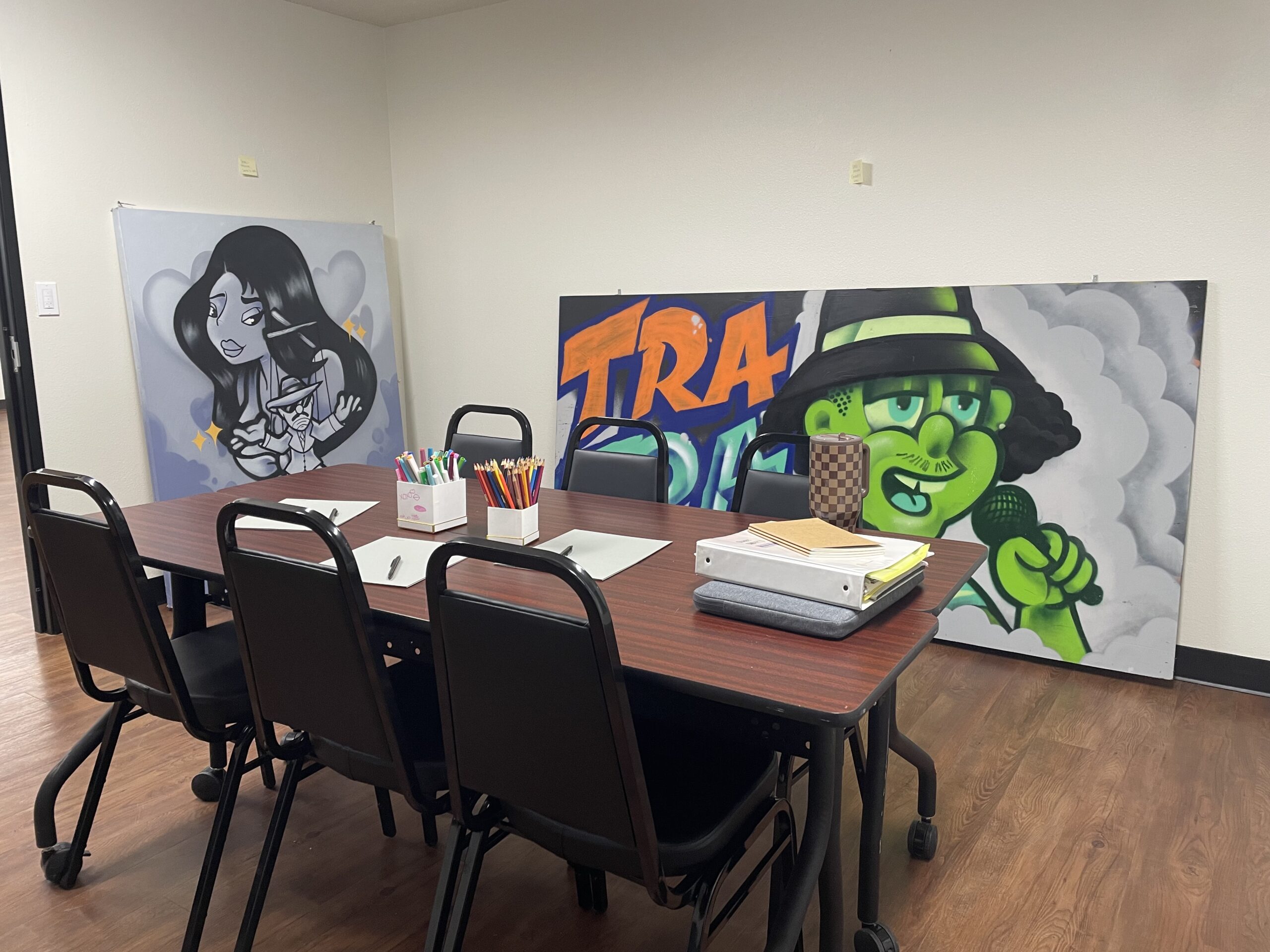
The Marion County program requires attendance at weekly 90-minute meetings held on the Marion County Juvenile Department campus, located on Northeast Center Street. There, Puentes leads kids through group conversations and assignments.
They reflect on what makes up their identity and how their gang differs from their family.
Puentes led four groups in the program’s first months – two for boys ages 15-18, one for boys 12-14 and one for girls. So far, nine students have graduated, with three more expected to finish the program soon, she said.
Local parole officers refer youth they work with to the program, and Marion County Circuit Court judges will also be able to mandate the program in the near future, Puentes said. None of the students Puentes has worked with in the new program have spent time at state facilities, but some have been involved in assaults, robberies and shootings, she said.
For the first couple of meetings, youth are often tense around each other. Part of that tension can come from Puentes’ choice not to separate youth with rival or different gang affiliations.
“They quickly find out that they have so much more in common than they do differences. It’s amazing, they start kind of talking about the fact that, ‘Well, wait, we went to school together … we played on that basketball team together, or you’re friends with my cousin,’” Puentes said. “The bigger thing, I think, that the groups show them, is that they can co-exist with somebody that they have, sometimes, really strong hatred for.”
The main point of the groups is to challenge the students’ gang mentality, by getting them to think and talk about how their actions affect their families’ lives and their communities, Puentes said.
During group meetings, students share if they’ve been involved in gang-related behaviors in the week, such as getting into verbal fights with rivals, tagging or staying out past curfew, Puentes said.
“Nine out of 10 times, I already know what they’ve done and they have to report it to the whole group, they start thinking twice about doing it,” Puentes said.
While law enforcement and schools focus on telling youth not to wear certain colors or to quit gang activity entirely, Puentes has seen that focusing on personal behavior leads to bigger changes in their lives.
Around 20 years ago, while at OYA, Puentes came across a boy who was set on being in a gang for the rest of his life. She challenged him to join Street Smarts, where he showed progress and continually had “lightbulbs come on,” about his behavior, Puentes said.
Eight years after leaving OYA, he asked Puentes for her help, something she offers to all of the students she’s seen through the program.
After spending time at the Oregon State Penitentiary and losing his father, the former student wanted to finish his high school diploma and needed his youth authority transcripts.
Puentes brought papers for him to sign and ended up having a two-hour conversation with him.
“He’s like, ‘and I know I drove you crazy, (but) I finally got it … my gang is always gonna be part of who I am, and I’m always going to have love for them … but I finally got it that I no longer have to do what they do,’” Puentes remembers him telling her.
For Puentes, that moment captures why the program is more effective to get youth in gangs to act differently.
“If I ask young people to leave the gang, oftentimes they’re hearing … that they need to be somebody different. It’s very much tied into their identity. And I personally feel that I would not like somebody to come up to me and say, Christina, I need you to change who you are. It’s much easier if somebody came and asked me, Christina, I need you to work on A, B or C of your behavior, and in turn, that moves away from the identity,” she said.
At the end of the program, students prepare a statement on their past and what they want for their future. Some choose to leave their gangs, some stay and others want to distance themselves and participate in gang activity less.
Puentes always holds her breath when students read their statements, she said. In the audience are the students’ families, parole officers and the group they went through the program with.
After finishing Street Smarts, graduates have access to Puentes for support throughout their future. She is still in touch with kids she saw through the program over 15 years ago, she said.
“I think the amazing thing about doing it early on and doing it at the community level is you’re able to catch kids before they get in too deep. You’re able to give kids the ability to see things at a different level before they make really horrible choices that are going to inevitably put them on a different trajectory,” Puentes said.
Contact reporter Madeleine Moore: [email protected].
A MOMENT MORE, PLEASE– If you found this story useful, consider subscribing to Salem Reporter if you don’t already. Work such as this, done by local professionals, depends on community support from subscribers. Please take a moment and sign up now – easy and secure: SUBSCRIBE.

Madeleine Moore joined Salem Reporter in 2024 and reports on a variety of topics including public safety, addiction, treatment and the criminal justice system. She came to Salem after graduating from the University of Oregon in June 2024 with a bachelor’s degree in journalism.