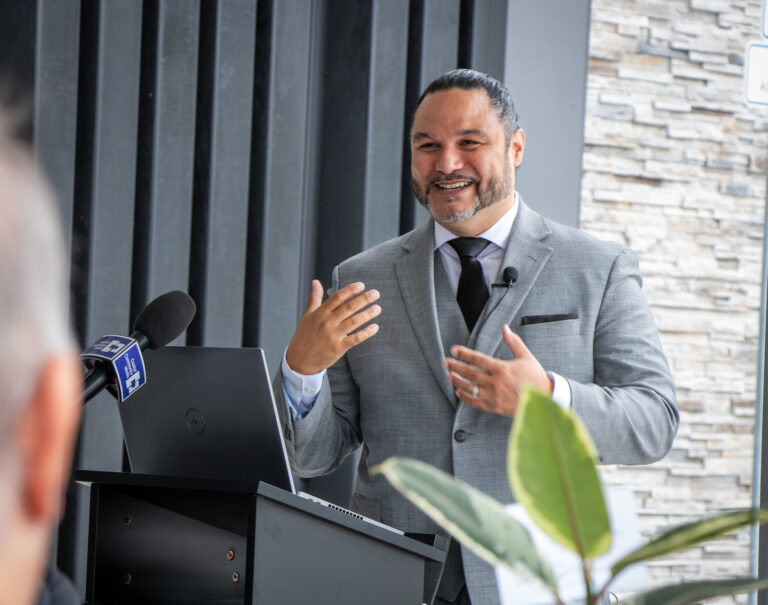
Our Place allows families to stay together as parents recover from addiction
A new addiction treatment service in Salem is giving children a chance to live in a two-parent household for the first time in their lives.
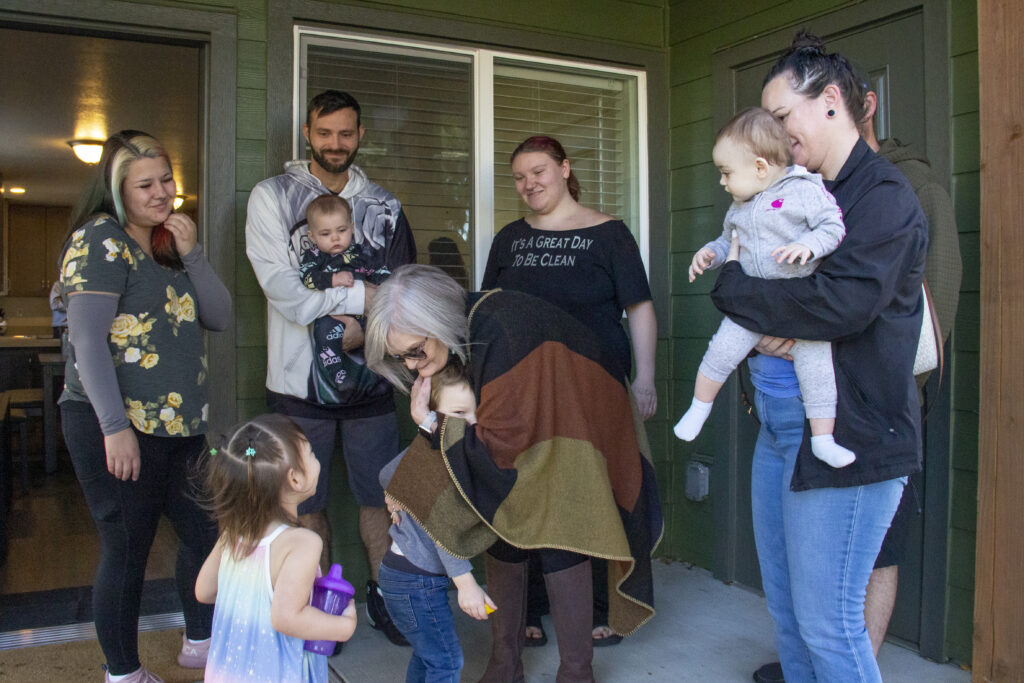
At the recent celebration of the program’s opening, kids raced around the office space, laughing, as their parents and Marion County staff mingled.
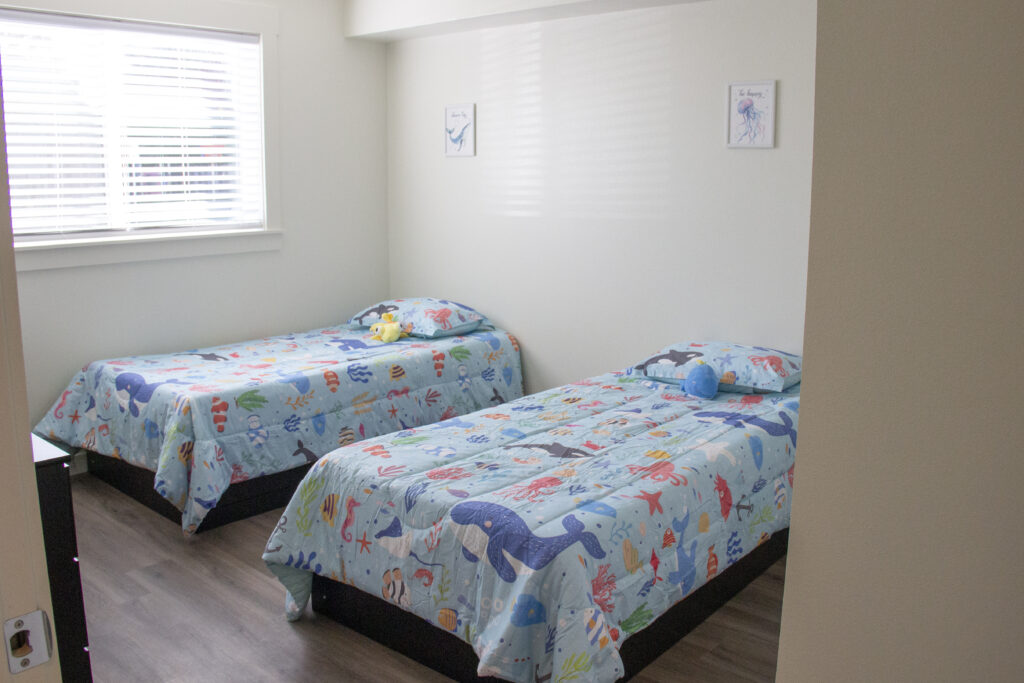
Our Place, housed in an apartment building in northeast Salem, provides free housing to adults and their children as parents go through recovery and receive mental health treatment, employment assistance and other supportive services.
It’s the latest expansion of county treatment and housing services to keep families together while parents navigate addiction treatment and recovery.
So far, three young families have moved into the apartment complex.
For the program’s open house on Oct. 29, Milah Thompson wore a t-shirt that said “It’s a great day to be clean.” After moving in the night before from Her Place, a women’s treatment program, she said Our Place had already brightened up her world.
Thompson, who has a 3-year-old son with her fiancé, was looking forward to the weekend when his two older children would visit their new apartment.
“This Saturday we’ll have all three kids, and we’ll be one big family,” she said.
It was a long way to get there, but she recommended it to anyone who wanted to start fresh and rebuild their relationships.
“The process was worth it,” Thompson said.
One of the main goals of the program is to reduce family separation driven by addiction, Teri Morgan, Marion County addictions treatment program manager, said in an interview. Previously, parents going through treatment would be split up by receiving services through separate programs, including residential treatment programs Her Place and His Place. Their kids could go with one parent to treatment or into foster care.
“Well, this is just Her Place and His Place on steroids. You know, we get to help the whole family. We get to see people that will probably stay in treatment, that may have left before because they wanted to be with their significant other or their significant other couldn’t get in anywhere else, or difficulty in coparenting, because one’s in a program and one’s not,” Morgan said.
At least one parent needs to have a substance use disorder for a family to qualify for Our Place, according to Morgan. Our Place has five units for families.
To get on the program’s waiting list, an adult needs to be at an outpatient level of recovery. If they need more intensive care, staff can connect them with other services.
People’s ability to stay at Our Place is tied to a specialized treatment plan they’ll work through with staff, according to Morgan.
The program provides addiction treatment services through the county or other providers, along with counseling for parents and children. The county will also supply families with employment specialists and child care on site.
Our Place provides “wraparound services” for families to learn how to budget, buy groceries, plan meals and do housework, Morgan said.
“Many of the people we see have generational substance use. So they’ve not ever really had the experience of, how do you run a household? Get kids up for school on time, keep your house clean and organized. So many of the life skills that may come easy for some people, don’t for others,” she said.
Morgan expects participants to graduate from Our Place in around six to nine months.
Child care, housing and transportation are three of the biggest barriers she sees for families struggling with addiction. Our Place helps with two out of three by providing housing and on-site child care services, and reduces need for transportation by bringing counselors and resources directly to families at the apartments.
“The opportunity for them to stay together as a family, coparent, those kiddos get to see that change in their parents … It just really improves chances for continued success for them,” Morgan said.
The program is part of a renewed partnership between Marion County and Catholic Community Services, which built the apartment building housing the program’s participants. In 2022, the Marion County Board of Commissioners voted to spend $500,000 of Covid relief money to help fund the building’s construction, according to Marion County Health and Human Services administrator Ryan Matthews.
Our Place is also funded through Medicaid and national opioid settlements, Matthews said.
The county’s other treatment programs that also provide housing, Her Place and His Place, have been around for years. Her Place started over 25 years ago and His Place opened around two years ago.
Both programs have seen success in bringing treatment and housing together for dozens of people, but have not been able to keep families together when one or both parents need services.
“We also know research shows that parents who stay with their children doing treatment have higher completion rates and better long-term outcomes. Children benefit from stability, reduced trauma from separation and seeing recovery modeled at home,” Morgan said. “Families who heal together have a better chance of breaking cycles of substance use and involvement with child welfare. The outcome, the success of this can be generational. You know, we’re not just keeping this family together and seeing parents get sober, we’re changing that trajectory for generational substance use, generational criminality, generational poverty.”
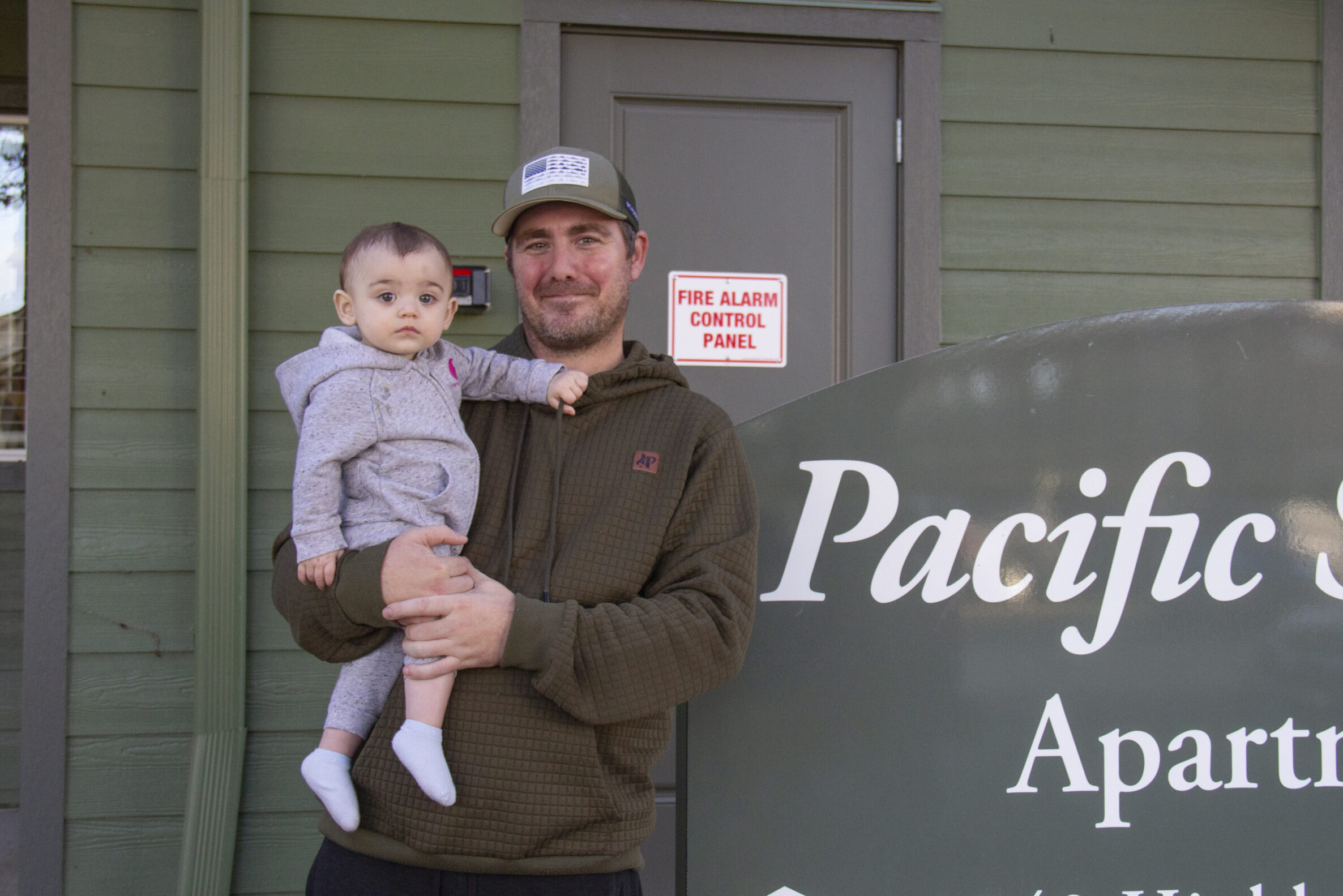
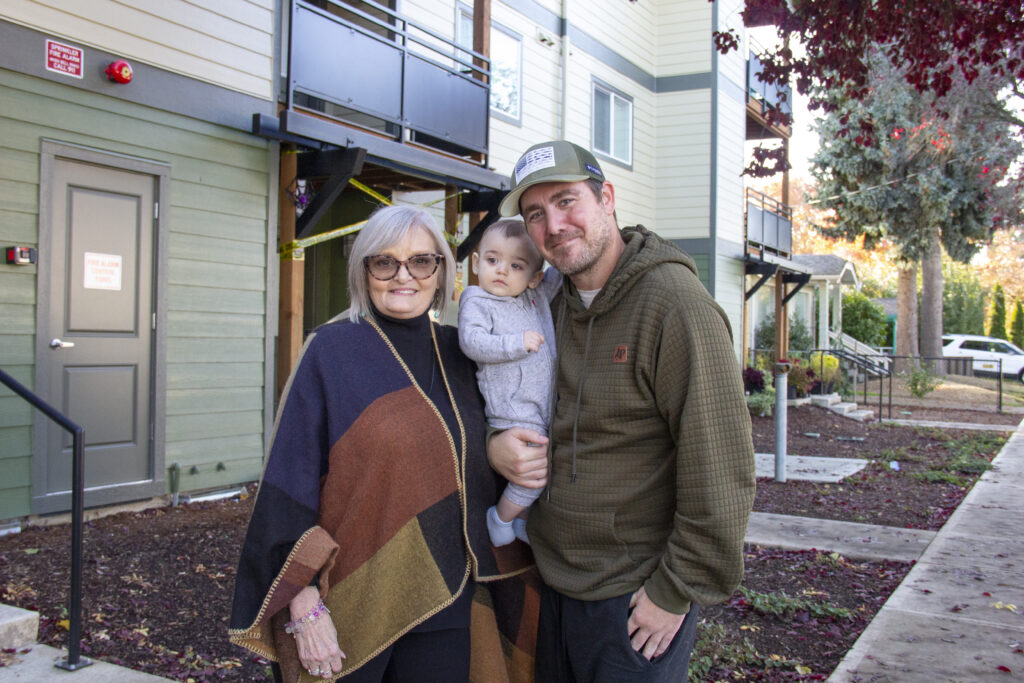
Emma Jean, who turns 1 this month, was woken up from a nap to attend the open house. She calmly accepted coos and greetings from county staff, gripping the string of her dad, Andrew Shepherd’s sweatshirt.
Shepherd and his partner sought support when she became pregnant with Emma Jean.
“We decided we needed to change our lives, what we were doing,” he said.
In order to start their recoveries, the family had to split up. Emma’s mom moved into Her Place, and Shepherd moved into an Oxford House, a group home for people in recovery from drug and alcohol addiction. He later stayed at Soaring Heights Recovery, which provides transitional housing.
“It was really hard, having (Emma Jean) and not being able to be together and do it together as a family.”
Shepherd said he’d resisted the separation, at first. He thinks an option like Our Place will help families in a similar situation.
“I was real hesitant, and I feel like it stops a lot of other couples that they’re not going to be able to do it together. But with something like (Our Place), they can, and it’ll open the door for a lot of people, I think, that want to get better but don’t want to do it alone,” he said.
His family was able to move in together a month ago. He’s looking forward to having his children from a previous relationship visit the new space.
“We were waiting for this to be able to work, and get the resources that we need to help keep the family together. It’s been amazing,” he said.
He’s also getting help with dental work, and they get help with diapers. Recently, the program participants took a trip to the pumpkin patch.
“And, of course, a place to live. Because rentals are super hard, or expensive, to find,” he said.
His partner is about to graduate treatment, and families won’t need to leave Our Place until they secure another stable place to live.
“Just having people that are willing to help is a breath of fresh air,” he said.
People interested in learning more about Our Place or participating in the program can email Morgan at [email protected].
Contact reporter Madeleine Moore: [email protected]. Contact reporter Abbey McDonald: [email protected] or 503-575-1251.
A MOMENT MORE, PLEASE– If you found this story useful, consider subscribing to Salem Reporter if you don’t already. Work such as this, done by local professionals, depends on community support from subscribers. Please take a moment and sign up now – easy and secure: SUBSCRIBE.

Madeleine Moore joined Salem Reporter in 2024 and reports on a variety of topics including public safety, addiction, treatment and the criminal justice system. She came to Salem after graduating from the University of Oregon in June 2024 with a bachelor’s degree in journalism.

Abbey McDonald joined the Salem Reporter in 2022. She previously worked as the business reporter at The Astorian, where she covered labor issues, health care and social services. A University of Oregon grad, she has also reported for the Malheur Enterprise, The News-Review and Willamette Week.