While a majority of residents feel a sense of community in Salem, nearly seven in 10 homeless residents reported discrimination weekly or daily.
That’s according to a recent city survey conducted by students from Western Oregon University in partnership with the Salem Human Rights Commission. The survey was taken by 552 people in four languages and was conducted between April 24 and May 14, 2025.
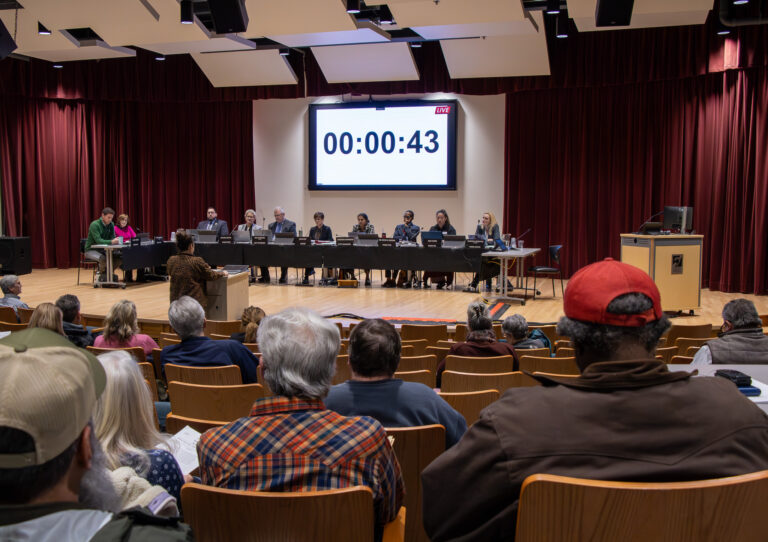
Robert Marshall, the vice chair of the commission, presented the results to Salem city councilors on Monday.
The survey has been taken for the past seven years in order to gather insights into Salem residents’ sense of belonging and experiences with discrimination. The survey was available online and done in-person during events put on by The ARCHES Project, Church at the Park, Safe Sleep United, and the Micronesian Islander Community.
Marshall said the survey included 80 people who identified as Pacific Islander and 63 people who identified as unhoused.
The survey found that 68% of homeless people surveyed would be unlikely to go to police to report being the victim of a bias crime or incident.
“That, as a council member, is very alarming because it is an indicator that the data we have on our unsheltered residents is under-reported. Vastly underreported,” Councilor Mai Vang said during a discussion. “I’m glad to hear that the police department has identified that as a place for improvement and is working with the human rights commission, so I am glad we are making positive steps.”
The Salem Police Department provides a liaison to the Human Rights Commission, according to a staff report from Gretchen Bennett, who’s acting as Salem’s community services director.
More than half of respondents said they feel a sense of community in Salem, the survey showed. That share was higher among Pacific Islanders, at 65%, and lower among homeless residents, at 40%.
Less than a third of respondents said they personally experienced discrimination in Salem this year, but that figure skyrocketed to about 82% for homeless respondents, nearly 68% of whom said they experience discrimination weekly or daily.
The three most common types of discrimination reported were on the basis of race, color or national origin; age; and gender. More than 90% of homeless respondents said they experienced discrimination because of their housing status.
The survey results had few specific insights about the experiences of Salem’s Latino residents, who were underrepresented among those who took the survey. About 9% of respondents identified as Latino, compared to 26% of Salem’s population, according to census data.
Justin Crosswhite, a WOU student who helped conduct the survey, recalled speaking with a younger person living on the street who told him that “Many people drive by screaming, ‘Get a job!’”
Crosswhite said after helping with the survey his perception of those on the streets has changed.
“They are simply people, too, simply trying to survive and get by. They simply just want to be heard and treated as human,” Crosswhite said. “The discrimination of the homeless people in Salem is unfair as it seems they simply don’t have a voice to be understood or heard.”
Out of all the people surveyed who said they experienced discrimination, almost 60% said they experience it in public places like parks or in the streets, 48% said they experience it in businesses like banks, restaurants and shops, and almost 34% of respondents said they are discriminated against in healthcare settings.
For homeless respondents the most common place to face discrimination was in public, outdoor spaces, followed by businesses and then while taking public transportation.
“It is important to note that all of the places listed are places of public accommodation. These are places in the city of Salem and in our state’s capital city that individuals should feel the safest, seen, valued, and heard,” Marshall said Monday.
When it came to whether a respondent would report being the victim of a bias crime to the Salem Police Department, nearly 55% of people overall said they were somewhat or very likely to report it. About one in three said they were somewhat or very unlikely to report bias crimes to police.
Over half of homeless respondents said they would also be unlikely to report bias crimes to the human rights commission. The most common reason was a lack of awareness of the commission, the survey said.
“Individuals experiencing homelessness are people. They are deserving of dignity. They are deserving of the same rights as everybody else,” Roberts said on Monday. “If we work together on housing solutions we would have less people on the streets.”
Contact reporter Joe Siess: [email protected] or 503-335-7790.
A MOMENT MORE, PLEASE – If you found this story useful, consider subscribing to Salem Reporter if you don’t already. Work such as this, done by local professionals, depends on community support from subscribers. Please take a moment and sign up now – easy and secure: SUBSCRIBE.

Joe Siess is a reporter for Salem Reporter. Joe joined Salem Reporter in 2024 and primarily covers city and county government but loves surprises. Joe previously reported for the Redmond Spokesman, the Bulletin in Bend, Klamath Falls Herald and News and the Malheur Enterprise. He was born in Independence, MO, where the Oregon Trail officially starts, and grew up in the Kansas City area.