The Salem area’s longest-serving state legislator is facing a challenge from a Monmouth well driller who said he wants to hold state agencies more accountable.
Rep. Paul Evans, a Democrat, is seeking a sixth term in House District 20, which includes West Salem, a portion of southwest Salem, Independence and Monmouth.
Kevin Chambers, a former Polk County Republican Party chair, is seeking the seat.
Here’s how both candidates said they’d address Salem’s budgetary challenges, homelessness, education and more.
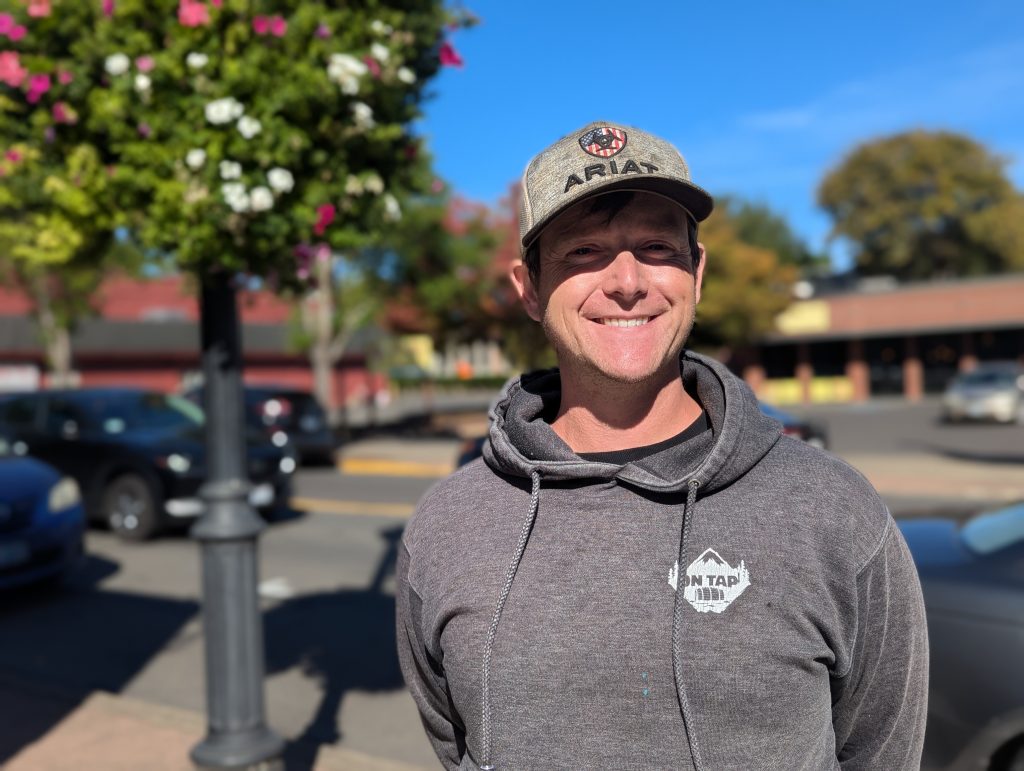
Name: Kevin Chambers
Party: Republican
Age: 34
Residence: West Salem
Occupation: Water well driller
Education: B.S. in Earth Science, Western Oregon University
Prior governmental experience: Polk County Republican chair 2018 – 2019, Polk County Housing Authority 2019, Oregon Water Resources Department Rules and Advisory Committee 2019 – 2021, West Salem Neighborhood Association 2019 – 2020, Monmouth Budget Committee 2023 – 2024
Top issues: Government accountability, education reform, judicial reform
Chambers has spent most of his life in Polk County, growing up in West Salem and more recently living there and in Monmouth.
He said he’s running because Evans has “abandoned his district” and failed to make improvements for West Salem, like a new bridge across the Willamette River.
He wants the state to try a new approach to addressing homelessness and addiction, and believes that legislators need to hold more accountable Gov. Tina Kotek and state agencies for spending and meeting state goals.
As a legislator, “you get a little bit of a bully pulpit. And I think Republicans have failed at using PR and talking to reporters: ‘Hey, I tried to do this and tried to do this, and they’re not listening,’” he said.
Chambers considers himself a “progressive Republican,” noting that in 2019 he unsuccessfully put forward a proposal supporting same-sex marriage in the Oregon Republican Party platform.
In office, he said he’d focus on finding common ground with the Democratic majority and would be willing to trade his vote and compromise to get his proposals through. He said Democrats and Republicans agree on about 85% of their concerns, which includes homelessness and health care.
Chambers said he would advance bills that aim to solve problems, not focus on divisive issues like abortion restrictions that have no chance of passing.
“I hate messaging bills,” he said. “Why am I wasting my time on this? I have actual work to do.”
To serve the district, Chambers said he’d seek to hire staff from Evans’ office who know issues well, and aim for a politically diverse staff that includes a Republican, Democrat and Libertarian. He said he’d prioritize being accessible to constituents, noting that he’s running with no campaign manager and his personal cell phone is listed on his campaign website.
Chambers’ job drilling water wells often takes him out of state for weeks or months at a time. He said if elected, he’d take a work sabbatical during session and only accept projects close to the district so he’d be available to constituents.
Salem budget and needs
As the city of Salem faces a growing budget deficit, Chambers said he supports requiring the the state to cover the cost of providing services to state property in the city.
Chambers also said the state should pursue downsizing offices in Salem now that many state employees are permanently working remotely. Over time, he said selling off some state property in Salem would put those buildings back on the tax rolls in private ownership.
“My priorities would always be funding the police and emergency responders first, and then reducing budgets,” he said, along with allowing voters to decide if they want to spend more on other services like libraries.
Homelessness, housing and treatment
Chambers said Oregon needs a new approach to tackle homelessness that includes a push to build new housing and accountability for state money going to homelessness.
“We’re spending more on housing and homelessness, but it’s still getting worse. So we need to use our committees in the legislature to bring people in and have an accounting of how you’re spending the money,” Chambers said.
He wants state regulations cut on new housing construction that nowrequire what he described as “bells and whistles” that add to construction cost, like requirements for green energy.
He also suggested waiving system development charges for several years to spur new development. Local governments impose such fees on developers to cover infrastructure costs, like the cost of connecting a new apartment building to the city’s sewer system.
Oregon’s rent control law has worsened the housing issue, he said, because landlords have no incentive to seek the maximum allowable rent increase every year.
Chambers has been sober for three years and said Oregon needs more pathways to help people return to productive lives when they finish drug or alcohol treatment. He wants more halfway houses and more people who could check in on those in recovery, like parole officers or sponsors.
He wants to see stiffer penalties for drug possession, which he said should be a felony, to motivate people to enter treatment.
He was cited for driving under the influence, he said, which is off his record after a treatment and education program.
“I learned a lot from it, too. Never drank and drive again,” he said.
Chambers supports multiple chances for people to get clean and change their behavior, but said the system also needs accountability.
“If someone’s also a repeat offender, you know, okay, you’re not going out on bail,” he said.
Education
Chambers graduated from Western Christian School outside Salem and comes from a family of educators, many of whom teach at private schools. He said he wants to make it easier for families to afford private school through a voucher system where the state would give families making under a certain amount money to pay tuition.
“The quality of education from a private school to a public school is night and day,” he said.
He said he’d pay for the cost by expanding timber sales from state lands and doing more to clear undergrowth, which would also help prevent large wildfires.
Chambers said he also supports state grants for starting private schools.
He also wants reforms to improve outcomes in Oregon’s public schools, including an update to the state’s quality education model that says not just how much Oregon needs to spend to meet its educational goals, but how schools should spend it.
Schools need more money, he said, but that needs to come with oversight, “not just: ‘Here’s a blank checkbook.’”
Chambers said he also wants a state law requiring at least 60% of school district budgets to go to schools, limiting administrative overhead. In the Salem-Keizer School District, 89% of the district budget goes to schools, according to a budget presentation in June.
Other issues
Chambers said his other priorities include regulating artificial intelligence and reforming Oregon’s process for appointing judges to give counties more local control.
Circuit court judges are elected, but those who retire mid-term are replaced by appointees picked by the governor. He wants to change the law so county commissioners make those appointments.
“I want to start pulling power away from the executive branch,” he said. “It would provide more accountability, local control, it would stop the gaming of it.”
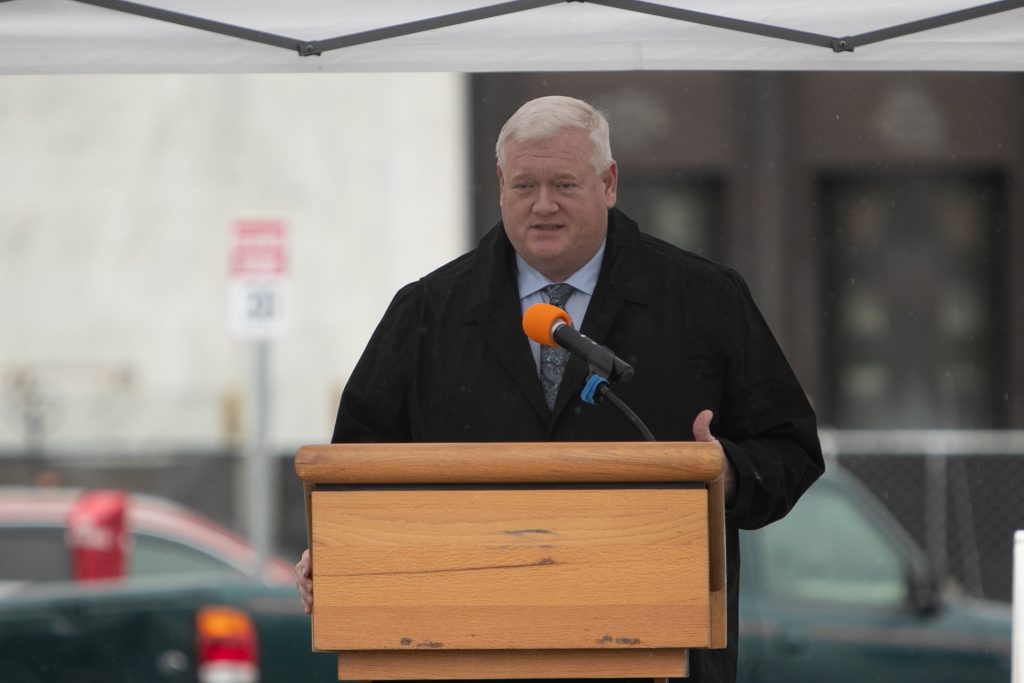
Name: Paul Evans
Party: Democratic
Age: 54
Residence: Monmouth
Occupation: Professor in speech and communication, Chemeketa Community College
Education: M.A. in Interdisciplinary Studies, Oregon State University; B.A. in Public Policy and Administration, Western Oregon University
Prior governmental experience: State representative, District 20, since 2015Top issues: Emergency management, infrastructure and planning, veterans services
Evans is an Air Force veteran who has long made emergency planning and preparedness a focus of his legislative career.
He believes politicians shouldn’t stay in office indefinitely and said he considered not seeking reelection.
“I’ve been convinced by people that my life experience is still needed and maybe more needed now than it was before,” he said. “I still believe leaders should be very reflective of why they stay and how long they stay in public life.”
Evans said he’s long been advocating for more coordination between agencies and governments to build resiliency. That focus is gaining better traction now that people recognize the effects of climate change and other issues that cut across several fields.
He sponsored legislation that separated the state fire marshal’s office from the Oregon State Police so the agencies could focus on their respective jobs. He also worked to invest in firefighting equipment and the state’s incident response system.
“This season, more acreage burned than did in ‘20 and ‘21, 1.9 million acres, and it’s still going, but we were in a better posture, and you could see the results. There wasn’t widespread panic, there wasn’t a huge concern, because we were able to mount the resources early and deploy where they needed to be, so that we could protect most of the structures and protect most of the priority areas,” he said.
Last session, he secured initial state funding to start a trolley between Monmouth and Independence. He’s hopeful he can secure continued state funding to keep the popular service operating.
Salem budget and issues
Evans said he would vote for an annual state payment to Salem to compensate the city for tax-exempt state land. But he sees that proposal as treating a symptom of the larger issue – a tax system that doesn’t keep pace with inflation.
“Like anybody else, if I’m bleeding, I’ll use a Band-Aid, but I prefer to figure out how not to be cut,” he said.
Evans said he would support repealing Measures 5 and 50, voter-approved measures from the 1990s that capped the rate local governments like cities and school districts could charge in property taxes. That system means voters in many cases can’t vote to raise their own taxes.
“If people want to have more control and they want to have more services it’s a weird thing that our own law prevents people from actually voting for something that they want,” he said.
He said that’s also created a system where the state has to backfill local government costs, taking money from state priorities.
Last session, Evans proposed that Oregonians vote on creating a statewide public safety authority funded by property taxes. Under his plan, which didn’t pass, 80% of the money would go to local jurisdictions and the rest for state agencies like Oregon State Police. He will try again if reelected, he said.
Homelessness, housing and treatment
Evans agrees Oregon needs to build more housing and said land use regulations and bureaucracy can tie up projects. He’d like to see legislators work on common-sense measures. As an example, he said there’s a farm property just outside Monmouth that the family has indicated they’ll never take out of farming.
“It happens to be in the urban growth boundary, and when they put the map together, the family hadn’t said that,” he said.
He’d like it to be easier to adjust such boundaries so such parcels could be traded for those parcels where housing could be built.
Evans said homelessness is complicated. He’d like to see the state use the National Guard to set up armory-type facilities where homeless people can be sheltered from the elements.
That should come with “a very robust recruiting campaign to get anybody who’s living out in the weather into that facility,” he said.
He said Oregon needs more behavioral health and addiction treatment, and needs to adjust its civil commitment laws so it’s easier to order people into treatment when they’re a danger to themselves or others.
“It isn’t being merciful to let people struggle,” he said.
Evans said he’s introducing legislation to give $5,000 to any homeless person who joins the military and completes basic training. He said he understands that’s not a solution for many, but thinks it would help with a share of homeless people, especially young men, who are checked out from society.
“The one good thing the military does is it does give you structure, and it gives you health care. It gives you three squares a day, and if you serve long enough, you get education benefits,” he said.
He said Oregon’s leaders need to get smarter about tackling homelessness.
“I think we’re dog paddling as fast as we can but that there’s more water in the tub every day,” he said. “If we’re not careful, the public’s patience is going to run out soon, and then I think what happens then is the pendulum swing where a lot of the good work that’s been done is erased.”
Education
Evans said Oregon needs to fund its schools at the level prescribed by the “quality education model,” a calculation of what it would take to meet state educational goals.
He also said Oregon needs more behavioral health treatment outside of schools. Public schools, he said, are becoming a magnet for students with complex behavioral needs and disabilities, straining budgets.
“I know people who are very wealthy that have all of their kids but one in private school, that send the one to public school, because the public is paying the freight for some very high cost education,” he said.
He believes public schools should do that, but they need to be funded accordingly.
Evans more broadly says he’d like to see a “guaranteed opportunity” program that would pay for high school graduates to go on to college, apprenticeships or trade school in exchange for paying back a portion of their future earnings.
“America is adrift because we’ve lost our focus on what we’re supposed to be … focusing on identity politics and tribalism, instead of remembering that the thing that united all Americans, or used to, are their aspirational goals,” he said. “Eventually, you should be expecting a life and liberty and pursuit of happiness. You should be expecting justice. You should be expecting these things because we’re going to work to build them together.”
Other issues
Evans said one of the most urgent issues facing West Salem is coordinated planning.
Polk County is growing and more people are moving to the area from Portland. Evans said he wants to help facilitate planning between local government agencies to address issues like the proliferation of housing along Wallace Road that’s causing traffic challenges.
He believes the area needs another new bridge across the Willamette River, “but not through the heart of downtown Salem, which is already congested.” He said he’ll push for legislation to build a bridge near the Wheatland Ferry north of Keizer, which would allow traffic to get from Highway 99 to Interstate 5 more easily.
Here are totals for each campaign as reported by the state Elections Division as of Oct. 11. To look into individual donations and expenditures, start with this state website: Campaign finance.
EVANS
Contributions: $173,747. Expenditures: $153,281. Cash on hand: $57,176.
Top five donors: Future Pac, House Builders (campaign arm of Oregon House Democrats), $22,979; Democratic Party of Oregon, $21,019; Oregon AFSCME Council 75 (the union representing many state employees), $15,500; Oregon Nurses Association, $9,500; Oregon Realtors Political Action Committee, $7,500.
CAMPBELL
Contributions: $4,245. Expenditures: $3,341. Cash on hand: $1,386.
Top five donors: Front Lawn Productions, $1,000 (a friend’s video production company); Polk County Republican Central Committee, $800; K Drilling, $263.75; Richard Withnell, $250; Debra Wilson, $250.
Contact reporter Rachel Alexander: [email protected] or 503-575-1241.
A MOMENT MORE, PLEASE– If you found this story useful, consider subscribing to Salem Reporter if you don’t already. Work such as this, done by local professionals, depends on community support from subscribers. Please take a moment and sign up now – easy and secure: SUBSCRIBE.

Rachel Alexander is Salem Reporter’s managing editor. She joined Salem Reporter when it was founded in 2018 and covers education, economic development and a little bit of everything else. She’s been a journalist in Oregon and Washington for over a decade and is a past president of Oregon's Society of Professional Journalists chapter. Outside of work, you can often find her gardening or with her nose buried in a book.