Salem’s drinking water will not be impacted this summer after an unseasonably warm winter and as most of the state is experiencing a drought.
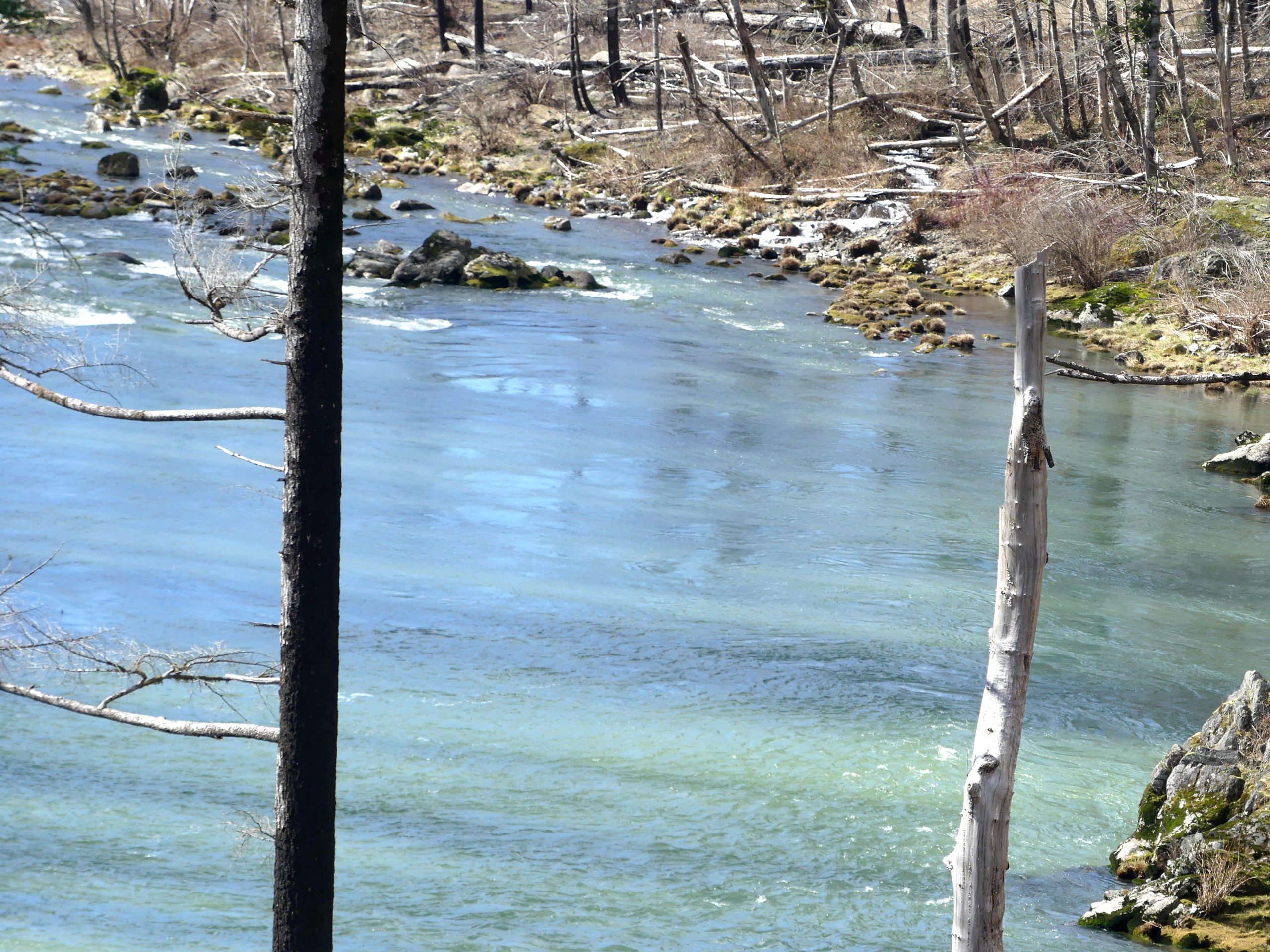
Salem’s drinking water comes from the North Santiam River, which is primarily fed by rainwater, rather than snowmelt from the Cascades, according to city officials. That means the city’s water supply will not be at risk despite lackluster snowpack in the mountain range.
However, Marion County officials said that water levels in the aquifers and streams that make up the Salem area’s groundwater system are continuing to drop after multiple years of below-average precipitation, and increased water usage.
That means local wells could run dry, but there is not enough data to tell whether that will happen this summer, Travis Brown, a regional groundwater expert with the Oregon Water Resources Department, told Salem Reporter in an interview.
“There’s a lot of different factors that go into whether any individual well might go dry,” Brown said. “Given that and the fact that we really don’t have data for all of those factors necessarily, or at least not good representative data for the great variety that we have across the county, we can’t really forecast how many wells might go dry or quantitatively estimate the risk there.”
The U.S. Drought Monitor shows that as of June, 9, the vast majority of Oregon is currently in some form of drought with close to half of the state facing severe or extreme drought.
About 93% of Marion County is experiencing moderate drought conditions, the monitor shows.
Drought classifications get triggered when precipitation levels drop below long-term normals, according to Greg Wacker, a water resources department watermaster covering Marion County.
As a watermaster, Wacker is in charge of measuring, managing and distributing water resources in the county.
He said there are parts of the county where water levels are at the cusp of requiring regulation, but that has yet to happen. He also said that it was difficult to say whether it would happen or not.
“There’s so many variables it’s hard to know for sure how things are going to end up…But if things truly just stop, and we get going on a 100-degree week, the streams are going to drop really quick,” Wacker said.
Fortunately for Salem, the city’s drinking water is not threatened, Jason Pulley, an official with the city’s public works department, told Salem Reporter in an email.
“The North Santiam basin, which provides nearly all of our drinking water, is primarily fed by rainwater. Snowpack does contribute to the hydrologic conditions (and can help maintain water elevation in Detroit Reservoir later in the summer, much to the delight of recreational boaters and water-sports enthusiasts), but to a lesser extent than other Cascade basins,” Pulley said. “Meanwhile, the Detroit Reservoir provides a steady flow of water in the North Santiam River during the summer months.”
In the event that the city’s drinking water supply is threatened, as could temporarily be the case once the U.S. Army Corps of Engineers begins a deep drawdown of Detroit Lake later this year, the city has options.
Those include tapping into Keizer’s water supply and using groundwater resources at Salem’s drinking water treatment facility on Geren Island among others.
When it comes to drought conditions in this part of the state, the concern largely stems from what is called, “snow drought,” Brown said.
“It is not so much that we got a lot less precipitation than we normally would, it’s that a lot of that precipitation came as rain rather than snow,” Brown said. “We don’t have the snowpack and the storage that’s associated with that that helps keep rivers flowing better later into the year. It does matter somewhat for groundwater because snow sometimes infiltrates and recharges aquifers a little bit better.”
Contact reporter Joe Siess: [email protected].
SIGN UP: Salem Reporter is dedicated to covering the people, issues, and stories that shape our community. Stay connected to Salem. Subscribe today.

Joe Siess is a reporter for Salem Reporter. Joe joined Salem Reporter in 2024 and primarily covers city and county government but loves surprises. Joe previously reported for the Redmond Spokesman, the Bulletin in Bend, Klamath Falls Herald and News and the Malheur Enterprise. He was born in Independence, MO, where the Oregon Trail officially starts, and grew up in the Kansas City area.