


Dozens of Salem residents who rent out their homes or spare bedrooms on a short-term basis want the city to reconsider a plan to charge them an extra 2% fee to fund tourism marketing.
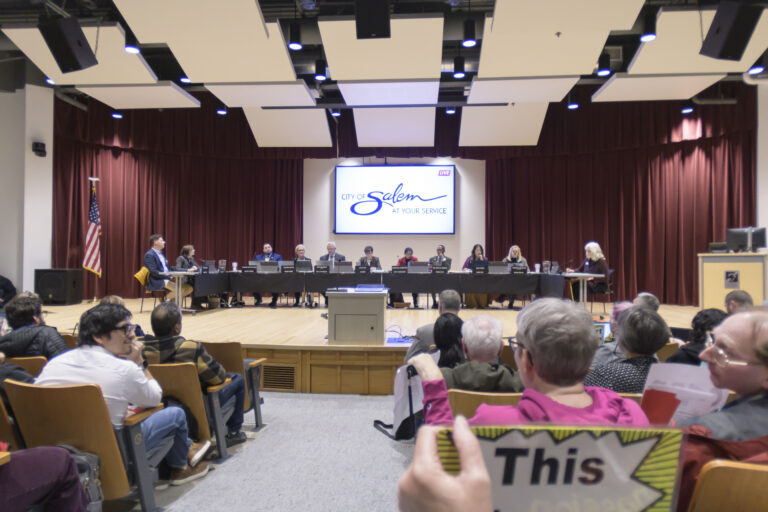
The subject will be considered by Salem city councilors on Monday, March 9, during a public hearing at the council’s 6 p.m. meeting. No decisions are expected until a future council meeting.
If authorized, the fee, which is already levied on commercial hotels, would be extended to short-term rental operators offering lodging using services like Airbnb, Vrbo, and other companies that allow guests to book temporary stays, often in private residences.
Ali Farias, who rents out a property at 860 15th St. N.E. said passing the fee onto short-term rentals blurs the line between small, host-occupied residential properties and large dedicated commercial lodging operations.
“This fee unfairly burdens property owners who use their homes occasionally for income, treating them identically to corporate hotel chains,” Farias said.
Some operators who submitted testimony objected to having to pay into a tourism promotion fund and said their guests are generally visiting family or traveling for work.
Salem Planning Administrator Lisa Anderson-Ogilvie said while there are about 28 registered operators offering short-term lodging out of private homes in Salem, the city has identified hundreds more short-term operators without licenses despite city efforts to bring more into compliance.
The city is currently trying to register short-term rental operators in Salem, Anderson-Ogilvie said. That would allow the city to charge them the extra fee.
That includes those operating out of private homes, as well as commercial lodging options that use platforms like Airbnb.
The 2% fee would be on top of an existing 9% transient occupancy tax levied on all those in Salem renting out housing options for less than 30 days. That money goes into a city tourism fund which helps cover the cost of major events like the World Beat Festival, as well as costs for the Salem Convention Center and maintenance at major parks. The 2% fee goes almost entirely to Travel Salem, which is contracted with the city to market Salem as a tourism destination to attract visitors, conventions and sporting events.
The fee currently generates roughly $1 million a year for Travel Salem, Kuh said, and is funded entirely by hotels and motels.
“While these efforts benefit the entire lodging sector, short-term vacation rentals currently share in those benefits without contributing to the fund that makes them possible,” Kuh said. “For the system to be fair and sustainable, all lodging providers that benefit from Salem’s tourism promotion should contribute to the efforts that make it possible.”
Kuh said that during past Ironman 70.3 triathlon events 46% of visiting athletes and spectators stayed in hotels while 36% used short-term vacation rental options. The other 18% stayed with friends and family or camped out.
In December 2024, Salem city councilors voted unanimously to renew the tourism fee for hotels and motels for a period of five years.
Some rental operators said their objection to the new fee is about the city’s lack of enforcement.
Doug Vogel who offers stays at his property at 310 23rd Street S.E. said in his public testimony that offering short-term rental options has helped him afford the costs of owning a home.
“My concern is that a small amount of us went through the process of getting a conditional use permit that we paid more than $6,000 for, retained property managers, followed compliance guidelines…and have been burdened with filling out monthly reports that the hundreds of other (short-term rental) owners do not.”
“If this additional 2% tax is approved, we will be the only ones paying it,” Vogel added.
According to Anderson-Ogilvie , the city purchased software last year to help monitor and track unlicensed short-term rental operations in Salem. She said the software accesses public data to come up with property addresses and information on owners with property listed on major rental platforms.
“The city sent letters to unlicensed operators alerting them to the fact that they need to obtain any required permits and a license, or to cease operations,” Anderson-Ogilvie said. “A second round of letters was sent to those that did not respond. The letters alert operators that failure to comply with permitting and licensing requirements may lead to civil penalties.”
She said on any given day there are between 200 and 300 listings for short-term rentals in Salem flagged by the city’s new software.
She did not have an estimate of how much money the 2% fee might generate if it’s applied to short-term rentals and said it depends on rates charged overnight, booking volumes and on other factors.
Correction: This article incorrectly attributed information provided by Salem Planning Administrator Lisa Anderson-Ogilvie to city spokeswoman Nicole Miller. Salem Reporter apologizes for the error. The story was also updated to clarify the city’s efforts to register short-term rental operators.
Contact reporter Joe Siess: [email protected].
LOCAL NEWS DELIVERED TO YOU: Subscribe to Salem Reporter and get all the fact-based Salem news that matters to you. Fair, accurate, trusted – SUBSCRIBE

Joe Siess is a reporter for Salem Reporter. Joe joined Salem Reporter in 2024 and primarily covers city and county government but loves surprises. Joe previously reported for the Redmond Spokesman, the Bulletin in Bend, Klamath Falls Herald and News and the Malheur Enterprise. He was born in Independence, MO, where the Oregon Trail officially starts, and grew up in the Kansas City area.
Comments are closed.





The hotels/motels voluntarily created the Tourism Promotion Area (TPA) tax, now they want to force short Term Rentals (STR) to pay the tax. Travel Salem offers no programs for STR owners, only hotels. The city changed the ordinance in Dec 2025 to weight the vote toward hotels. Instead of one vote per person, the city changed it to one vote per room/unit. There are 2,000 hotel rooms in Salem and only 300 STRs.
When the City sent out the letter to STRs requiring them to get a license, they threatened STR owners with a $2,000 a day fine for each day they host without a license. Several hosts took their units off the booking platforms to prevent being fined. The second change to the ordinance in Dec required the host to have been listed on a booking platform on the 60 days prior to the vote. So, threatening hosts with a fine invalidated their right to vote.
This is not a normal vote, it is a remonstrance vote. In a remonstrance if you don’t vote, you are counted as a “yes” vote.
Why isn’t any reporter asking the city WHY so many hosts are not getting a license. The licensing requirement was established in 2017. But the city council voted to change the fee for a Conditional Use Permit (CUP)from about $2,000 in 2017 to $7,000 today. No one understands why hosts need a CUP for a rental. Guests eat, sleep, bathe, watch TV, read, etc in a STR, the same use as every other house on the block. Salem has the highest licensing fees in Oregon for cities our size and smaller.
This isn’t a vote to see if STR owners want to become part of the TPA , it’s a vote to force us to join.