Ethics commission finds Salem Mayor Julie Hoy, 5 councilors broke public meetings law

The state government ethics commission found Friday that Salem Mayor Julie Hoy and five city councilors broke state law by discussing the employment of the former city manager in private leading up to his abrupt resignation in February.
The seven-member Oregon Government Ethics Commission voted 6-0, with one commissioner abstaining, based on an ethics investigation that found Salem Mayor Julie Hoy, Council President Linda Nishioka, and Councilors Deanna Gwyn, Vanessa Nordyke, Paul Tigan and Micki Varney “deliberately coordinated and orchestrated” an illegal serial meeting to avoid making a public decision on the employment of Keith Stahley, the former city manager, earlier this year.
The commission also dismissed cases against Councilors Irvin Brown and Shane Matthews based on an investigator’s finding that there wasn’t enough evidence to show they violated ethics laws.
Councilor Mai Vang won election to the council after Stahley’s resignation and was not part of the investigation.
READ IT: Commission investigator’s individual reports on Hoy, Gwyn, Varney, Tigan, Nordyke, Nishioka, Brown, and Matthews.
Hoy and the councilors will have the opportunity to accept a letter of education from the commission or to contest the ruling.
The ethics investigation centered on whether the mayor and five councilors convened a quorum to discuss the fate of the city manager outside of public view.
Commission investigator Josh Sullivan concluded in reports released last week that Hoy served as an intermediary between the five councilors by initiating one-on-one conversations early this year about Stahley’s employment following a poor performance audit.
Hoy then relayed that information to Nishioka, leading Nishioka to believe the majority of the council wanted Stahley gone, the investigation said.
That prompted Nishioka to urge Stahley to consider resigning rather than go through a contentious public process, the investigation said. Stahley tendered his resignation on Feb. 9.
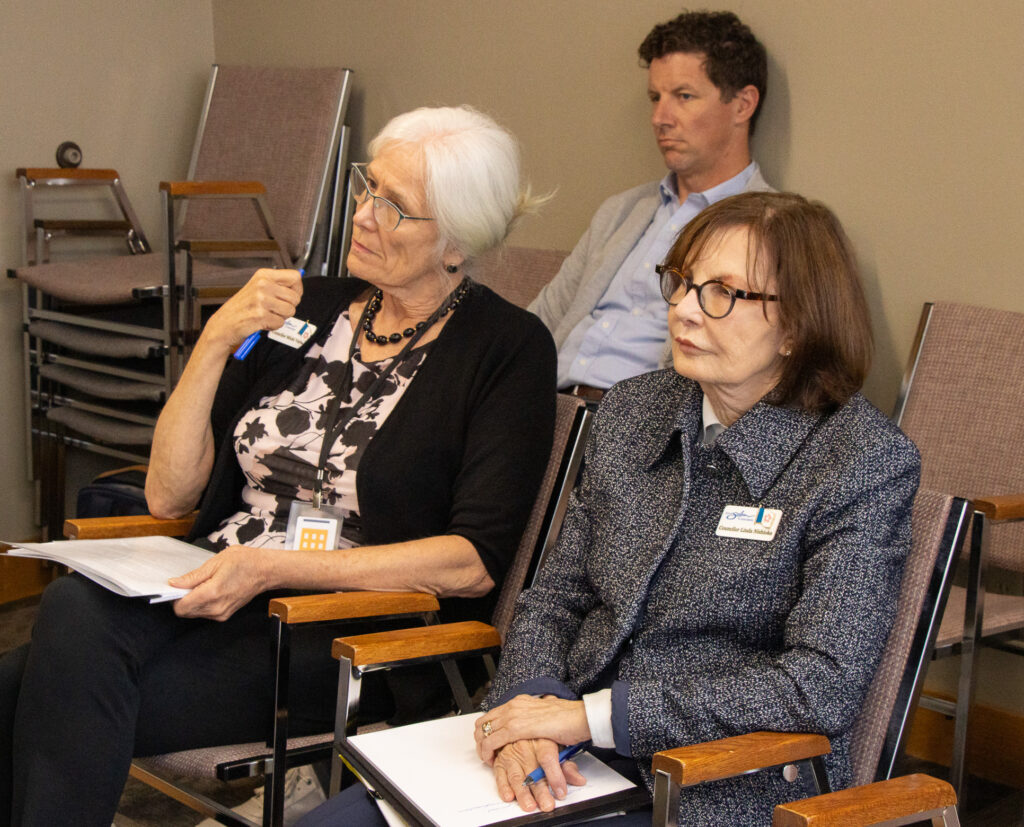
Hoy and Nishioka each disputed the other’s version of events during the commission meeting.
Nishioka has repeatedly said the mayor told her a majority of councilors wanted Stahley to resign, while Hoy has denied making that statement.
The ethics investigation centered on whether a majority of councilors discussed Stahley’s employment and not on whether or not Hoy or Nishioka’s accounting of events was truthful.
But in his report, the investigator explicitly concluded that Hoy told Nishioka a majority of the council wanted Stahley to resign.
Hoy told the commission that was a lie.
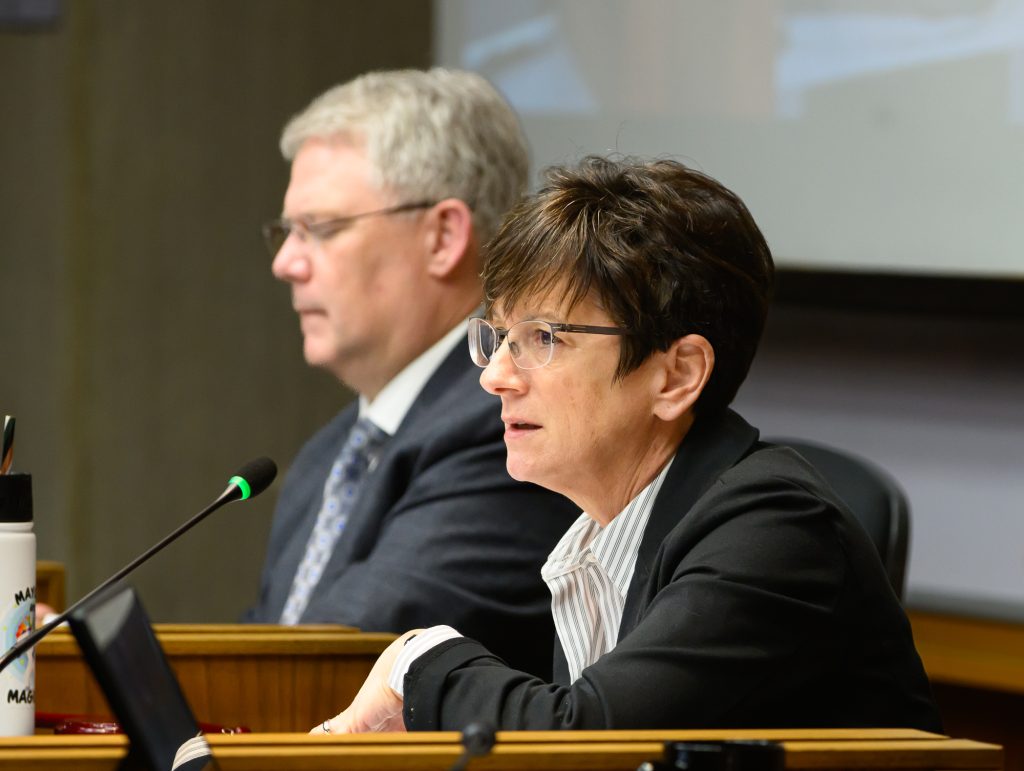
She and her attorney, Jill Gibson, appeared virtually for the Friday meeting held in the commission’s Salem office.
During her five minute testimony she read a prepared statement and showed little emotion as she maintained she never told Nishioka that a majority of the council wanted Stahley to go.
Hoy said on Friday that the council president lied to protect herself after Stahley’s resignation, contradicting the investigator’s findings.
Hoy also said that Nishioka asked her if she had enough votes during their phone call prior to Nishioka’s conversation with Stahley.
“The truth is, Councilor Nishioka went ahead of council on this by inserting herself into the matter. I have no way of knowing what was said in that meeting (between Nishioka and Stahley), and I believe it was in the aftermath that she lied to protect herself,” Hoy said. “We could have followed the process and landed in an executive session or in a council meeting to discuss the matter.”
Hoy said she was genuinely surprised when Stahley resigned and she maintained that her version of the story is the true version and that she did nothing wrong.
“In my role as an elected official I take ethics very seriously. Basing this investigation’s findings on one person’s version of events over another is wrong,” Hoy said. “There is no evidence to corroborate Councilor Nishioka’s claim that I told her I had enough votes. That is simply not true.”
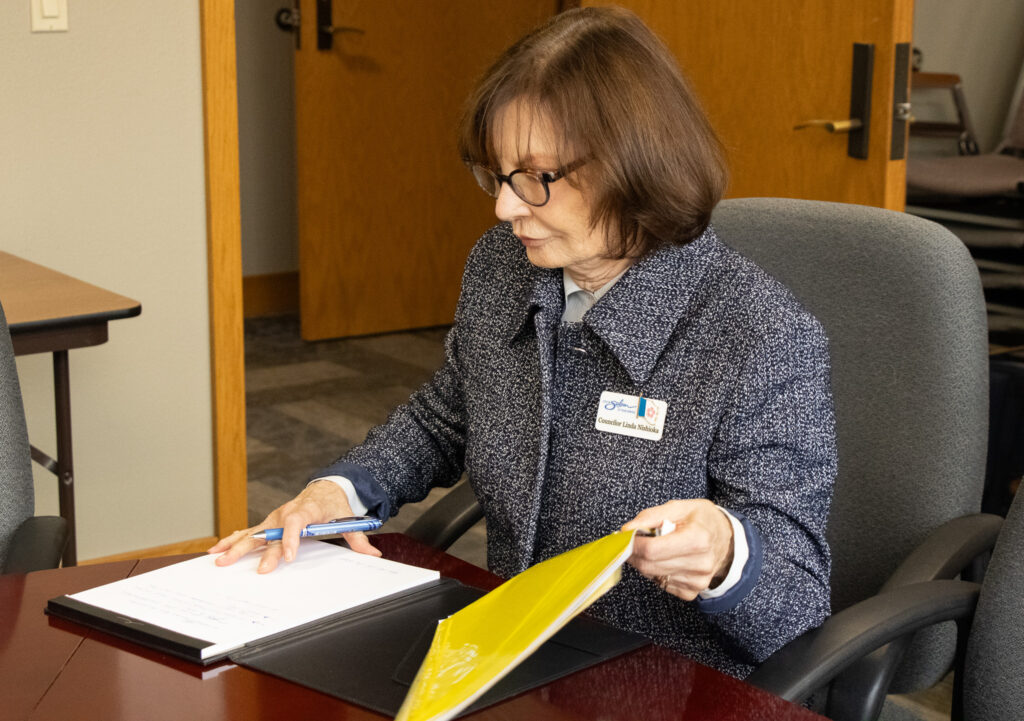
Nishioka attended the meeting in person. She also read from her statement and showed little emotion while disputing Hoy’s assertion that she lied to protect herself after Stahley’s resignation.
She said she did not “solicit or engage in any cooperative deliberation towards a decision with councilors regarding Mr. Stahley’s evaluation or employment.”
Nishioka maintained that when Hoy told her that a majority of the council wanted Stahley to go, she asked Hoy, “All of them?” and Hoy responded that she was waiting for one councilor to “call her back.”
“I cared about Mr. Stahley. And there were personal things in his life that if he was in a situation of needing to resign, that could really impact his family. So, when I heard this devastating news, I shared that with him in our scheduled meeting,” Nishioka said. “That was not an unusual topic for us to discuss because he was already struggling with communicating with the mayor. And in the many meetings we had, I asked him how he was doing, and often he would say that he may have to resign earlier than he intended when he took the position.”
Nishioka said she was being truthful in her testimony to the investigator.
“I really feel there was misdirection in her stating that I had lied, because I did not,” Nishioka said.
Nishioka spoke after Hoy and said her intent was not to circumvent public meetings law and that she would accept a letter of education if the commission found that she did.
Commissioners did not explicitly discuss which version of events they believed, and focused their discussion on whether a majority of the council discussed Stahley’s employment.
But they adopted the investigator’s findings, an indication that commissioners didn’t accept Hoy’s explanation.
The report concluded Hoy and the councilors participated in the serial communications and deliberated about Stahley’s resignation by speaking to Hoy about the city manager’s performance.
Those conversations with the mayor resulted in a decision being made outside of a public meeting, as required by state law, the investigation concluded.
After the city manager resigned, the council met in an executive session to discuss the matter before voting publicly on Feb. 10 to unanimously accept Stahley’s resignation.
Two community members then submitted complaints to the commission, prompting the investigation.
The investigation report was based on information obtained from interviews, emails, text messages, and personal statements from those involved. It found “that a quorum of the council coordinated communications to acquire the resignation of the city manager and that this coordination occurred outside of a public meeting.”
“By discussing Keith Stahley’s performance and his possible resignation with multiple city councilors, and by telling multiple city councilors, including Council President Nishioka, that a majority of other city councilors wanted Keith Stahley to resign, Julie Hoy acted as an intermediary through whom the city council convened … in violation of the requirements of public meetings law,” the report said.
Sullivan concluded in his report that the “the communications were coordinated and orchestrated to avoid deliberating and deciding in public.”
Gwyn, Nordyke, Matthews and Brown also appeared virtually, while Varney, Tigan attended in person.
Each councilor spoke for five minutes to defend themselves before the commission.
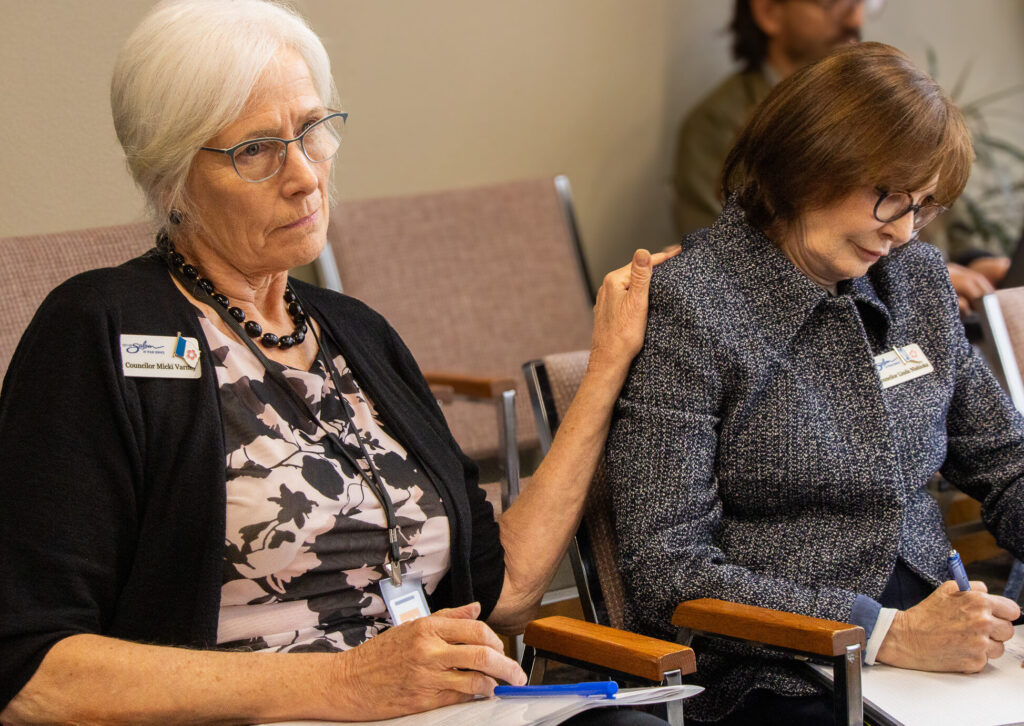
Nordyke, who is running against Hoy for mayor in the 2026 primary election, said there is no dispute that she did not speak with a quorum of individuals. She said she had a single conversation with the mayor and that that conversation was meant to be private.
“The mayor told me she wanted to keep our conversation between us. And I readily agreed to that…that is not a quorum and that is not an intention to form a quorum. This is proof that I did not agree to the mayor speaking to any other member of council. This is proof that I did not agree to the mayor serving as my intermediary to speak to other councilors,” Nordyke said. “Mayor Hoy, as we know, she ended up speaking with every member of council, and that was without my knowledge. Mayor Hoy and I had spoken in private many times before February 3 and it was not reasonably foreseeable that she would break my trust.”
The months-long investigation also found city councilors felt “caught off guard” by Stahley’s departure, and were led to believe by Hoy that the majority of the council agreed he should be removed. The investigation record shows no councilor told Hoy they supported asking Stahley to resign.
Susan Myers, the executive director of the commission, said it is likely that the councilors will receive a letter of education.
The matter is not the first ethics dustup for Hoy, who while still serving as a city councilor, did not recuse herself in a land use decision involving one of her largest campaign donors. Hoy, along with Gwyn, were censured by the council under former Mayor Chris Hoy as a result.
The two Hoys are not related.
Stahley also gave Hoy an ethics warning in 2024 after she promoted a local tire business for a city contract.
PREVIOUS COVERAGE:
Mayor Julie Hoy lied to set in motion former city manager’s resignation, investigation shows
Ethics investigator finds Mayor Julie Hoy, 5 councilors engaged in illegal serial meeting
Ethics commission votes to investigate Salem mayor, councilors over possibly unethical
State investigator concludes Salem council discussed manager’s ouster out of public view
Records reveal Nishioka wanted to sue Hoy after Stahley resigned
Contact reporter Joe Siess: [email protected] or 503-335-7790.
A MOMENT MORE, PLEASE – If you found this story useful, consider subscribing to Salem Reporter if you don’t already. Work such as this, done by local professionals, depends on community support from subscribers. Please take a moment and sign up now – easy and secure: SUBSCRIBE.
Joe Siess is a reporter for Salem Reporter. Joe joined Salem Reporter in 2024 and covers city hall but also loves surprises. Joe previously reported for the Redmond Spokesman, the Bulletin in Bend, Klamath Falls Herald and News and the Malheur Enterprise. He was born in Independence, MO, where the Oregon Trail officially starts, and grew up in the Kansas City area.