COLUMN: Meet the long-tailed duck, an obscure winter visitor to Oregon

Hayden Island is in the Columbia between Portland and Vancouver, Washington. Bill Vollmer photographed this duck near the Holiday Inn on Hayden Island.

That is a long-tailed duck, not well known around Oregon if you’re not a birder who keeps lists. Here it’s a winter only species that doesn’t come this far south in large numbers. If you’d like a look at one keep in mind its particular preference for habitat: coastal marine waters and large freshwater lakes or deep rivers. A long-tail is not going to spend time in a farm pond or some cat-tail marsh among the mallards and pintails.
Further north they become regular in winter. A friend bravely visited northern Minnesota this winter and reported seeing many long-tails there: “a raft of about 100 of them in tight formation out in Lake Superior.” Around the San Juan Islands or coastal British Columbia this bird would be easier to find in winter.
This species breeds across the northern latitudes: tundra freshwater ponds in Alaska and Canada, Iceland, northern Scandinavia and Russia. There’s no other species in its genus, Clangula. And, it’s a fine diver.
To feed it can dive almost 200 feet below the surface. Its food includes small fish, shellfish and other invertebrates, eggs, and larvae. It can feed day and night. Much of its prey comes from near the bottom of both salt and freshwater bodies. The long-tail can pull food from rocks or kelp. The specific prey depends on what’s most available at the location, an adaptable diet around the sub-Arctic. The males are larger and can stay underwater over 30 seconds.
Typical of sea ducks, it will use its feet to scoot across the surface before taking flight. The long-tail often flies low over water and can reach speeds up to 50 mph.
Breeding pairs occupy territories, although females will nest in groups outside of male territory. Brood amalgamation occurs but has not been well studied. Males can form large congregations while molting. How social are the long-tails when they’re down here? Long-tails may be highly social in winter months, but often form small flocks. Likely this is affected by how much food there is. It roosts in large groups at night in winter. Long-tails can be found with other ducks that share their habitat preference like scoters or mergansers.
The female picks the nest site on the ground near water. She often covers the eggs with leaves when she has to leave the nest. She will lay six to nine eggs, and incubate 25 days or more before they hatch. These ducklings are able to feed after hatching. They can swim within 24 hours and leave the nest. They are not good divers at first. They pick at material brought to the surface by the female during her dives. The family can walk to different water. The male is apparently little bothered by parenthood, as is true with many duck species.
For information about upcoming Salem Audubon programs and activities, see www.salemaudubon.org, or Salem Audubon’s Facebook page.
Harry Fuller is an Oregon birder and natural history author of “Freeway Birding” and the newly-published “Birding Harney County.” He is a member of the Salem Audubon Society. Contact him at [email protected] or atowhee.blog. His “Some Fascinating Things About Birds” column appears regularly in Salem Reporter.
LOCAL NEWS DELIVERED TO YOU: Subscribe to Salem Reporter and get all the fact-based Salem news that matters to you. Fair, accurate, trusted – SUBSCRIBE
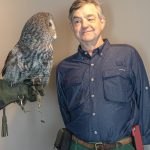
Harry Fuller is an Oregon birder and natural history author of three books: “Freeway Birding,” "Great Gray Owls of California, Oregon and Washington," and "San Francisco's Natural History--Sand Dunes to Streetcars." He leads birding trips for the Malheur Field Station. He is a member of the Salem Audubon Society, and leads bird trips locally. Harry has just published a new book, BIrding Harney County.