Salem organizations that work to shelter and house people face deep uncertainty about their future funding following recent zig-zagging by the U.S. Department of Housing and Urban Development.
The federal agency had proposed a restructuring of the nation’s largest competition for shelter and housing funds, prioritizing short-term programs and those that require people to work and be sober before getting housing. Agency officials then pulled that back Dec. 8 following lawsuits by advocates and 20 states, including Oregon.
Previously, funding decisions largely were left to local boards. The Trump administration’s recent guidelines cut the amount of funding the local boards controlled and drastically cut the time to decide what to fund.
Misty Bolger is executive director of the Mid-Willamette Valley Homeless Alliance, which is tasked with reviewing applications from local providers for HUD funding and combining them into a single regional package for federal officials to consider.
She said the homeless alliance at the moment has no federal guidance on what to submit or when. The alliance has opted to pause its application process, and is bracing for the possibility that they’ll have to scramble over the holidays if HUD unexpectedly releases its revised guidelines.
That means organizations that last year put over $4 million in federal dollars toward housing and helping homeless people in the Salem area can’t effectively plan their next year.
“You would think that this (pause) would allow us to take a breath, but I’m just kind of taking short, quick breaths into a paper bag,” Bolger said.
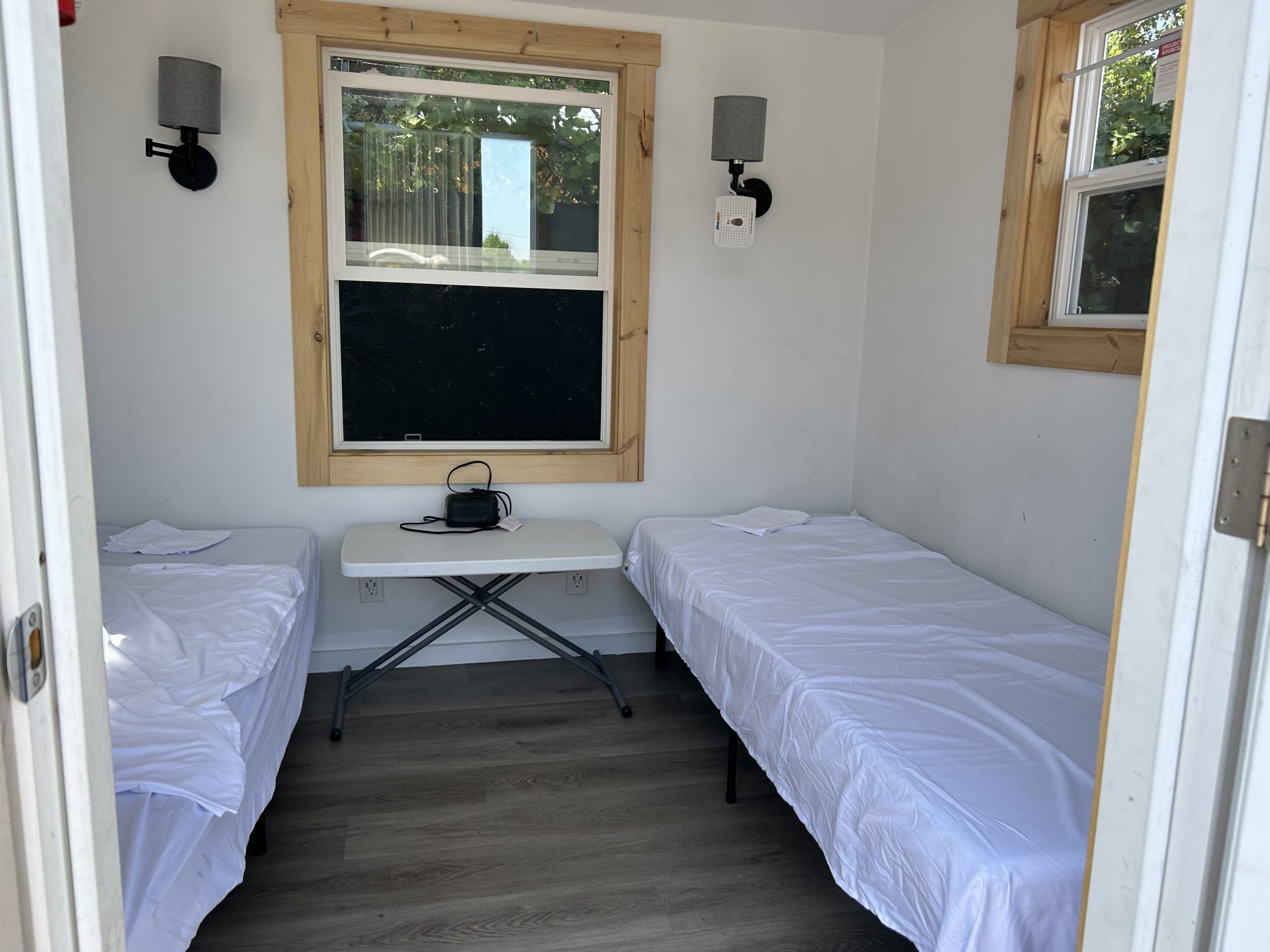
The since-rescinded plan that HUD announced nationally in November would have cut its funding of supportive housing by two-thirds. Such programs pay for apartments for formerly homeless people with disabilities for as long as they need, like at the Coral House in Salem.
Those now-withdrawn guidelines shifted support to short-term, sobriety-focused and faith-based programs. They also would have added new requirements for complying with federal immigration enforcement and barred acknowledging transgender identities.
Providers and advocates nationally raised alarms that such changes would worsen the homeless crisis. The changes, they maintained, went against decades of research and policy which, until the Trump administration, had bipartisan support.
Oregon Attorney General Dan Rayfield filed the lawsuit against HUD on Nov. 25, along with a coalition of governors and attorneys general, contending changes to the grant program were unlawful and conflicted with the state’s sheltering requirements.
On Monday, Dec. 8, HUD pulled the funding criteria about 90 minutes ahead of a court hearing for two lawsuits: one from the coalition of states, and another from a group of 11 local governments and non-profits, according to reporting by POLITICO.
HUD removed its new requirements from the website without notice, and said in a statement that it withdrew the criteria so that it could make changes. The agency said revised requirements would be issued “well in advance of the deadline for obligation of available Fiscal Year 2025 funds.”
The homeless alliance, governed by a board which includes local elected officials, health care providers and homeless service providers, held an emergency meeting last week to decide how to respond.
Originally, the alliance had given Salem-area providers until Dec. 15 to submit projects to be added to its joint-application to HUD for the region. But the board voted to stop the process until there is a better sense of what local shelters are proposing.
Homeless services had already been under a compressed timeline from HUD this year. The homeless alliance typically has three months to process local applications to submit to HUD. This year, it had less than 30 days.
Bolger said there was too much ambiguity around what HUD’s revised criteria would look like to ask providers to rush to submit something.
“There’s a lot of unknowns, and with such a quick turnaround we wanted to be as thoughtful as possible about not only the process, but about the providers’ time,” she said.
The pause came with risks. Without communication from HUD, Bolger worries HUD could release over the holidays its new criteria with the original, mid-January deadline. That would require providers and alliance staff to get work done in days that typically has taken months.
“I think everybody is a little bit nervous,” Bolger said. “We told everybody to continue really thinking about their (applications) and trying to work on them as much as possible, so that if we do get the application with similar priorities and percentages of funding (from HUD), then we would all be ready.”
Before HUD pulled the notice, area providers raised concerns that the federal guidelines would compromise their values.
Jimmy Jones, executive director of the Mid-Willamette Valley Community Action Agency which runs shelters and programs throughout the region, asked the alliance to maintain local control over homeless policies.
“It would also be helpful if the alliance adopted a statement in defense of the civil liberties and constitutional rights of our community members who are homeless, rejecting strategies of criminalization and incarceration,” Jones said in a letter. “Like the SNAP crisis in November, these two matters are collectively an assault on the dignity and independence of vulnerable populations. These two issues are inexorably linked, and they speak to the very core of the Alliance’s legitimacy as an organization.”
Bolger said she recently met to devise more localized criteria for funding. Alliance staff have also been attending meetings from the National Alliance to End Homelessness, one of the country’s largest homelessness policy advocacy groups and with other organizations to learn how they’re working through conflicting priorities.
“Our priority remains maximizing resources and really encouraging agencies to collaborate and partner to expand services for the participants. We want to be an agency where some of these conversations are happening, and our priority is always to try to do whatever we can to support the providers doing the excellent work in our community,” she said.
Contact reporter Abbey McDonald: [email protected] or 503-575-1251.
A MOMENT MORE, PLEASE– If you found this story useful, consider subscribing to Salem Reporter if you don’t already. Work such as this, done by local professionals, depends on community support from subscribers. Please take a moment and sign up now – easy and secure: SUBSCRIBE.

Abbey McDonald joined the Salem Reporter in 2022. She previously worked as the business reporter at The Astorian, where she covered labor issues, health care and social services. A University of Oregon grad, she has also reported for the Malheur Enterprise, The News-Review and Willamette Week.