Oregon quietly halts noncitizen voters investigation
The Oregon Department of Justice and Secretary of State’s Office shelved an investigation into three individuals suspected of voting despite not being U.S. citizens after an attorney for the state warned the cases were “vulnerable” to claims of selective prosecution.
The investigation stems from last fall’s discovery that more than 1,600 people had been wrongly registered to vote while obtaining or renewing driver’s licenses or state-issued identification cards. Oregon has automatically registered voters since 2016 when they provide documents proving citizenship, like a U.S. birth certificate or passport, during interactions at the Driver and Motor Vehicle Services division. But since 2019 the state has allowed people to obtain driver’s licenses without proving they’re citizens or legal residents.
A series of errors led to the discovery that more than 1,600 people were registered to vote in error. Oregon has more than 3 million registered voters, and clerical workers both miskeyed foreign passports as U.S. passports and failed to make key distinctions between the passports of U.S. nationals and citizens. People born in the territories of American Samoa and Swains Island can hold U.S. passports, but they are not citizens and cannot vote in elections other than party presidential nominating elections.
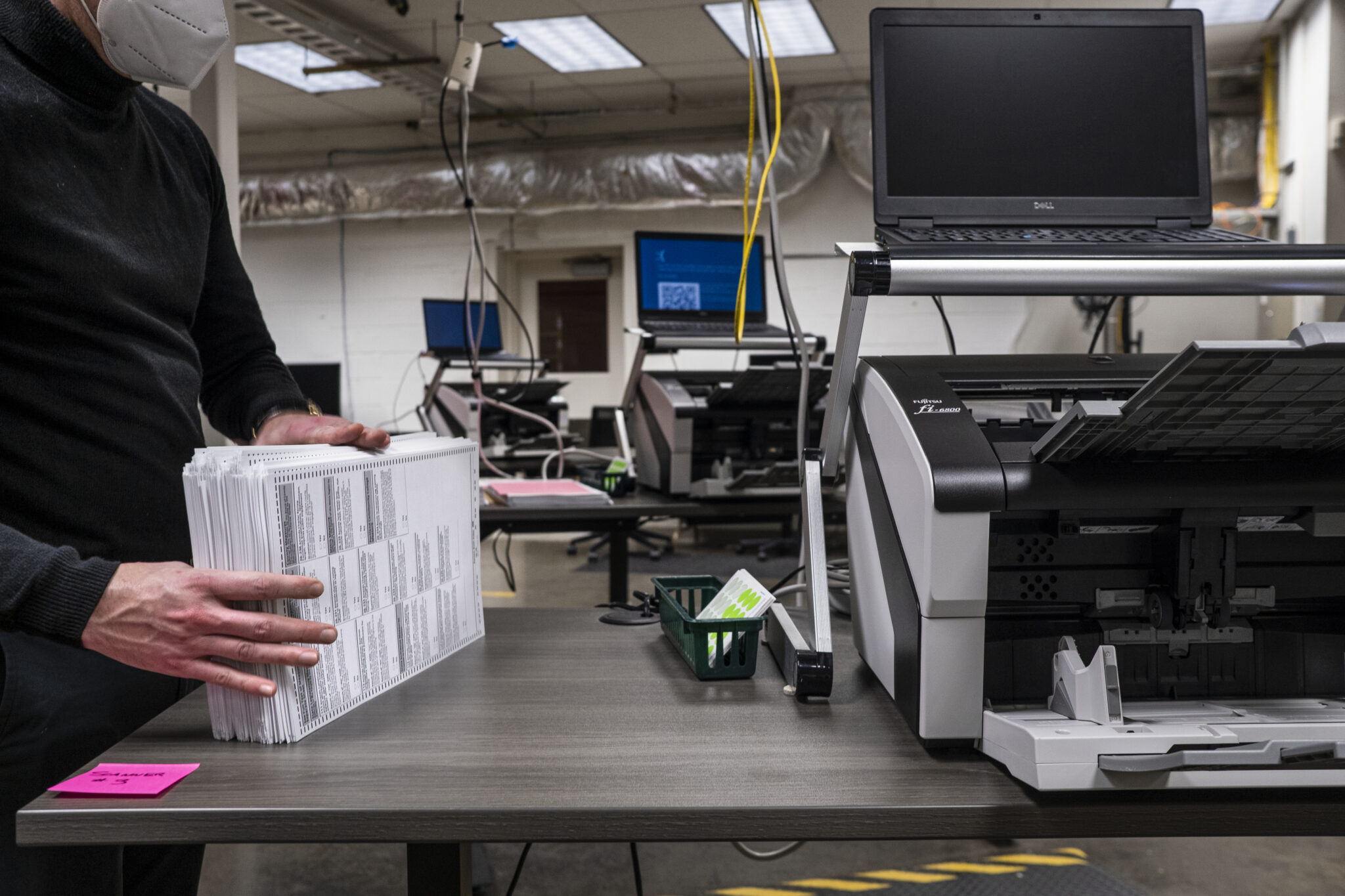
State officials removed those wrongly registered voters from voter rolls ahead of the November 2024 election, though a miniscule percentage ever voted. A total of 38 wrongly registered people voted in various elections in 2022 and 2023, and 30 of those received letters warning of consequences of voting while ineligible. The Secretary of State’s Office in February 2025 referred three cases for criminal investigation to the Oregon Department of Justice.
Neither the Oregon Department of Justice nor the Secretary of State publicly announced the results of those investigations or a Sept. 23 letter to the Secretary of State’s office, which left the door open for the Secretary of State’s Office to add on more evidence and refer the cases again. However, Jenny Hansson, a spokesperson for the Oregon Department of Justice, provided a copy of the letter on Thursday after the Capital Chronicle inquired about the probe.
In a brief three-page document addressed to Deputy Secretary of State Michael Kaplan, a senior assistant attorney general for the Oregon Department of Justice said that the three individuals voluntarily complied with investigators and that there was enough evidence to conclude they turned in signed ballot envelopes.
But “regardless of whether the evidence would be sufficient to obtain convictions,” attorney Jeffrey A. Howes argued that the way the referral process was executed could have singled out certain defendants based on an “unjustifiable standard.” The three sent to the Department of Justice had obtained lawyers, not responded to letters seeking potentially incriminating information or partially responded to those letters.
That could pose concerns about selective prosecution, when a defendant is able to demonstrate that prosecution is based on a category like race or religion or having exercised a constitutionally protected right, Howes wrote.
“We are not suggesting that the sorting, selection, and referral of these three cases was part of a deliberate process of setting apart these three defendants because they chose to exercise constitutional rights (right to counsel; right against self-incrimination),” Howes wrote to Kaplan.
“But because that appears to have been the practical effect of the referral process, any effort to pursue a criminal prosecution in the current posture would be vulnerable to a claim of selective prosecution, which could result in dismissal of the criminal charges.”
Elections division lacks ‘well-defined protocols or guidelines’, DOJ lawyer said
Howes wrote that he discovered the division was “sorting cases without well-defined protocols or guidelines,” referencing an April 10 meeting between the Department of Justice and members of the Secretary of State’s Elections Division.
The Capital Chronicle was able to reach two of the individuals identified in his letter through Linkedin, but neither responded to messages seeking comment. The Capital Chronicle is not naming them because no charges have been filed.
The justice department recommended that the elections division review the three cases again and determine whether the individuals should also receive warning letters instead. Howes wrote that prosecutors remain open to re-considering the cases if “they are sufficiently different from those other cases to merit review for criminal prosecution.”
Tess Seger, a spokesperson for Secretary of State Tobias Read, said in an email that the office has no plans to refer the three cases or additional cases to the justice department.
“We appreciate DOJ’s feedback and have already addressed much of what they raised,” she said. “Since taking office in January, Secretary Read has directed his team to improve the office’s protocols and policies across the agency, including ensuring consistency in which cases are referred to DOJ for further investigation in the future.”
Due to statutes of limitation, state prosecutors have until Nov. 7 to bring charges against two of the individuals, and May 15 for another, according to Howes’ letter.
Oregon Capital Chronicle is part of States Newsroom, a network of news bureaus supported by grants and a coalition of donors as a 501c(3) public charity. Oregon Capital Chronicle maintains editorial independence. Contact Editor Julia Shumway for questions: [email protected]. Follow Oregon Capital Chronicle on Facebook and Twitter.
STORY TIP OR IDEA? Send an email to Salem Reporter’s news team: [email protected].

Shaanth Kodialam Nanguneri is a reporter based in Salem, Oregon covering Gov. Tina Kotek and the Oregon Legislature. He grew up in the Bay Area, California and went on to study at UCLA, reporting for the Daily Bruin until graduating in March 2025. Previously, he was a reporting intern covering criminal justice and health for CalMatters in Sacramento, California. He is always eager to tell stories that illuminate how complex and intricate policies from state government can help shape the lives of everyday Oregonians.