For Salem SNAP recipients, loss of benefits means stress, worse health

It usually takes free holiday turkeys to bring 200 people out to Feed Salem.
But last Saturday, the food pantry inside the Salem Alliance Church got a holiday-sized crowd — nearly double its normal turnout for twice-monthly food distribution.
Volunteer Kent Hungerford, 70, has helped pass out food for around four months after first going to the pantry to get help. He attributed the influx of people Saturday to the impending delay of federal food benefits, which won’t go out as scheduled Nov. 1.
Hungerford said the pantry was “picked clean” by the end of his Saturday, Oct. 25, shift after just two hours of being open. They ran out of popular items like elbow noodles, tortillas, white rice, spaghetti sauce, and were low on soups and oatmeal, he said.
“The amount of people that came through was enormous,” Hungerford said. “Normally that doesn’t happen until right before Thanksgiving or Christmas, when we can give out turkeys.”
People were still coming through the line after noon, Hungerford said, but the pantry was still able to feed everyone.
SNAP benefits won’t be paid out on time amid the ongoing federal government shutdown — a first in U.S. history.
Politicians have generally found ways to fund the program even during shutdowns. During the 2019 government shutdown under President Donald Trump’s administration, the president directed USDA to pay food benefits.
Rick Gaupo, CEO and president of the Marion Polk Food Share, said the unwillingness to do so now reflects a willingness to use hunger as “a political tool.”
Even if Congress reaches a last-minute deal to fund the government, payments will likely be delayed because they take several days for vendors to process.
Families around Salem who rely partially or entirely on SNAP benefits to eat said the impending delay, coupled with uncertainty over the program’s future, have added stress and financial challenges. Many said their household budgets were already stretched thin thanks to rising food, utility and health care prices.
Some told Salem Reporter they plan to cut back on meals, relying largely on cheap staples like rice and beans to stay full. Several said they were considering visiting food pantries for the first time in years, or ever. Some blamed President Donald Trump for his unwillingness to negotiate with Democrats for a deal to end the shutdown. Others said Oregon Gov. Tina Kotek should do more to help people and offset federal losses.
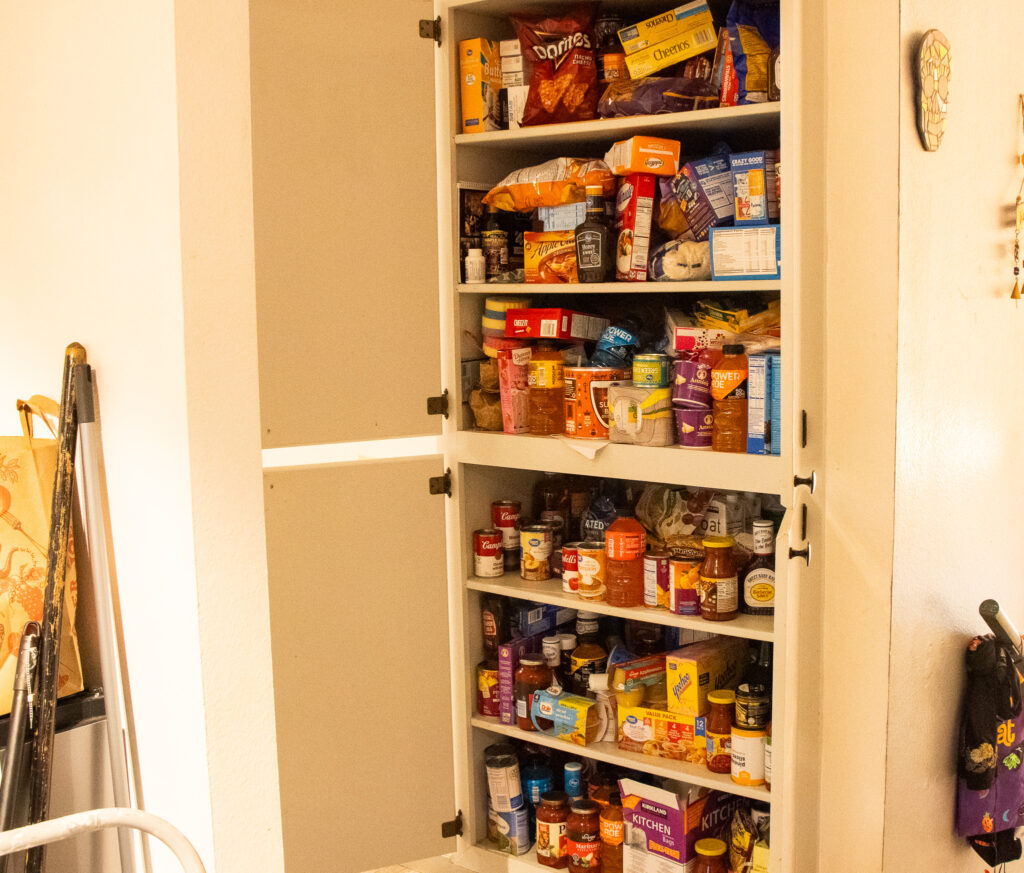
SNAP helps feed about 38,000 Marion County families and 8,600 Polk County families, paying an average family about $330 per month, according to the Oregon Department of Human Services. Statewide, 41% of Oregon families receiving SNAP have at least one working adult, and 37% have at least one elderly or disabled adult, DHS spokeswoman Sara Campos said.
Suzie Robinson, 75, has a rare form of cancer, and her husband has Parkinson’s disease. She described recent cuts to food and medical coverage as “abusive” on the part of the president.
The couple receives about $89 per month from SNAP, she said, which already hasn’t been enough to get the recommended amount of food for her treatment. She’s supposed to eat between three and eight meals a day, she said, and she’s about 12 pounds underweight. In combination with increased medical costs, it’s becoming unbearable.
“I told my doctor that if this keeps up and the cancer goes out of hand, I’m not taking any more treatment. I can’t keep doing this and have all these things go bad, and my life go down the tube because some president wants to stretch his loins or feel his testosterone or whatever the reason is that he’s being so mean,” she said.
Governors in some states have directed emergency money to support food benefits or pantries. Kotek on Wednesday afternoon announced the state would give $5 million to Oregon food banks, but Oregon has no plan to cover benefits.
“If we don’t get our food stamps, I have no idea what we’re going to do,” said Elle Green-Kelly, 36, a Salem resident who relies on the program for most of her family’s food. She said she’d been trying to avoid news about the program to cut down on her stress and had been hoping for a last-minute solution.
“I just thought that Oregon had a backup plan,” Green-Kelly said.
She works in real estate and said the tough housing market means she’s earning less in commission. She and her husband manage an Airbnb, which has also seen bookings decline amid economic uncertainty. They trade stocks and sell items on Etsy to earn extra income.
But the variability and uncertainty in their pay mean she relies on a mix of food benefits, “credit cards and vibes” to feed her family, including their 11-year-old son.
“We never know what our income is going to be until we file our taxes,” she said. She estimated they live on about $1,500 to $2,000 a month after business expenses.
Their $663 in SNAP benefits makes up the bulk of their $750 monthly grocery spending.
Despite their stress, Green-Kelly said she’s in less dire straits than many local families and is looking for ways to help.
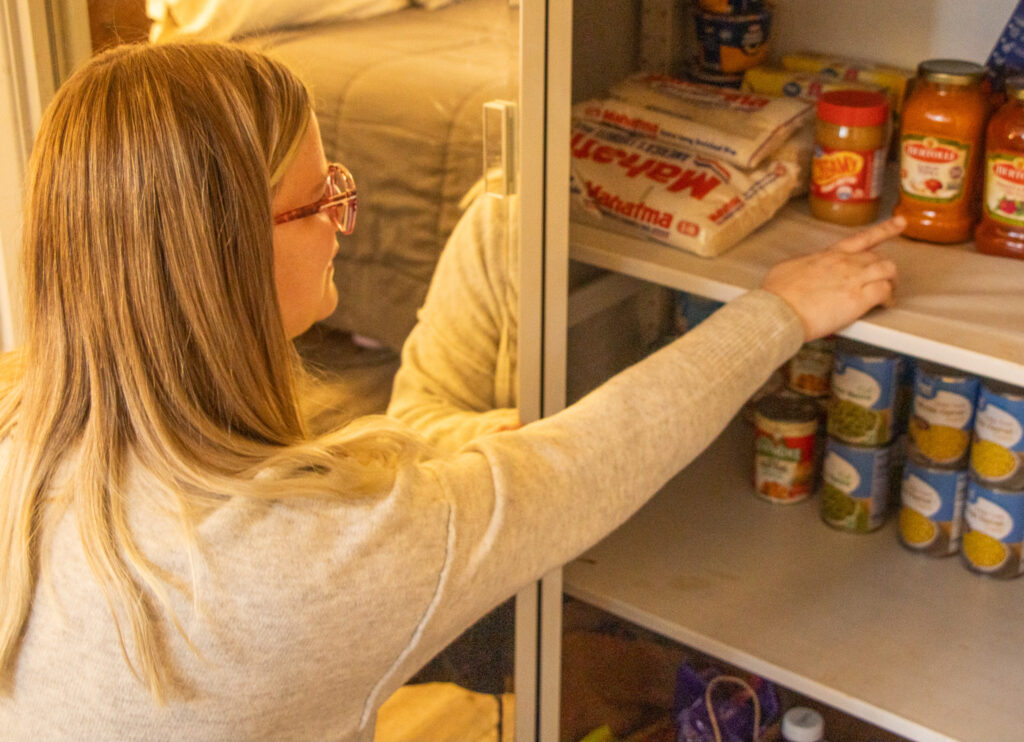
Her family began spending more on pantry staples each month last fall, expecting disruptions to food benefits might be coming. Now, the extra food they’ve accumulated fills a hall closet and has spilled over into the couple’s bedroom closet, with cans of corn and green beans stacked where sheets were once stored.
She’s hoping that their stockpile will get them through the delay and allow them to help others. She set aside some canned goods to donate to a local pantry and is helping coordinate gifts to moms in need in a local Facebook group.
So far, she’s facilitated about $1,800 sent between people in need and those who can help through a Facebook group of about 500 moms, mostly in Oregon.
“So many people talked about skipping meals so the kids could eat,” she said.
Green-Kelly said the uncertainty has made it harder to eat healthier. She’s been trying to get more fruits and vegetables in her diet, but said cutting back costs means she has turned to canned or processed foods more often than fresh.
“We are trying to eat the same amount of fruit and veggies that we used to,” she said.
Some local food stamp recipients are living off savings or have relatives they can ask for help. They said having to spend more on food means they’ll have to cut back on things like holiday celebrations with their kids.
“It’s stressful, it’s sad. I feel like I’m trying not to feel shame but there’s definitely an element of, ‘Oh if we’d planned this better maybe things would be easier,’” said Megan Schendel, 43, who moved to Oregon recently with her husband and their two young children to be closer to family.
They are looking for work, but didn’t want to delay the move because their son started kindergarten in the fall. For now, food stamps have been paying the grocery bills.
Hungerford, the food pantry volunteer, usually gets around $150 from SNAP to feed himself each month.
Without November benefits, he plans to rely on a stash of meat he purchased for cheap with SNAP at a Mount Angel plant. He will also get what he can from the pantry, for himself and a couple of his neighbors.
Abbey McDonald contributed reporting.
Contact Managing Editor Rachel Alexander: [email protected]. Contact reporter Hailey Cook: [email protected] .
A MOMENT MORE, PLEASE – If you found this story useful, consider subscribing to Salem Reporter if you don’t already. Work such as this, done by local professionals, depends on community support from subscribers. Please take a moment and sign up now – easy and secure: SUBSCRIBE.

Rachel Alexander is Salem Reporter’s managing editor. She joined Salem Reporter when it was founded in 2018 and covers education, economic development and a little bit of everything else. She’s been a journalist in Oregon and Washington for over a decade and is a past president of Oregon's Society of Professional Journalists chapter. Outside of work, you can often find her gardening or with her nose buried in a book.