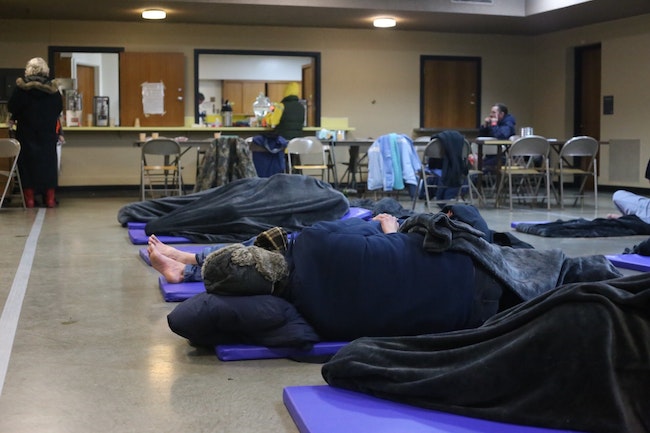
City leaders outline plan to expand police homeless service team, deploy mental health responders
City leaders plan to expand a police program dedicated to homeless outreach, increase city cleaning crews and stand up a new fire department program pairing emergency workers with mental health specialists.
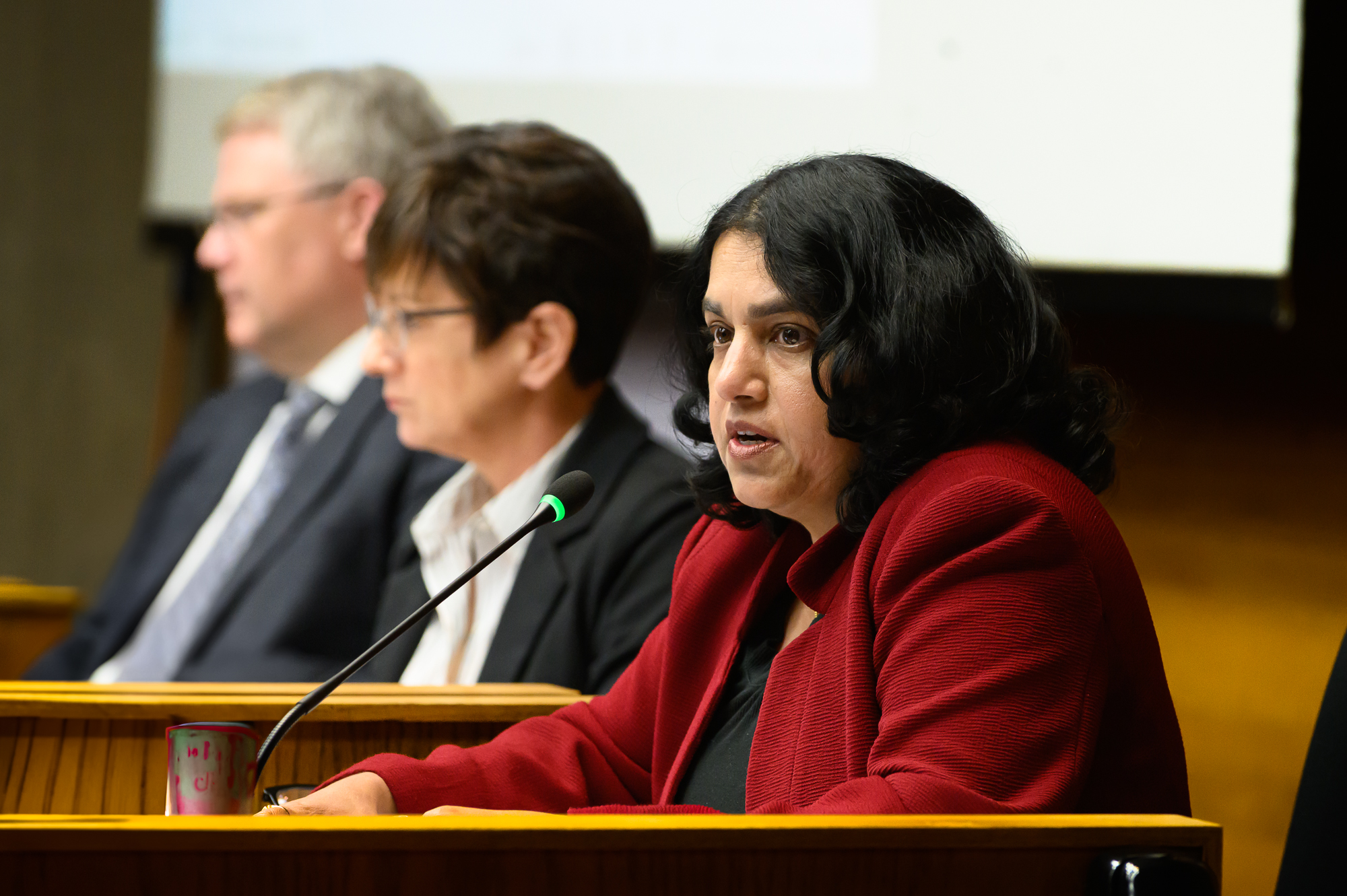
Salem city councilors discussed an early vision for both near-term and long-term plans to address issues related to safety and cleanliness downtown and in northeast Salem during a Wednesday evening work session.
The conversation focused on city plans to increase police presence and help mitigate petty crime and unsanitary conditions in the two parts of Salem where data shows most calls for police and emergency medical response are dispatched.
That comes after months of calls from business leaders for the city to do more to clean up Salem streets.
Interim City Manager Krishna Namburi said she hoped to start pilot programs sometime between Jan. 1, 2026, and July 2026.
Councilors indicated general support for the efforts, but raised concerns the city was moving too slowly.
“I think we should move as quickly as we can,” said Councilor Paul Tigan, whose ward includes downtown.
Whether Salem can begin those programs and sustain them long term depends on the city’s financial outlook and the willingness of Salem’s budget committee to pay for such services.
City staff estimated it would take about $650,000 to pay for the work from Jan. 1 to July 2026.
Longer-term costs would be $2.7 million per year.
Money for those programs could be drawn from a mix of sources, including the general fund, money the city earns from providing ambulance services, and downtown paid parking revenue.
City leaders also discussed bringing back police bike patrols after business groups raised $360,000 to help pay for two officers. The private funding was raised by the Salem Area Chamber of Commerce and the Salem Main Street Association and the city council will still have to agree to accept the funding, Namburi said Wednesday.
Here’s what city leaders discussed.
Deploying mental health workers on medical calls
Salem Fire Chief David Gerboth discussed his agency’s proposal for a new six-month pilot program that would pair a paramedic, an emergency medical technician and a mental health worker to intervene in mental health crises and behavioral health situations.
The intent is to address the small number of Salem residents who use 911 as their main form of health care and are responsible for an outsized share of the department’s calls. They are often unsheltered, struggling with substance abuse and mental health challenges and living in the downtown area, he said.
Gerboth proposed the team would operate 40 hours a week and would start downtown but would then move to northeast Salem along Lancaster Drive on a rotating basis.
Gerboth said such a team would provide appropriate care to people experiencing behavioral and substance abuse issues and would also reduce the burden of such calls on the agency.
“In some months, less than half a percent of our 911 callers create over 6% of our call volume,” Gerboth said.
The team would be capable of connecting people with programs and community support and would divert patients from Salem Hospital’s overcrowded emergency room to places like sobering centers, crisis stabilization centers and urgent cares.
He said Marion County would help offset the costs of the mental health specialist.
Gerboth said the team would be on call to help deescalate and stabilize situations where people are in crisis. The team would be in touch with organizations like Bridgeway Community Health and Northwest Human Services to help connect people with longer-term care.
“We are there for stabilization. For trying to contact and connect to our high utilizers of 911 and then we are utilizing those other organizations that take on the long-term part,” Gerboth said.
City Councilor Irvin Brown said he wanted to consider the community’s perception in any conversation regarding homelessness.
“The community is not going to grade us on how many phone calls we got or didn’t get. What the community is going to grade us on, they are going to grade us on what they can visually see,” Brown said. “If we do not fix that, it can be six months, 12 months, 36 months, it’s not going to change the outcome of the community’s perception.”
More hours for police homeless services
Salem Police Chief Trevor Womack wants to add two more officers to the department’s currently two-officer Homeless Services Team, which would allow it to operate seven days a week instead of four.
He described the team as walking the line between compassion and accountability. In addition to building connections and connecting people with services, the team would also ensure safety for city cleaning crews, lawfully remove people from unauthorized encampments, and in rarer cases, deal with serious crimes occurring in encampments.
Womack said four days a week is not adequate and that the kinds of situations his team deals with on a daily basis require constant monitoring and attention. People living in encampments are often victimized, he said.
“Some of these situations…are very dangerous. There’s sexual assaults. There’s murders…these are realities of the situation that are associated with the encampments,” Womack said. “We do have data that shows unsheltered populations in encampments are more likely to be victims than offenders, but at the same time they wouldn’t be a victim if they weren’t in the encampment. So we have to be real about the situation. And so we have to mitigate and manage that situation.”
Womack, like Gerboth, said such a team takes pressure off of other police officers, freeing them to deal with more traditional calls for service.
A 2023 city report on gun violence found homeless people made up about 20% of shooting victims and about 20% of perpetrators.
“That’s not all of our shootings but it’s a good percentage of our shootings, so there is that violent crime component as well,” Womack said. “We can help mitigate that by managing our encampment situations better and connecting people to services.”
Womack also proposed bringing back the police department’s eight-person bicycle team that would patrol downtown serving as a proactive force.
Namburi said Monday that her aim is to spend city money on proactive solutions that would reduce expenses down the line.
Womack said residents can make complaints about encampments and other homelessness related issues via the city’s online portal and that the city’s Outreach and Livability Services team will review the complaints and help direct resources accordingly.
Womack said cleaning crews attached to the city’s Outreach and Livability Services team often go hand-in-hand with the department’s Homelessness Services Team.
Once the police department’s Homelessness Services Team is able to engage with unhoused people, the Outreach and Livability Services Team comes in to clean up trash and debris. The police on site allow the cleanup to commence safely and effectively, Womack said.
Gretchen Bennett, the city’s homeless services liaison, also wants to expand city cleaning services from four days a week to seven days a week. The expansion would add two Salem Outreach and Livability Services team members to help improve cleanliness.
Next steps
City officials hope to have funding in place for services and programs by Jan. 1, though the actual rollout of new programs will take more time.
Chief Financial Officer Josh Eggleston said the city budget committee will convene on Oct. 22, and then council will have another discussion on the matter on Oct. 27.
On Dec. 8, Eggleston said, the budget committee will bring identified funding and budget changes to the council for consideration.
Correction: This article originally misstated the amount raised by private donors to fund police bike patrols. It is $360,000. Salem Reporter apologizes for the error.
Contact reporter Joe Siess: [email protected] or 503-335-7790.
A MOMENT MORE, PLEASE – If you found this story useful, consider subscribing to Salem Reporter if you don’t already. Work such as this, done by local professionals, depends on community support from subscribers. Please take a moment and sign up now – easy and secure: SUBSCRIBE.

Joe Siess is a reporter for Salem Reporter. Joe joined Salem Reporter in 2024 and covers city hall but also loves surprises. Joe previously reported for the Redmond Spokesman, the Bulletin in Bend, Klamath Falls Herald and News and the Malheur Enterprise. He was born in Independence, MO, where the Oregon Trail officially starts, and grew up in the Kansas City area.