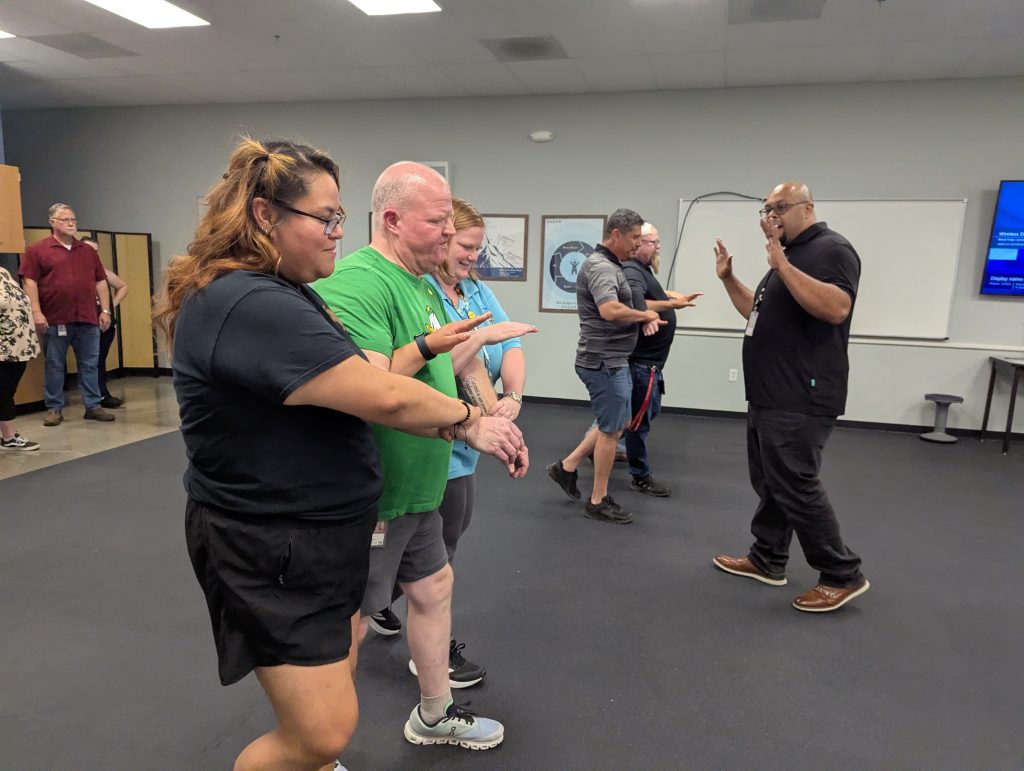
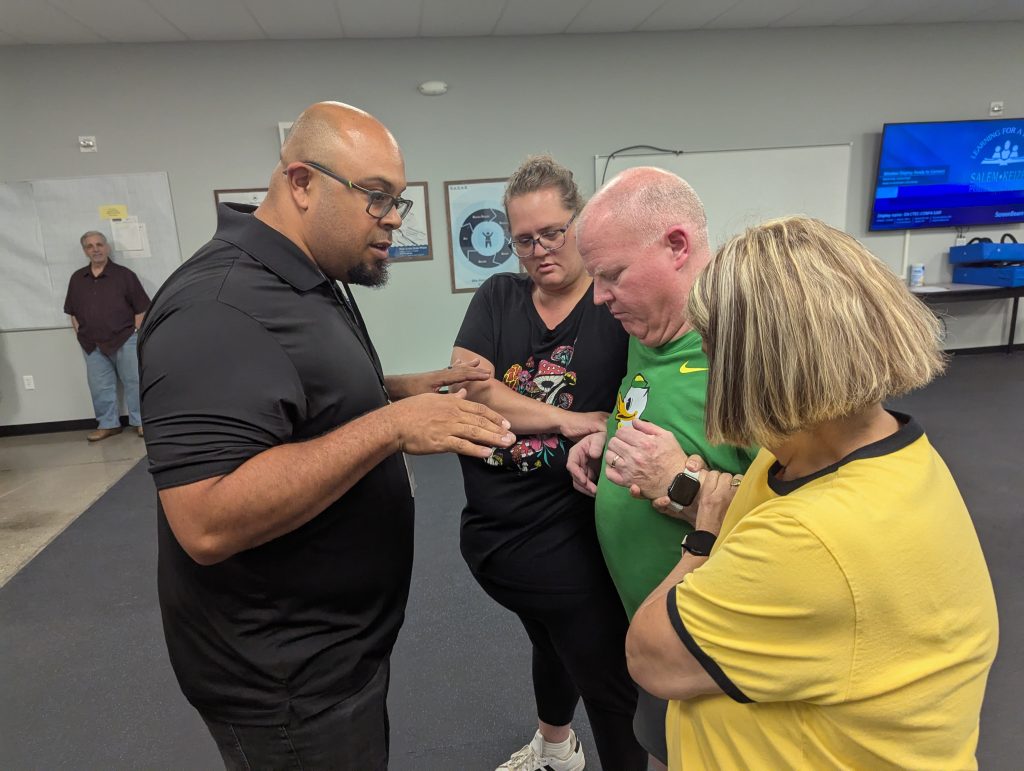
A group of bus drivers formed a circle, watching as Zach Wilson stood next to a colleague and wrapped his forearm around the man’s wrist.
On his partner’s other side, a second trainer mirrored his motions.
Wilson was demonstrating a maneuver intended to limit arm movement for a student who’s hitting or throwing things.
The secret?
“You gotta maintain control of the elbow,” Wilson said.
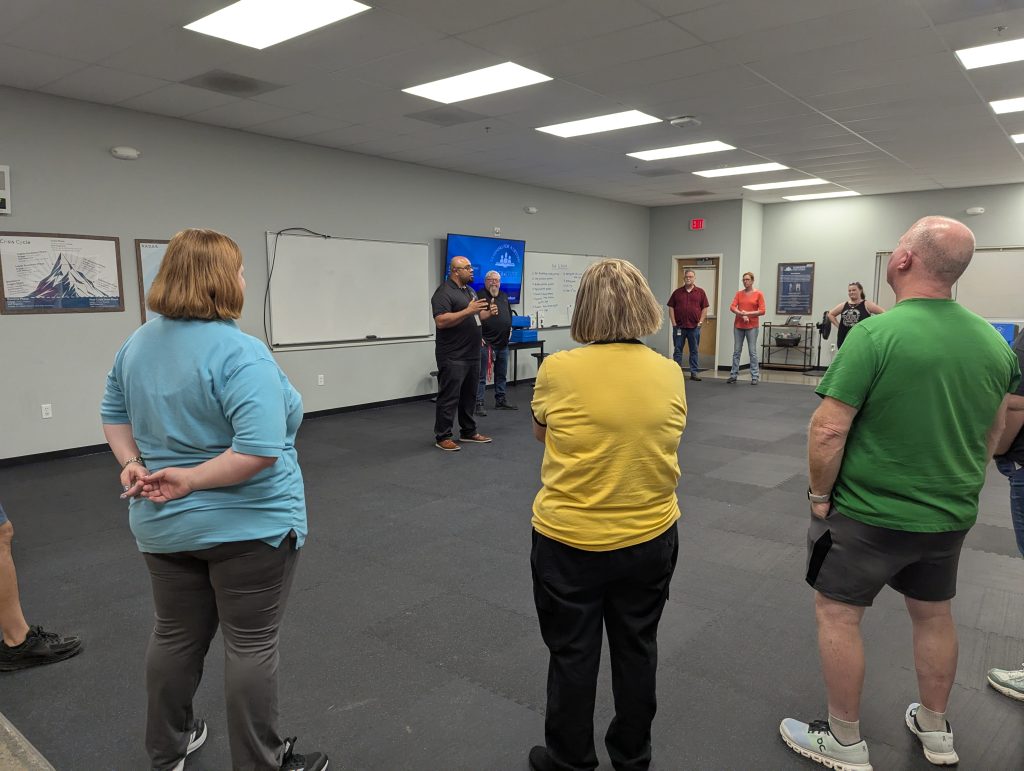
The hands-on session in July was the culmination of a multiday training that’s now standard for many employees joining the Salem-Keizer School District. About a dozen participated.
All new workers are instructed on topics including building rapport with students, managing their own emotions, helping to calm down students and deescalate potentially volatile situations.
Those in special education positions, including bus drivers, have more extensive training over a week and job shadows to prepare them for work. They’re instructed on mental health first aid, self-defense and the last resort of briefly restraining students to stop them from harming themselves or others.
Other interested employees who work with students can opt in to more extensive training too. The district has also opened its training to some community organizations who work with youth.
The training reflects a greatly expanded focus across the district on responding to students in crisis and keeping school employees safe while doing so. District employees last school year reported more than 1,400 injuries sustained while working with students, with 185 of those resulting in worker’s compensation claims.
The district employs about 5,000 people who work in 65 schools.
While schools across the U.S. face the issue, a state workplace safety review in 2023 found the Salem-Keizer School District had a particularly high staff injury rate.
“It wasn’t pretty,” said Bryon Mack, a safety officer who helps coordinate the district’s behavioral health training and response.
Framed copies of a news article about that review now sit at the desk of employees who coordinate training at the district’s behavioral health academy.
“We just came to the table and we’re like, ‘Something’s gotta change,’” Mack said.
Labor unions pushed for changes including better communication about student behavior plans and more training for workers. School district leaders have poured millions of dollars in recent years into more behavior trainers and expanding mental health programs for students who routinely act out or become aggressive.
The district has for years trained some employees in deescalating students. But over the past two years, that training has become more intensive and widespread.
Last year, the school district added a behavioral health training academy with its own classroom and hands-on training space at the Career Technical Education Center.
More than 1,300 employees received some type of behavioral health training last school year. Over 200 completed an 8-day course.
The district now employs nine trainers who focus on behavior and mental health and safety. Other employees are trained within their own departments to serve as experts who can help their colleagues refresh skills.
Before bus drivers practiced controlling one another’s arms, they watched several sobering news reports.
In one, a teacher dragged a 5-year-old girl hiding in a library bookshelf onto the floor, then kicked her in the side. The incident took place in a Kansas school in 2019.
Wilson, the lead trainer, spoke to a room of stunned bus drivers. His aim, he said, was to give them tools to notice their own reactions and avoid becoming an aggressor when faced with challenging behavior.
“It’s not if, it’s when. There is going to be a student who is going to get underneath your skin and you’re going to want to Hulk out on them,” he said. “Find a way to check in with yourself and do whatever you need to do to avoid doing something drastic and ridiculous and unacceptable like that.”
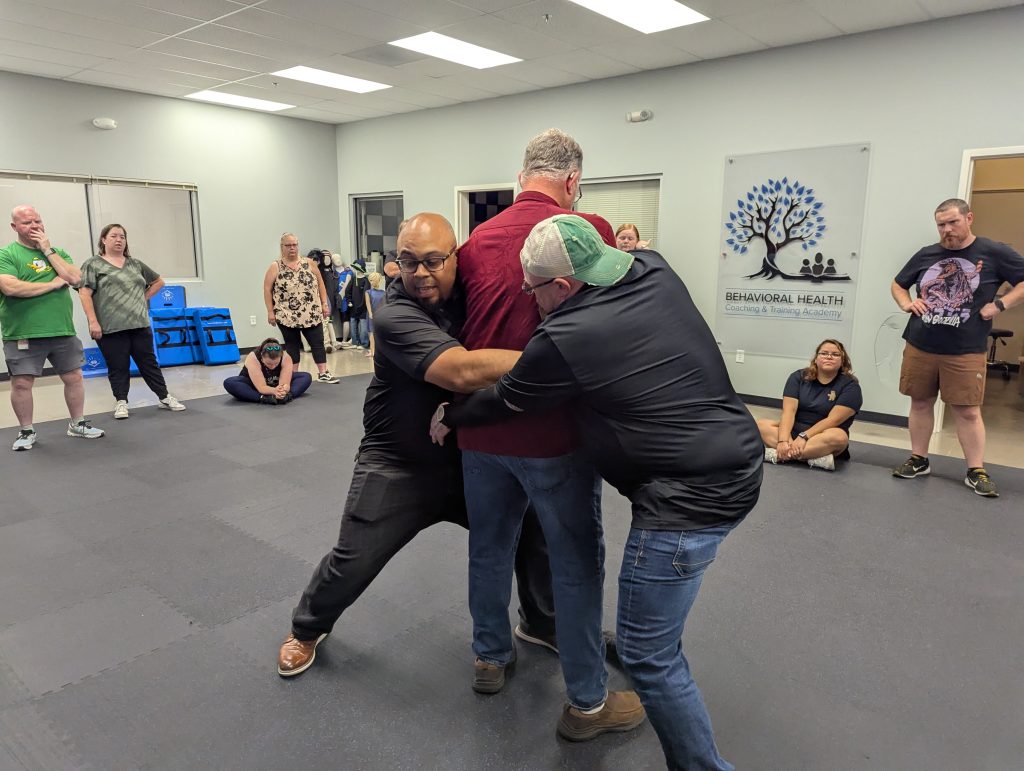
He reviewed state law, which bans restraining a student who’s facedown or on their back because of the high risk of restricting breathing or causing injury. The restraints taught in the course are done while a student is standing or occasionally sitting. They’re focused on arms, intended to briefly stop a student who’s posing an imminent risk to themselves or others. Some are solo, while others are designed for pairs.
District leaders, union leaders and rank-and-file bus drivers say the new efforts are helping.
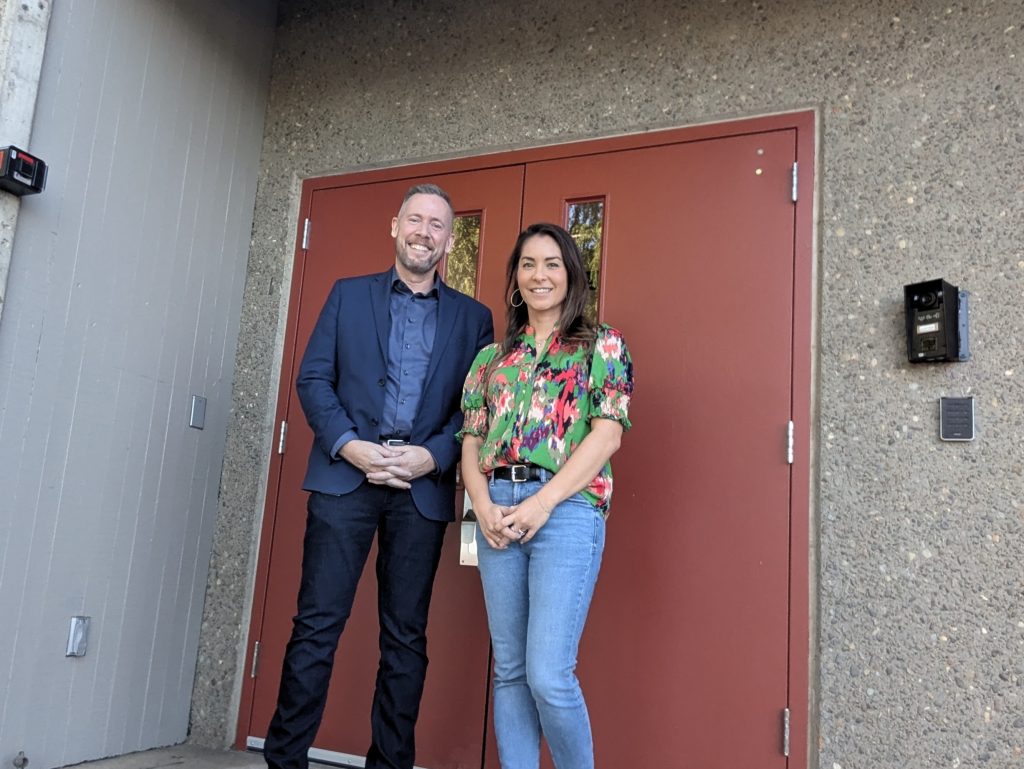
Brian Zauber Reed is a retired firefighter who now works with special education students at the district’s Behavior Intervention Center. He’s also on the board of the district’s classified employee union, and said he’s proud to see training he and other workers advocated for become more widespread.
He’s seen the payoff over the past school year in fewer injuries among employees.
“It’s really useful,” said Angie Nino Astaiza, a bus driver entering her third school year, who attended the July training.
She said she’s never had a student become aggressive on the bus, but said veteran bus drivers have told her stories about their encounters. She has had students get worked up and had to calm them down.
“It’s kind of good to have some safety resources for ourselves,” she said.
Aleyah Arnold, who’s entering her third year driving, beamed as she described her work. She loves being responsible for students on the bus, even when it’s challenging.
She used to drive a student who wore a vest on the bus to keep him buckled in.
“He was very good at getting out of it and he liked to kick us,” she recalled. “I was able to stay calm but if I’d had this training a while ago I could have been better prepared.”
Keeping employees safe and educating kids who are sometimes aggressive or violent remain significant challenges for local schools.
The school district in June paid $170,000 to settle a lawsuit over workplace injuries endured by a former special education class assistant at West Salem High School. She said she was repeatedly assaulted during the 2023-24 school year.
Reported staff injuries increased last school year to 1,478, a 9% increase. But the number resulting in worker’s compensation claims decreased by 16%. Those resulting in time off work also fell 23%, to 68 last year.
Chris Moore, the district’s director of mental health and social emotional learning, said more people are reporting even minor injuries.
“It’s exactly what we want to see,” he said. “We still have a high level of need, we still have a long ways to go, and we put some pretty actionable policies in place, programs and training, and it’s making a difference.”
He said this year, the district will use a rating scale to better distinguish between injuries that require time off work or medical care, like a concussion, versus less severe injuries, like a worker who reported a sunburn while escorting a student outside. The goal is to see the average severity of injuries fall over time, as well to decrease the total number of injuries, Moore said.
Expanded training is one initiative for addressing student behavioral challenges and mental health.
A behavior intervention program serving all students will open early next year at Straub Middle School, with space for about 45 students. That is more than double the current capacity of 17.
Students in that program can be in any grade from kindergarten through high school. They work with a special education teacher and support employees to develop skills to manage intense emotions and adjust to school. The goal is to eventually return them to a regular classroom.
Behavioral health workers will also staff a rapid response team of 11 that can come to a school in pairs when educators are having a challenging time with a student. Their aim is to respond to requests within 24 hours, but that could be faster depending on the need and severity of the issue, Moore said.
The school district now employs about 50 people to address student behavior between Moore’s team and educators in the Behavior Intervention Center.
And more data monitoring is helping those workers pinpoint problem areas and offer support, Moore said. A recent district analysis found 65 to 70 students responsible for the vast majority of serious injuries to employees.
Feedback from employees on the longer training course has been 98% positive, Moore said, and some workers who left the school district over concerns about their safety have since returned.
“We’re also hearing that it’s still hard out there too. We still have students whose needs far exceed our supply of resources, but we’re hearing a trend in the right direction,” Moore said.
Contact reporter Rachel Alexander: [email protected] or 503-575-1241.
A MOMENT MORE, PLEASE– If you found this story useful, consider subscribing to Salem Reporter if you don’t already. Work such as this, done by local professionals, depends on community support from subscribers. Please take a moment and sign up now – easy and secure: SUBSCRIBE.

Rachel Alexander is Salem Reporter’s managing editor. She joined Salem Reporter when it was founded in 2018 and covers education, economic development and a little bit of everything else. She’s been a journalist in Oregon and Washington for over a decade and is a past president of Oregon's Society of Professional Journalists chapter. Outside of work, you can often find her gardening or with her nose buried in a book.