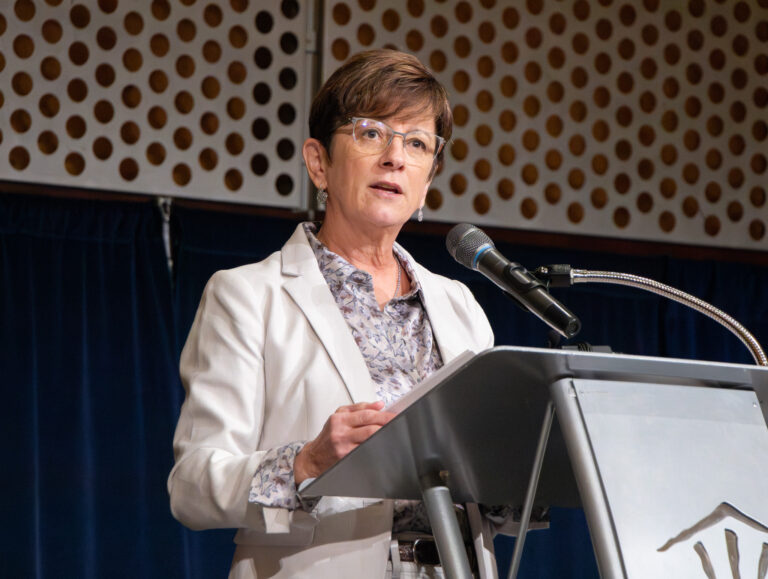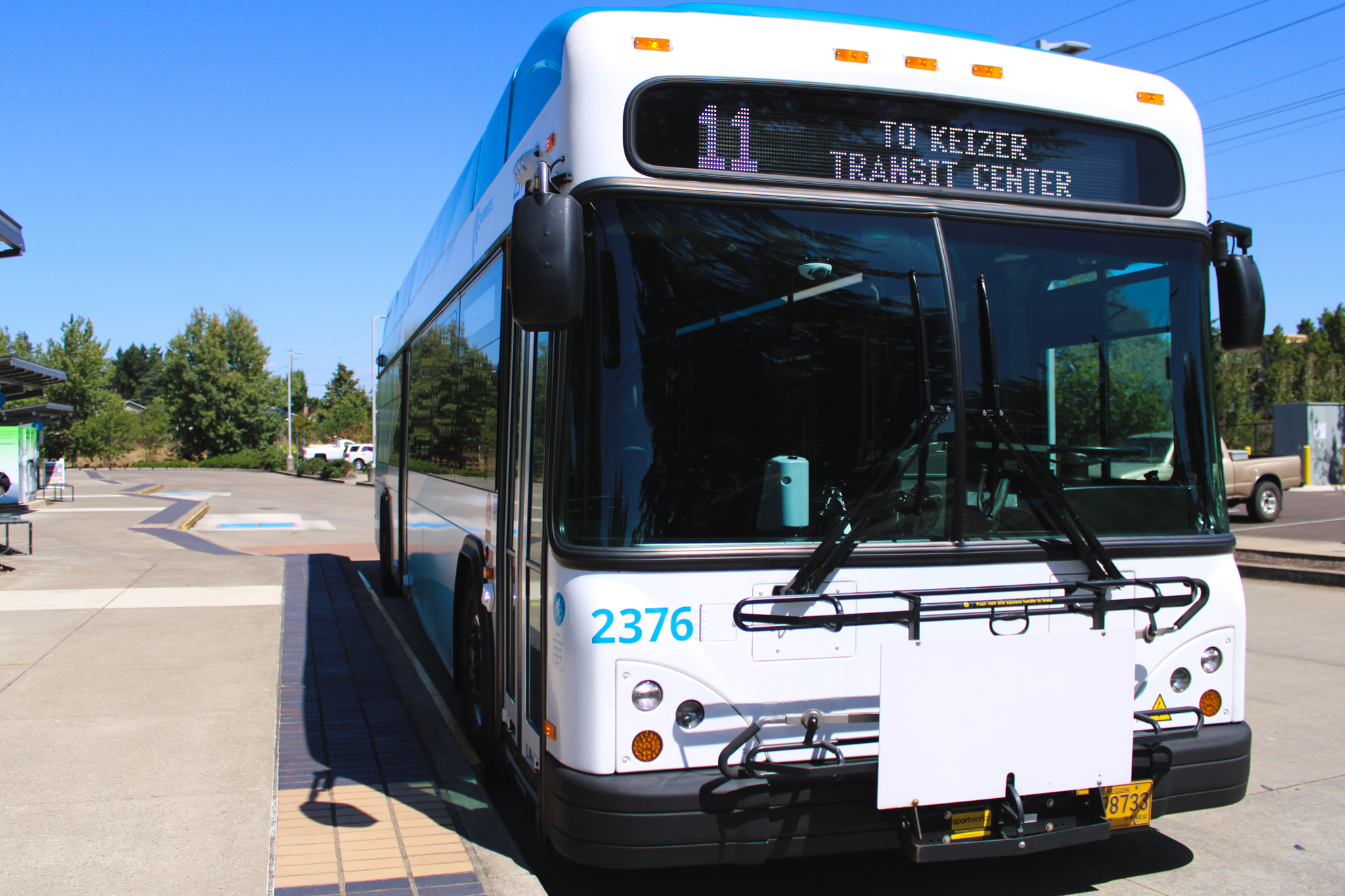
The Keizer City Council is opposing a new payroll tax intended to sustain and expand mass transit in Keizer and Salem. It is the first local government to do so.
Councilors voted unanimously on Monday, Aug. 18, to oppose the tax. They offered differing reasons and Council President Shaney Starr abstained, citing a potential conflict with her role at the Keizer Chamber of Commerce.
The charge against the tax was led by Councilor Soraida Cross.
“Anybody that knows me knows that I’m completely against taxes that aren’t voted on,” she said in proposing the council action.
The Salem Area Mass Transit District recently floated the plan to impose a new payroll tax of .7% on employers within the district boundaries. District officials estimate the tax would raise $39 million to add to its current budget of $155 million.
The transit board has yet to formally impose the tax, which it can do without a public vote. Transit officials, however, have been presenting details of the funding plan, including an online presentation.
The plan maps out increasing the frequency of most bus routes so more stops are covered every 15 minutes. The district also wants to add a transit center in south Salem.
Business leaders in the area have been objecting, and their concerns made it to Keizer councilors.
Jenn Benavidez is the business development specialist for SERVPRO of West Salem and on the board of the Keizer Chamber of Commerce. She said the firm employs 150 people and the new tax would be a burden. She noted her company serves small businesses.
“I work with a lot of businesses that really cannot afford another tax,” she told councilors.
She said transit officials recently shared plans with local business owners, underscoring their success with local ridership – 3.3 million rides in 2024. Some transit district board members attended the private forum held recently by the Salem Area Chamber of Commerce.
“The board kind of sucker punched us with oh, we’re doing great but now we get to throw this on the businesses,” Benavidez said.
She said the transit district has $49 million in reserves it could use.
Transit officials later said the district is budgeting $42 million for reserves in the current budget year. They said restrictions limit the use of $12 million of that, and that $30 million would be used to fund operations while the district awaits its disbursement of property taxes. Budget documents show the district has cut its reserves from $62 million three years ago.
TJ Sullivan, a former Salem city councilor who is in the insurance business, took the tack that taxing businesses would harm nonprofit organizations. He said they count on business support.
“We have a robust network of nonprofits,” he said.
He said the tax would mean businesses collectively would have to shift an estimated $39 million from their operations to cover the new tax.
“Don’t think that’s not going to have an impact on nonprofits,” he said.
He asked Keizer councilors to “discourage” the transit district, adding, “Now is not the right time.”
Kathy Lincoln of Keizer, who served a term on the transit board ending in 2019, asked councilors not to do that.
“It’s not nearly as catastrophic as it sounds,” she said.
She said many people in Keizer rely on public transit and even more would do so if Cherriots buses run more frequently.
“Remember, you represent all people in Keizer, not just businesses,” Lincoln said.
Councilors also considered written testimony from local business owners, who uniformly opposed the transit tax.
Jonathan Thompson of Northwest Dental Arts in Keizer said the proposed tax is “another tax in a long line of taxes and fees placed on our small business.” He estimated the tax would cost his company $4,000 a year.
Salem businessman Patrick Carney wrote: “Scale back, live within your means or disband Cherriots.”
Jerry Jones, owner of the Salem real estate services company Sperry-Pikes Northwest, wrote to councilors that “the costs of doing business in Oregon are out of control.”
Cross said she was concerned that state legislators were to consider increasing a state payroll tax for transit during a special session scheduled for September.
A package to bolster the state Transportation Department would increase the tax paid by employees from $1 per $1,000 of wages to $2.
Cross said for Cherriots now to plan to tax businesses on payroll would “essentially” be a “double dip.” She said the transit district would gain up to $10 million a year if the state tax increase occurs.
Transit officials confirmed her figure.
Cross also noted that directors on the Cherriots board “are getting compensated.” Keizer city councilors are not paid.
In an email to Keizertimes, Allan Pollock, Cherriots general manager, confirmed that four of the seven board members collect an annual stipend of $5,733. Such stipends were established by the board in 2021.
“The purpose of the policy was to help enhance board member recruitment, retention, diversity, and fair compensation with an understanding that public service should be attainable to everyone and that representative democracy should be representative,” he wrote. “The compensation is a stipend and is voluntary to accept.”
When it came time to vote, Councilor Dan Kohler questioned why no one from the transit district appeared at the council meeting.
City Manager Adam Brown said he informally advised Pollock the previous Friday that the topic would be before the council. Hours before the meeting, Pollock messaged the city, asking that the council delay acting on the tax until transit officials could make a presentation.
“We were not officially informed about an item concerning us or requested to provide information in order for the council to make an informed decision,” Pollock wrote to Keizertimes.
In discussion before the council vote, Councilor Lore Christopher said she was opposing the tax because she believes new taxes should come only with a public vote. Voters in 2015 turned down a transit payroll tax.
Councilor Marlene Parsons said she was opposed because she was concerned about the transit district’s reserves.
Mayor Cathy Clark said she was opposing the tax because she wanted to await the outcome of the legislative special session to learn how much more state money the transit district would get.
Councilor Kyle Juran joined the opposition vote, noting his frustration with the comments of Cherriot officials at the recent Salem business forum.
CORRECTION: Kathy Lincoln ended her service on the board of the Cherriots in 2019. An earlier version of this story incorrectly reported when her service ended. Keizertimes apologizes for the error.
PREVIOUS COVERAGE:
This article was originally published in the Keizertimes, which shares ownership with Salem Reporter. Contact Keizertimes at [email protected].
News tip? Email [email protected].
A MOMENT MORE, PLEASE– If you found this story useful, consider subscribing to Salem Reporter if you don’t already. Work such as this, done by local professionals, depends on community support from subscribers. Please take a moment and sign up now – easy and secure: SUBSCRIBE.

Les Zaitz is editor and CEO of Salem Reporter. He co-founded the news organization in 2018. He has been a journalist in Oregon for nearly 50 years in both daily and community newspapers and digital news services. He is nationally recognized for his commitment to local journalism.