Programs in Salem that rely on federal money to educate the children of migrant agricultural workers and recruit and train teachers will continue this school year despite an abrupt Trump administration decision to withhold millions of dollars for such programs already appropriated by Congress.
The Salem-Keizer School District would have received about $6 million from the federal government for those programs for the coming school year, Superintendent Andrea Castañeda told the school board during a July 8 meeting.
“Despite the federal uncertainty and rashness of federal action, Salem-Keizer Public Schools maintains the reserves to ensure that the staff who are federally funded will continue to be funded throughout this school year,” she said.
But if the federal cut is permanent, using district money instead is “not a long-term and sustainable commitment,” she said.
U.S. Department of Education officials notified state education departments June 30 that the agency would not distribute $6.8 billion in money earmarked for five federal education programs, Education Week reported.
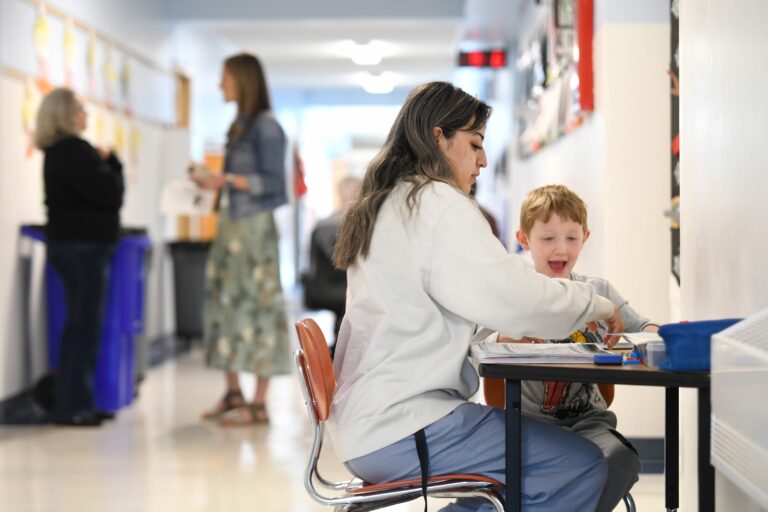
Salem schools use that money to pay for summer school for migrant students, teacher training and recruitment and help for students with limited English skills, among other things.
Oregon would have received about $73 million from those programs, Oregon Department of Education spokeswoman Liz Merah said.
Oregon Attorney General Dan Rayfield is joining a coalition of state attorneys general suing the Trump administration over the withheld money.
Not all federal money for public schools was withheld. So-called Title I money, which pays for extra teachers and employees at schools with a high share of students from low-income families, is still flowing.
About 159 full-time district workers are paid through federal money, district spokesman Aaron Harada said, though he didn’t have a count of how many are paid through the programs seeing funding freezes.
Castañeda said more broadly, cuts in “Big Beautiful Bill” that President Donald Trump signed into law earlier this month will profoundly impact the district’s most vulnerable students, including the children of migrant workers, those struggling with poverty and those who rely on Medicaid.
The bill cuts taxes for individuals and businesses while partially paying for those cuts through large reductions to Medicaid, food assistance and other social service programs.
“It does not require a discerning policy eye to see the rash inhumanity of these cuts,” Castañeda said. “These are reductions aimed absolutely at our most vulnerable populations.”
Contact reporter Rachel Alexander: [email protected] or 503-575-1241.
A MOMENT MORE, PLEASE– If you found this story useful, consider subscribing to Salem Reporter if you don’t already. Work such as this, done by local professionals, depends on community support from subscribers. Please take a moment and sign up now – easy and secure: SUBSCRIBE.

Rachel Alexander is Salem Reporter’s managing editor. She joined Salem Reporter when it was founded in 2018 and covers education, economic development and a little bit of everything else. She’s been a journalist in Oregon and Washington for over a decade and is a past president of Oregon's Society of Professional Journalists chapter. Outside of work, you can often find her gardening or with her nose buried in a book.