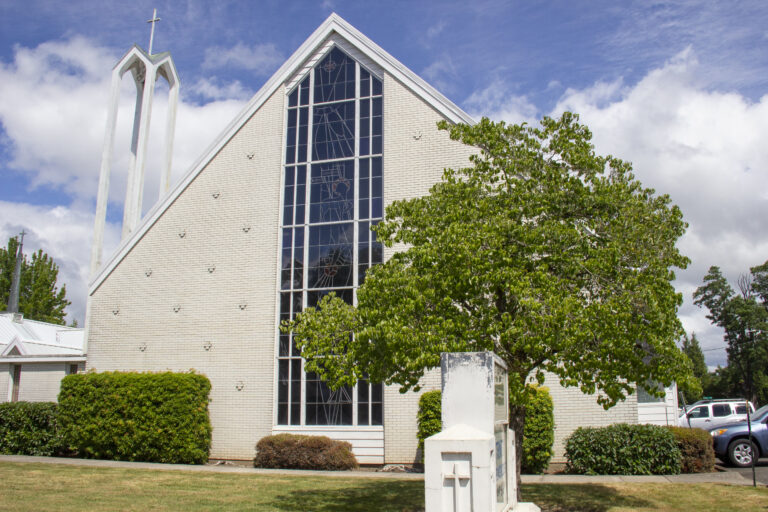
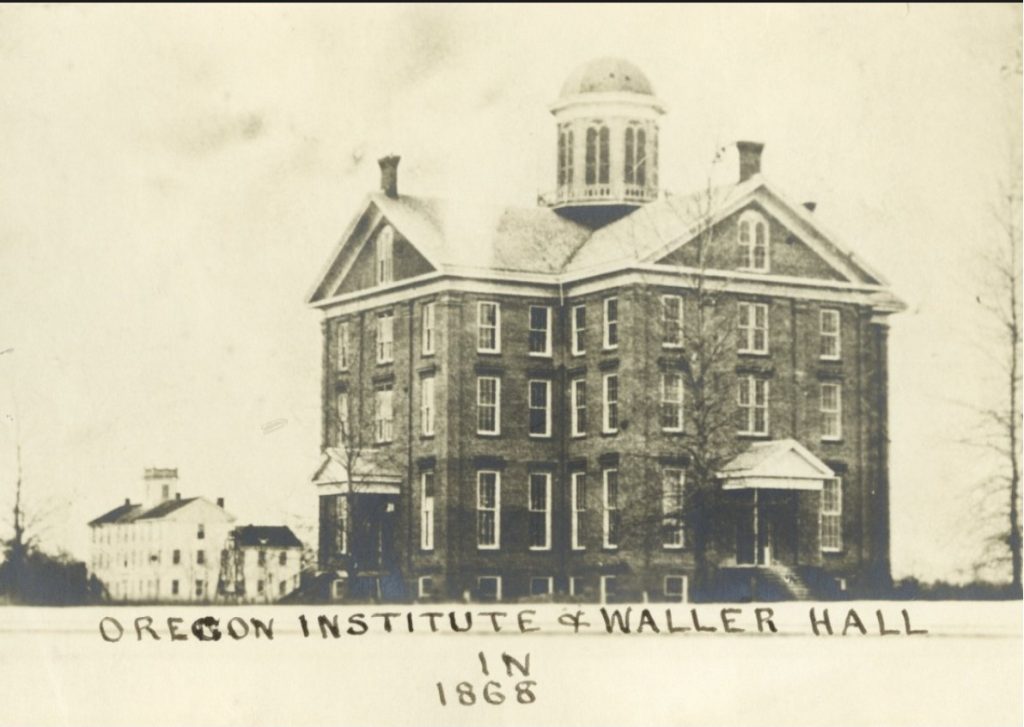
The lost, three-story Indian Manual Labor Training School can be seen in tauntingly plain sight in an 1868 photograph.
After its completion in 1842, Methodist missionaries used the building and surrounding fields to educate Indigenous children in Christianity and obedience. Boys worked at the farm while girls were tasked with cooking and cleaning. The children were prevented from speaking their native languages and suffered cruel punishments, malnutrition and disease, according to an application to the National Register of Historic Places by Kimberli Fitzgerald, the city of Salem’s archaeologist. Many of the children died from the abuse.
The school disbanded two years later, when the mission closed. It became a school for settler’s children, called the Oregon Institute, then a Willamette University building. A fire destroyed it in 1872.
A team of about 25 archaeologists and volunteers will spend the next several weeks digging at Willamette University. They’re continuing to look for evidence of the historic building beneath more than 150 years of soil.
Ultimately, Fitzgerald hopes to turn the site into a place of healing, acknowledging a history that continues to cause harm, she said. The archaeological evidence will help illuminate the experience of the Native children within a historical record that’s dominated by the written perspectives of the Methodist missionaries.
“To understand that history, and to not repeat it,” Fitzgerald said.
Once they find the building, Fitzgerald said the city will work with the Confederated Tribes of Grand Ronde to memorialize it. She’s not sure what that will look like, yet, but it could be anything from a plaque to an annual remembrance like Qingming, which takes place at a historical Chinese shrine uncovered in Salem Pioneer Cemetery.
This year, they’re using more gadgets than ever before in their search for the foundation.
The search for the school and a parsonage built around the same time began in 2022. They believe the parsonage sat on what’s now Willamette Heritage Center.
This year, Fitzgerald is continuing the search for the school building alongside archaeologists from the Grand Ronde Tribe, the Oregon Archaeological Society and students from Willamette University, Portland State University, the University of Oregon and Oregon State University. The work is funded by grants from the National Parks Service, Oregon Preservation Office and Oregon Archaeological Society, according to the city website.
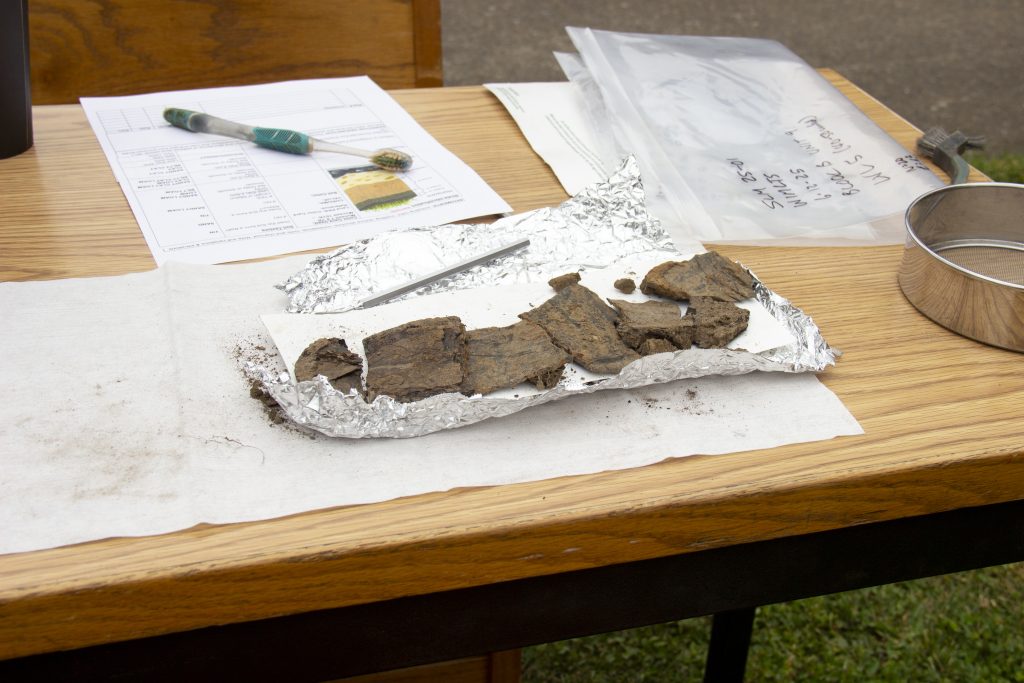
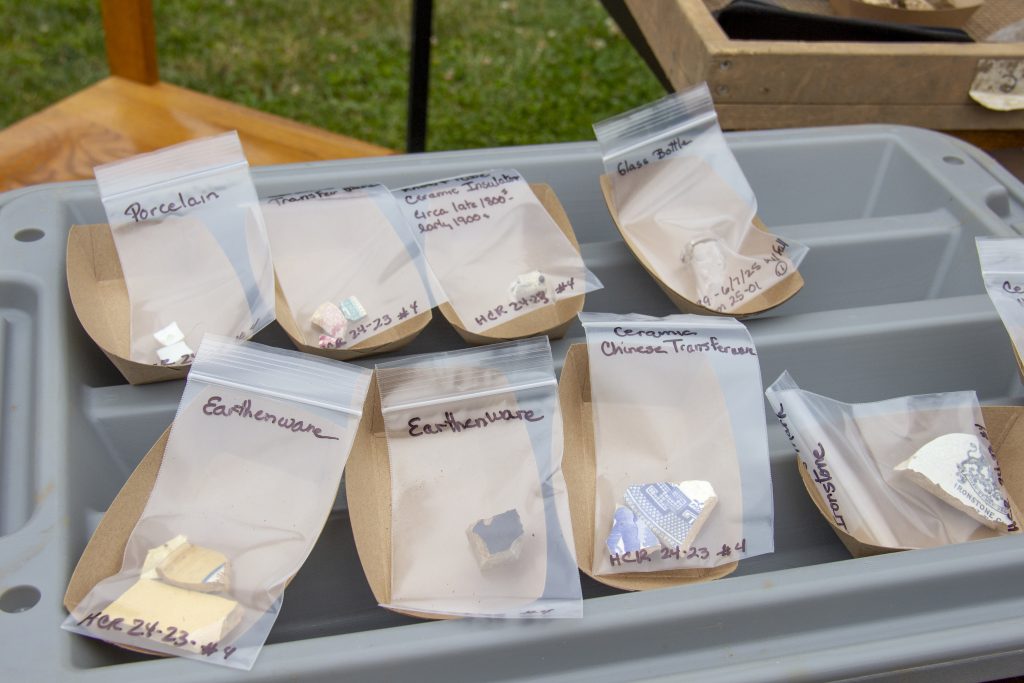
During an open house on June 13, visitors got to speak directly with the team about what they’d uncovered. A welcome table included a historic photo album, artifacts and recent finds, like bones from roaming pigs known to wreak havoc in the area at the time.
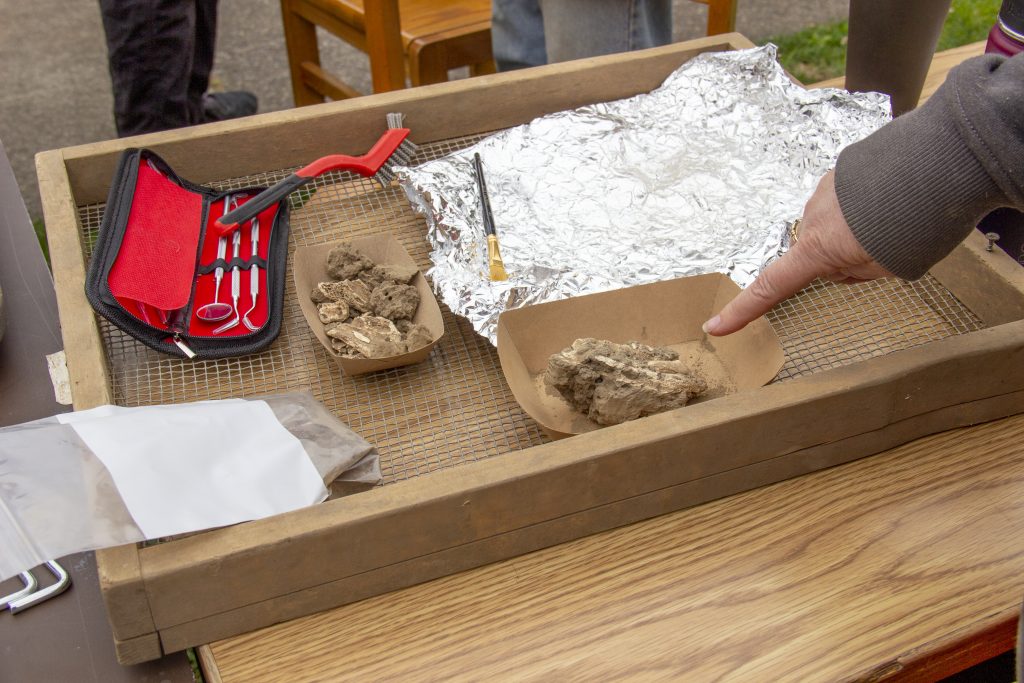
In the past week, the team has already found the remnants of three shoes. While they plan to further test the finds, Fitzgerald said they know the students were required to make shoes as part of the labor.
Such finds are guiding the decisions around where to dig deeper to look for the school’s foundation. On Friday, much of the discussion between archaeologists was theorizing which university construction projects of the past century had disrupted an otherwise neat stratigraphy.
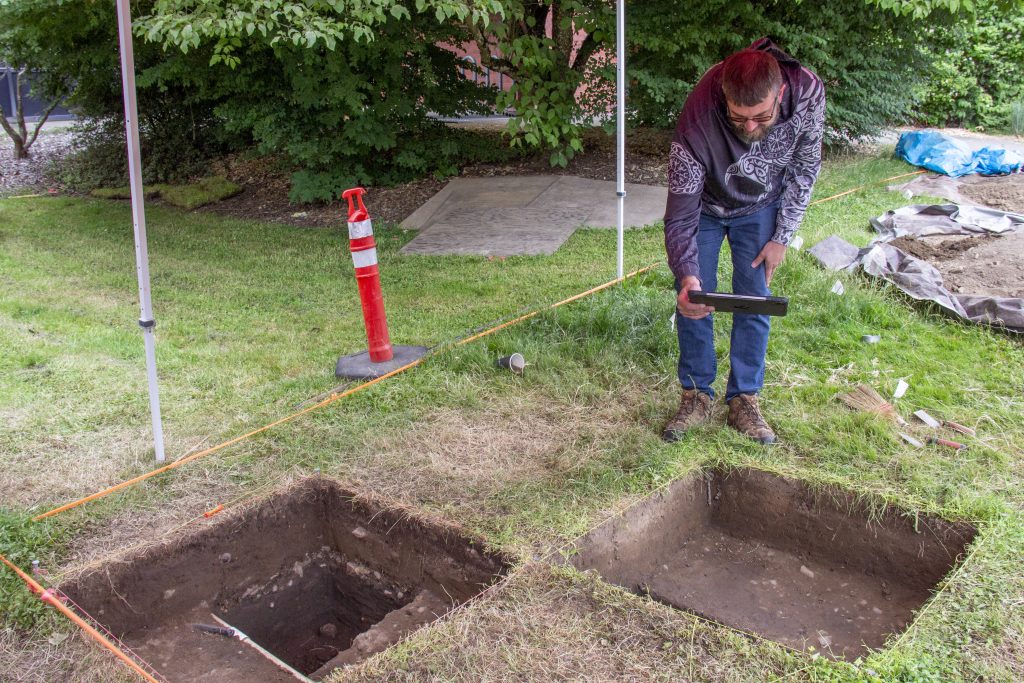
“You can see here we ran into an irrigation pipe,” Fitzgerald said, pointing to tubing in the hole where a crumbled shoe was unearthed. That pipe ended up fitting nicely into the dig, though, she said, evenly bisecting one of the square excavation holes at 50 centimeters.
While she spoke, Grand Ronde Archaeologist Jeremy Johnson scanned the holes with his iPad’s camera. Within moments, it created a 3-D, digital scan of the holes. It’s one of several tech upgrades for the project this year.
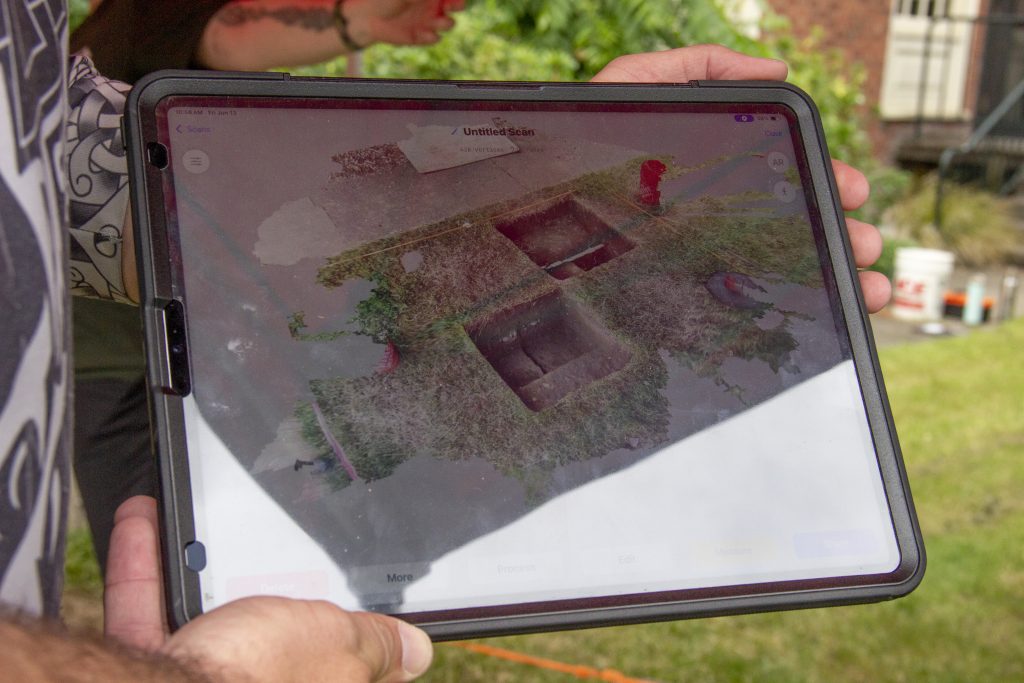
Inside a classroom, stations allowed the archaeologists to dry out soil samples in what looked like an industrial Easy-Bake Oven before placing them in a lit box. They then photographed the samples with an iPad which identified the soil’s exact color and logged it into a shared database.
“Every year before we’ve just done it by hand, where you figure out the color of your soils by using the Munsell soil book,” Fitzgerald said, referring to a printed chart with colored gradients that archaeologists hold up to soil and match to the best of their visual ability. This year, the iPad app bypasses human error or disagreement about which color is which.
But institutional, human knowledge will still play a big role in the search. One of the visitors on Friday was David McCreery, a longtime Willamette professor and archaeologist who retired in 2015. Within minutes of arrival, he was crouching by one of the sites and had pulled the attention of a circle of archaeologists and community members by sharing his knowledge of the site’s history.
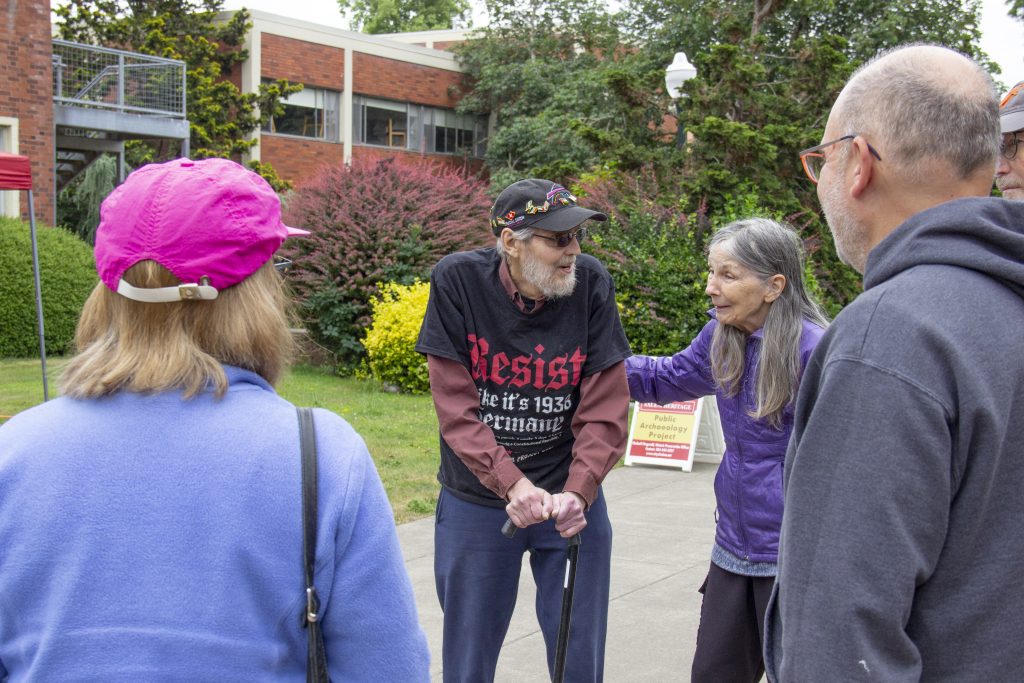
McCreery was a welcome sight for Fitzgerald. He’d done some archaeological work at Willamette University over two decades ago, unearthing bricks and later saving them from being disposed of for taking up space. He joined Fitzgerald and historians inside to look through the boxes labeled “Oregon Institute.”
“They said throw them out, but I don’t throw anything out,” McCreery said, examining a brick.
Fitzgerald showed him a thin brick they’d set aside, stamped with a brick maker’s mark featuring writing and a logo. McCreery’s knowledge quickly surfaced.
“You’ll see the brick maker mark on the bricks that are used on Eaton Hall. Of course, that’s somewhat later. Eaton was built in 1906…”
The two began sharing knowledge back and forth, and a Willamette student held open a book of historical maps for McCreery to examine.
“Do you have any idea where the outbuilding was?” McCreary said, peering at a map.
Fitzgerald’s head whipped up in excitement. Finding the school’s outbuildings is one of her main goals for the coming weeks. “No, do you?”
“No,” he said, and they both laughed.
But, Fitzgerald is hopeful that they’ll find the school, and the outbuildings. They’ve already found artifacts from the time period, and they’ll be looking for another few weeks.
“I’m an optimist. I’m convinced we’re going to find it. I think that David did find a portion of it,” she said, motioning to the bricks. “It was a big building. I don’t believe that it’s all gone. I think it’s still there for us to find.”
Contact reporter Abbey McDonald: [email protected] or 503-575-1251.
A MOMENT MORE, PLEASE– If you found this story useful, consider subscribing to Salem Reporter if you don’t already. Work such as this, done by local professionals, depends on community support from subscribers. Please take a moment and sign up now – easy and secure: SUBSCRIBE.

Abbey McDonald joined the Salem Reporter in 2022. She previously worked as the business reporter at The Astorian, where she covered labor issues, health care and social services. A University of Oregon grad, she has also reported for the Malheur Enterprise, The News-Review and Willamette Week.