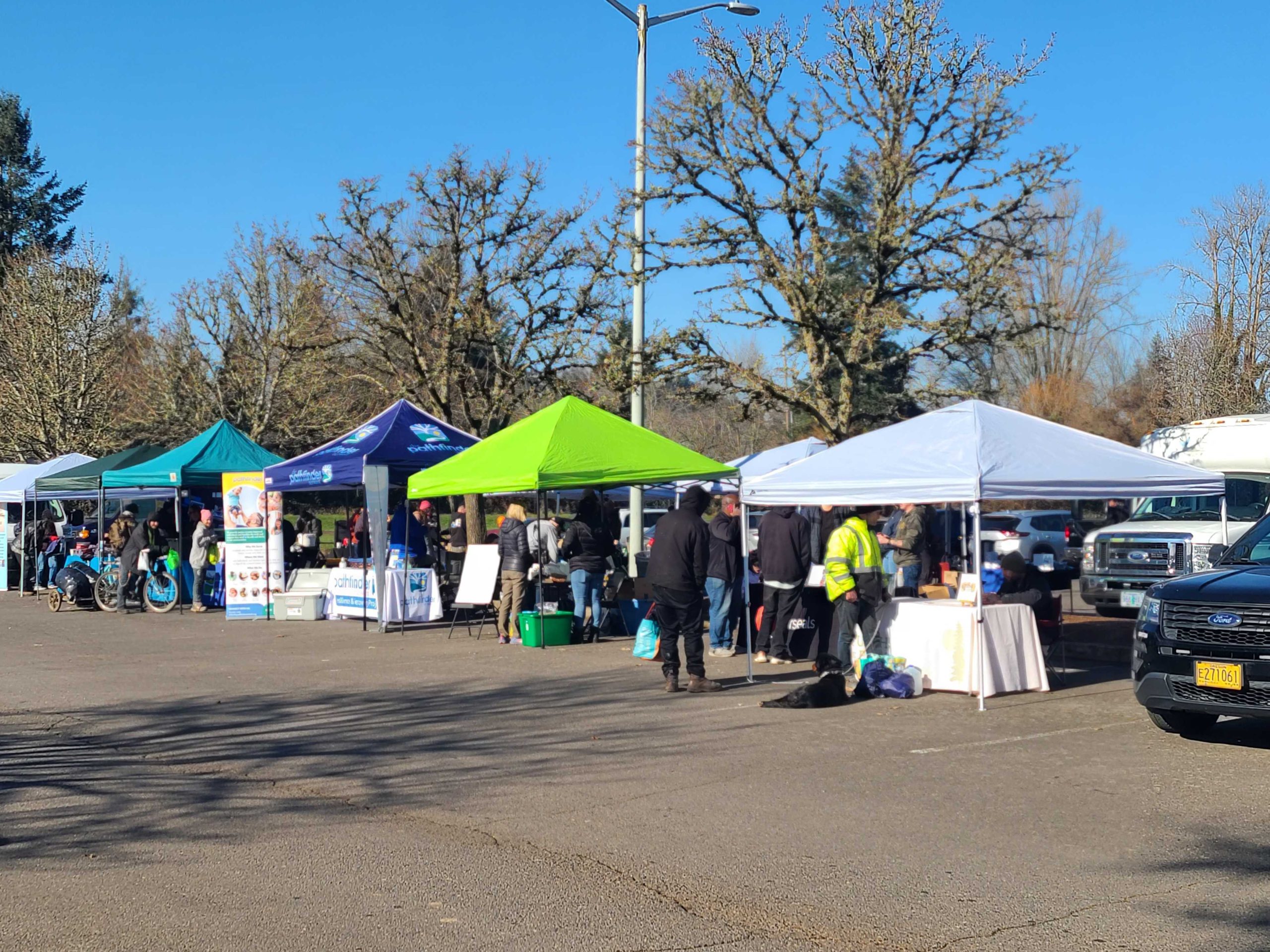
Outside of Salem, it’s uncommon for a worker from a housing authority to greet an unsheltered person on a sidewalk or in an encampment.
But for eight years, the Salem Housing Authority served a unique role in the community, going beyond their expected role of helping people pay rent and preventing evictions. The agency’s staffers were working in camps and on the streets to help pull people out of homelessness and into apartments.
That work, which laid the foundation for how Salem nonprofits connect with and house unsheltered people, will end in May. There isn’t enough money to keep going.
As the housing authority’s program ends, a community-wide team of outreach services remains among community nonprofits which the Housing Authority helped build, including at the Mid-Willamette Valley Community Action Agency.
But that team is losing its quarterback, said Jimmy Jones, the action agency’s executive director.
“In some ways, they were that valuable because they did have access to housing authority vouchers, they did have housing authority services,” that connected people with rent help and an apartment, Jones said.
The Salem Housing Authority’s Special Programs Outreach Team began in 2017, with a $1.4 million grant from the city of Salem. It allowed the housing authority to begin working directly with unsheltered people, connecting them with housing, employment, life-skills training and a year of rent help for an apartment.
Since then, they helped at least 313 people move off the street and into permanent housing, said Nicole Utz, the Salem Housing Authority’s housing administrator.
The city paid for part of the program each year, but cut the funding from its budget last year, a total of $625,000. The housing authority continued the program for another year with the remaining budget, federal vouchers and using state funds that will run out in June, said Utz.
Utz said they’ve been trying to keep the program.
“But if the funding is not there, we can’t continue to support that activity. We don’t have the resources to maintain it,” she said.
Utz said the program filled a gap in a city that, at the time, was still a few years away from the city’s rapid expansion of sheltering and homeless service options.
“It’s unique that a housing authority has their own outreach team,” Utz said. “We were very compelled during a period of time when there wasn’t a lot of teams.”
Historically, housing authorities have worked more like landlords rather than focusing on homeless services, said Jones.
“They were built and designed to be a housing resource for low-income individuals who were not necessarily homeless. They didn’t really run supportive services,” he said. “So having (Salem Housing Authority) change their outlook, their perspective, their mission, their alignment toward addressing this homeless problem has been a great grace to the entire community.”
Last year, over two-thirds of participants in the program, which included a year’s worth of help with rent and getting employment, connecting with medical appointments and more, moved into housing choice voucher programs. The agency used federal grants to help people pay rent.
All of those graduates remain housed today, Utz said.
The team also linked 200 people to services in the community over a year and a half, by meeting with them and asking questions designed to help case managers figure out the next steps toward permanent housing and health care.
The housing authority’s staff also helped 275 households fleeing domestic violence and moving off the streets.
Utz said the program’s legacy is shown in the way Salem’s homeless resources now collaborate to help support the most vulnerable people in the community.
“While this marks the end of a chapter, it is also a moment of pride,” she said.
During a meeting Monday, Utz thanked the work of the 13 people who have worked in the program through the years. The two case managers and two program managers currently working have been offered other jobs at the housing authority, Utz said.
“Their compassion, dedication and resilience have built a legacy of care and connection that will not be forgotten,” Utz said.
They plan to keep their compassion action response unit, a renovated ambulance that serves as a mobile office. They can respond, for instance, to emergencies like an apartment complex fire displacing many people at once.
Utz said the housing authority is shifting its focus, including participating in a state pilot program allowing people on the Oregon Health Plan to get help with things like rent, air conditioning and accessing healthy foods. They’re also planning to build a resident services team to help people facing eviction.
Utz said they will still provide information and resources to unsheltered people, but not in the field.
There’s been a shift in need in recent years, Utz said. More often, the housing authority’s waitlists are being filled with people who need additional support that property managers can’t provide.
“It’s another type of outreach, but it’s not homeless outreach in the camps. What we’re trying to do is ensure that people who are now housed can remain stably housed,” she said.
Contact reporter Abbey McDonald: [email protected] or 503-575-1251.
A MOMENT MORE, PLEASE– If you found this story useful, consider subscribing to Salem Reporter if you don’t already. Work such as this, done by local professionals, depends on community support from subscribers. Please take a moment and sign up now – easy and secure: SUBSCRIBE.

Abbey McDonald joined the Salem Reporter in 2022. She previously worked as the business reporter at The Astorian, where she covered labor issues, health care and social services. A University of Oregon grad, she has also reported for the Malheur Enterprise, The News-Review and Willamette Week.