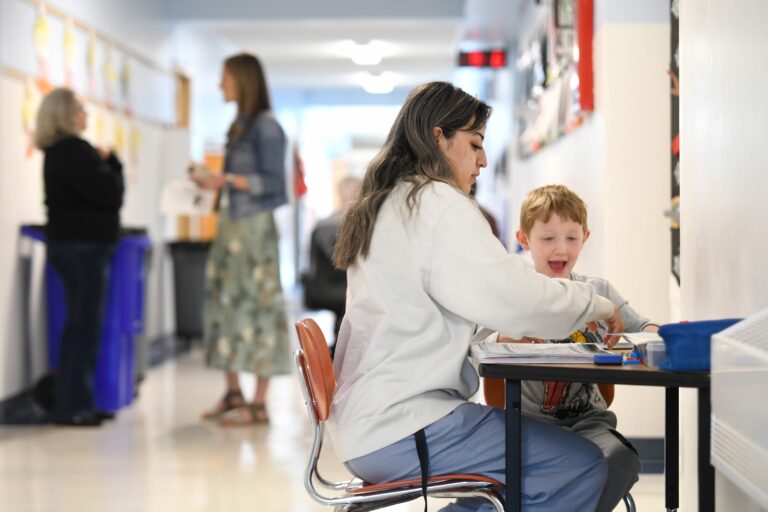
Nearly half of third graders in local elementary schools are reading at the level expected for their age, giving Salem-Keizer School District leaders hope of better performance on Oregon’s standardized tests in the spring.
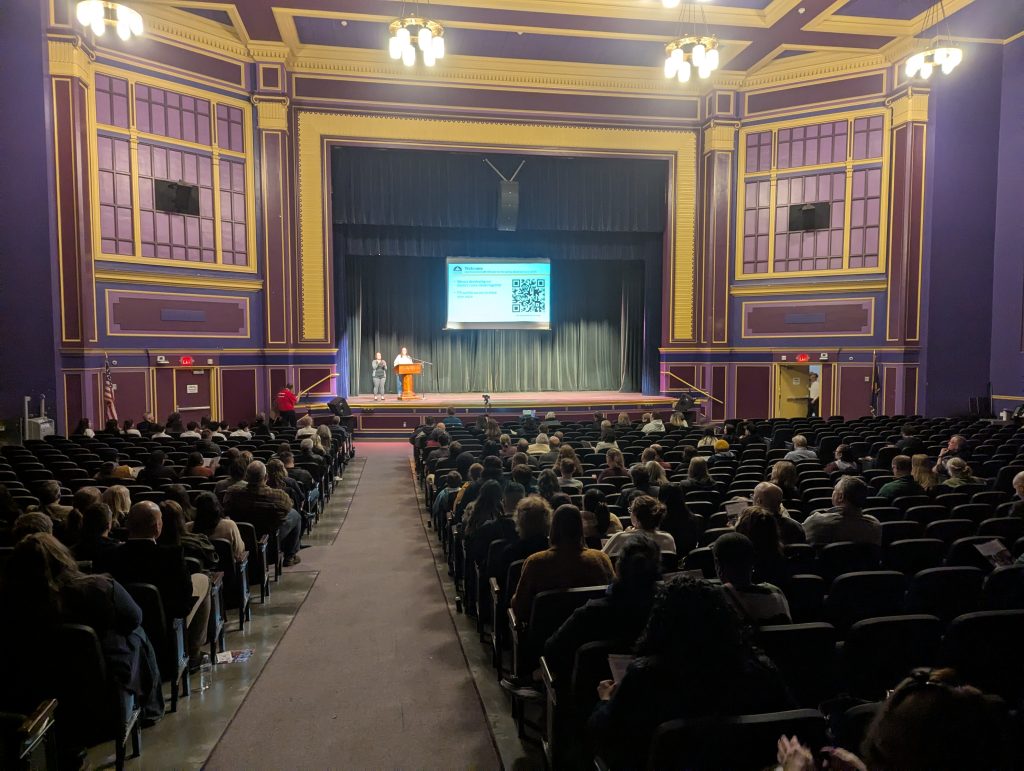
That was one of the takeaways from a Tuesday evening public presentation from district leaders, which drew several hundred attendees to the auditorium at North Salem High School. State tests last spring showed just one in four third graders were reading at grade level — a number that’s been falling since the Covid pandemic.
“As educators and as community members, as family members, this causes concerns and a sense of urgency,” Deputy Superintendent Olga Cobb told the room. “We need to change this outcome, no excuses. Our students can do it.”
This year, the district’s internal tests show numbers are looking up, with 46% of third graders reading at or above the level they should be. It wasn’t clear from the presentation if those numbers reflect English or Spanish-language tests for native Spanish speakers, and district leaders did not respond to follow-up questions Wednesday.
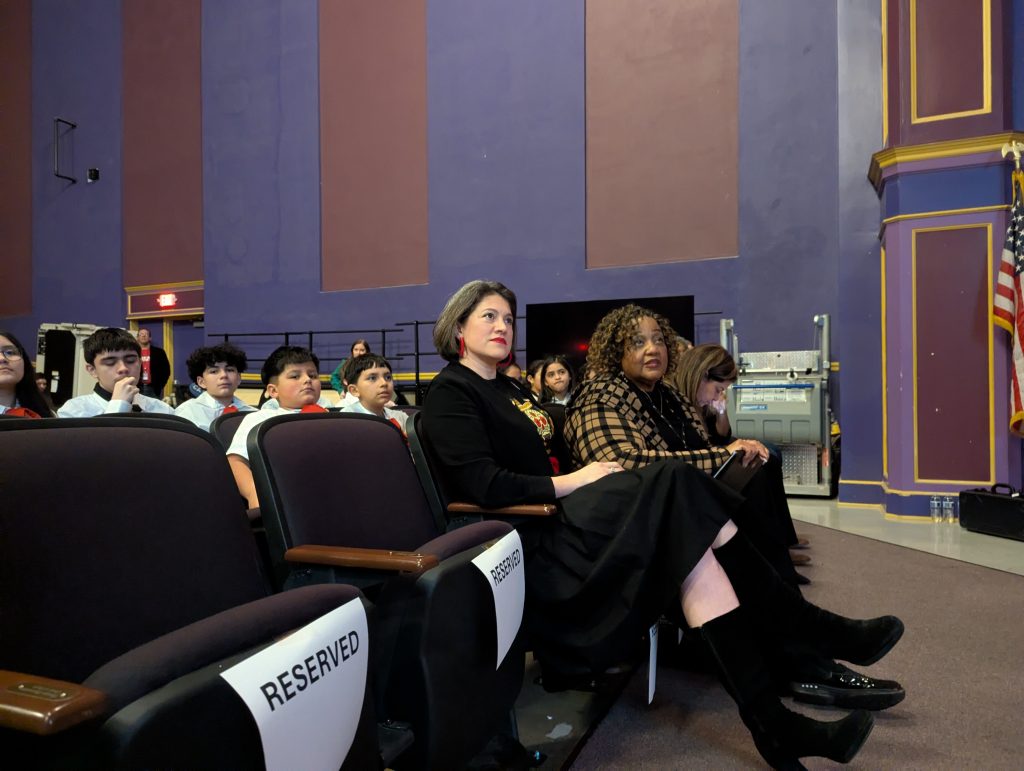
The event, called the “State of the District,” was the first in what’s expected to be an annual public presentation by district leaders.
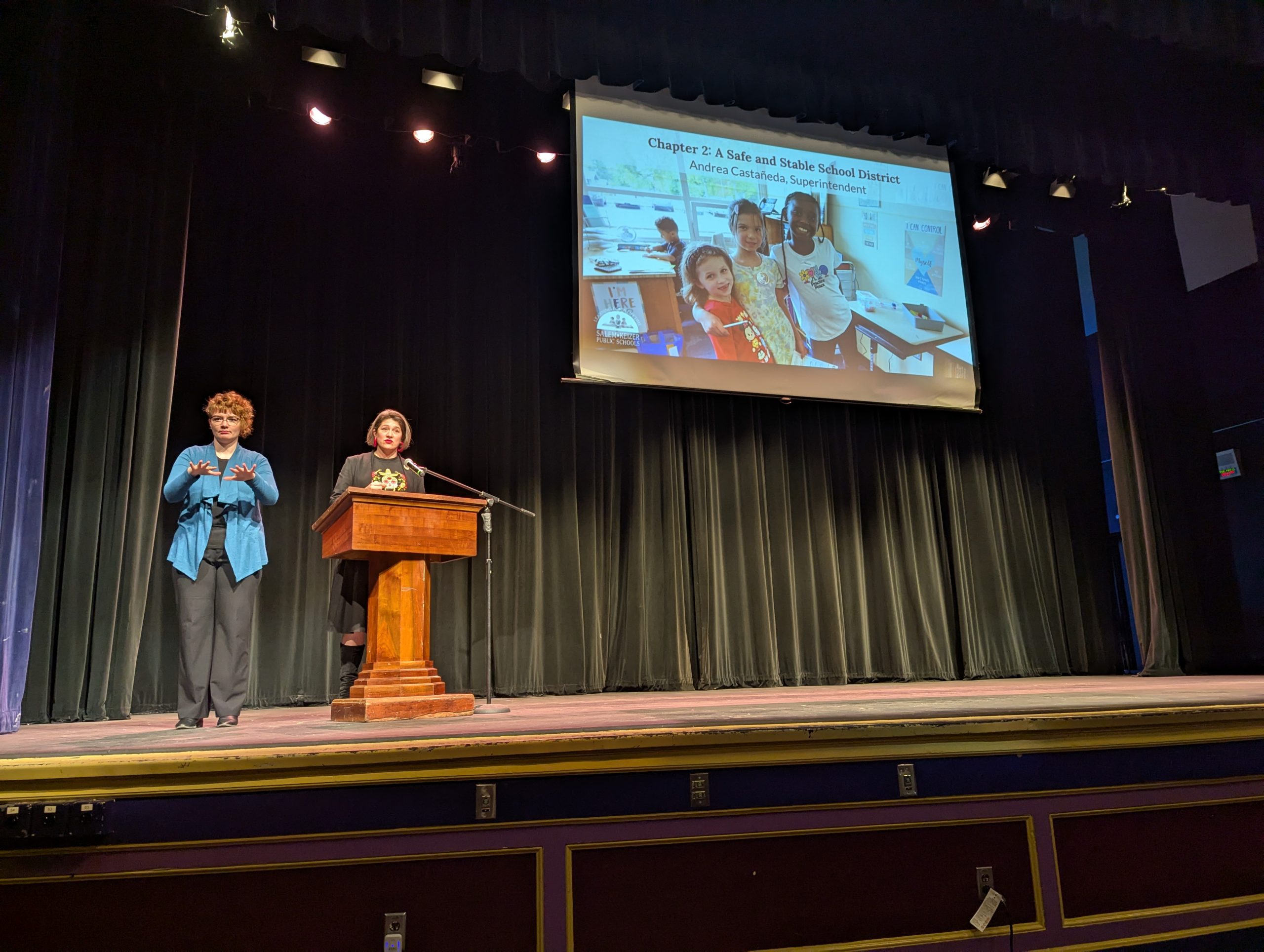
Cobb joined school board Chair Cynthia Richardson, Superintendent Andrea Castañeda, Deputy Superintendent Danielle Neves and Director of Mental Health Chris Moore, addressing attendees, who included parents, teachers, school principals and students. The aim, they said, was to highlight what’s working well in local schools while explaining how they’re addressing persistent challenges.
“We will honor our community with honesty,” Richardson said. “Salem-Keizer contains greatness and there are a few gaps. Both are true and both demand and deserve attention.”
Castañeda, who is in her second year leading the district, said Salem-Keizer is on stronger financial footing after deep cuts last year.
She told the room the district is not planning for cuts this spring, in contrast to others in the region. That drew a round of applause from the audience.
But she cautioned that Oregon’s public schools remain on a trajectory where revenue grows slower than expenses.
“The hardest part of my job is that sometimes it is not possible to give everybody everything they need,” she said.
It’s a theme she’s highlighted repeatedly over the past year, pointing to issues including ballooning pension costs for long-retired employees, growing demands for schools to provide social services and mental health care, and more mandates from state and federal authorities that require more administrators to gather data and fill out reports.
“I need you to know that even with the best possible increases, the best case scenario, our revenue will not keep up with our expenses. So we’ve got to be really smart, we’ve got to be intentional, and we have to hold on to our sustainability,” she said.
She also addressed an audience question about how best to support immigrant students and families at a time when many are fearful of deportation targeting them or their loved ones.
“I believe the real risk in a moment like this is not just the technical risk. It’s the risk that we start turning inward, that we start turning away from each other,” she said. She encouraged people to notice one another’s fears and pains, to stay open and present.
“Don’t look away. Don’t turn away. Live active compassion in every community that you travel through,” she said.
The evening included performances from student singers and musicians, including the Houck Middle School mariachi. District leaders highlighted growing career education and dual language programs, as well as a large share of bilingual graduates — nearly 500 last year — as bright spots.
The district is currently meeting three of six goals the school board set in the fall of 2023 for school improvement, hitting targets for regular attendance, the share of ninth graders on track to graduate, and high school students reporting they feel welcome at school.
Graduation rates, third-grade reading scores and elementary students’ reported sense of belonging remain below the board’s targets.
Helping the district’s youngest students learn to read remains a persistent challenge, and is the only goal the district hasn’t made progress on since 2023.
Cobb highlighted several efforts underway to help more students learn to read. It’s a topic that’s gotten renewed attention in Oregon in recent years following a significant pandemic decline in the share of students performing at grade level, and Oregon’s declining and poor performance compared to other states.
Efforts in Salem schools include standardizing curriculum across schools and grades so every teacher has materials available in English and Spanish.
“If our teachers don’t have good materials in their hands, our kids miss out,” Cobb said.
She said the district is also expanding training for teachers on reading instruction and curriculum, and doing walk-throughs where teachers can visit each other’s classrooms and talk about instruction.
The district also has a better internal system to test where students are and identify what skills they need help with to make sure they’re on track and help them catch up.
Continued poor attendance remains a challenge, she said, despite improvements to
“Almost half of our students miss at least one day every other week. We need to change that. We need our kids in schools every day so we can teach them and they can learn what we know they are capable of,” Cobb said.
Castañeda spoke about several initiatives she described as supporting school safety, including expanded weapon detectors, limiting the number of doors in use during the school day and pouches to lock away student cellphones.
She said she understood weapon detectors weren’t popular with everyone, but continues to believe they were the right choice. They are currently in use at most district high schools.
“We will always make the decision that we would want other people to make for our own children,” she said.
Phone pouches are currently in use at six schools. Denny McCarthy, Straub Middle School principal, told Salem Reporter the rollout has gone well so far, cutting down conflict between students. Christi Cheever, Parrish Middle School principal, said she hasn’t pursued them and has seen good results at her school by having educators strictly enforce a ban on having phones out.
Castañeda also highlighted more training for employees to avoid injury when students are violent or acting out.
She credited leaders of the district’s employee unions with raising the issue of staff safety and keeping it a focus. The district is currently facing a lawsuit over an incident last school year where a West Salem High School assistant was injured and continues to see injuries and complaints from employees.
“We’re getting better at finding patterns, predicting incidents and responding to incidents but I know we have more work to do,” Castañeda said.
Moore, the mental health director, said the fall opening of a day treatment center was a bright spot in giving schools more options for students who need intensive mental health support. The facility provides mental health care for students, with schooling built around therapy and other medical needs. It’s intended to give students a place to stabilize their mental health, eventually allowing them to move back into a traditional school.
Plans are underway to expand another district program for students with significant behavioral issues, Moore said.
The district currently runs two Behavior Intervention Centers, one for elementary and one for secondary, with 17 students and three teachers over two campuses.
Next year, he said those schools will be combined into a larger program with space for up to 45 students. It will be located in the east wing of Straub Middle School.
“Staff and families have advocated for more support,” he said.
Contact reporter Rachel Alexander: [email protected] or 503-575-1241.
A MOMENT MORE, PLEASE – If you found this story useful, consider subscribing to Salem Reporter if you don’t already. Work such as this, done by local professionals, depends on community support from subscribers. Please take a moment and sign up now – easy and secure: SUBSCRIBE.

Rachel Alexander is Salem Reporter’s managing editor. She joined Salem Reporter when it was founded in 2018 and covers education, economic development and a little bit of everything else. She’s been a journalist in Oregon and Washington for over a decade and is a past president of Oregon's Society of Professional Journalists chapter. Outside of work, you can often find her gardening or with her nose buried in a book.