In mid-November, dozens of residents at Salem’s Terrace Lake Park senior mobile home community made their way to the shared clubhouse, where they’d asked their elected officials to hear them out.
The residents on fixed incomes said they were facing higher and higher rents for the land their homes sat on, with some seeing rent jump 10% each year for the past several years — the current legal cap. They said some were choosing between heating their homes or buying food.
Oregon Rep. Tom Andersen, Sen. Deb Patterson and City Councilor Deanna Gwyn shared their concerns. The Salem legislators said the increases they faced relate to the larger senior homelessness crisis in the state. They said the tenants had a valuable perspective, and their testimony could help a state bill that was being drafted to limit rent increases in mobile home parks and marinas.
“We need your help, to help us help,” Patterson said.
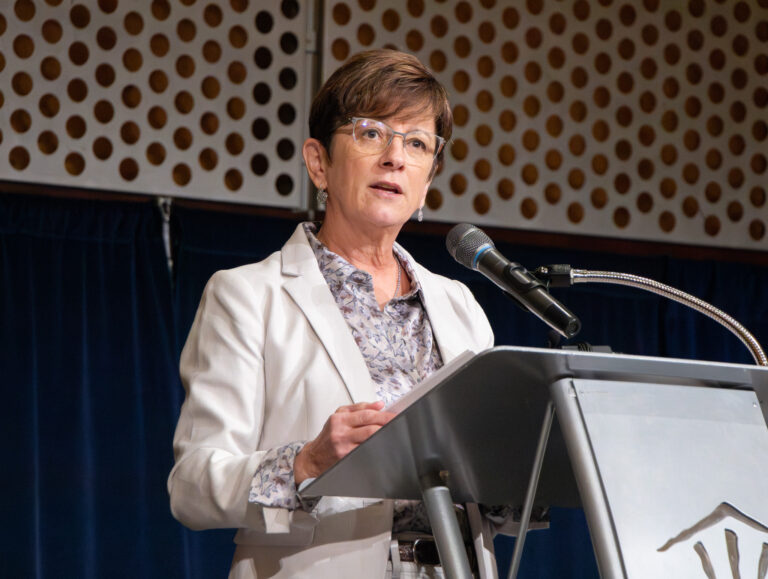
Months later, resident Kathleen Lempka answered that call, joining a packed public hearing held on Feb. 3 by the House Committee on Housing and Homelessness. Andersen is the committee’s vice chair.
The bill, HB 3054, is spearheaded by Rep. Pam Marsh from the Ashland area and would limit annual rent increases for tenants.
Nearly 250 people submitted written testimony in support, and nearly 100 against. Twenty-four of them were from Salem, split evenly between support and opposition.
“Everything has gone up,” Lempka said of bills, groceries and rent during her testimony. “Fixed incomes stay put.”
She said her neighbors are fearful of having to move in with their children, or becoming homeless. Some are skipping meals to make ends meet. “That’s scary when you’re in your 70s or 80s,” she said.
Mobile and manufactured homes have been a fast growing form of housing across the U.S. in recent years as many areas face limited housing and fast-growing rents. Residents typically own their home, but still pay monthly rent for the land it sits on.
Lempka said about a hundred mobile homeowners from around the state showed up in support of the bill. Those able to testify in the limited available time said they felt like captive tenants, unable to afford to move their mobile homes as rent increases outpaced annual increases to Social Security payments.
There was also a sizable opposition, with much of the testimony coming from smaller, family-owned park landlords saying the limits may put them in debt and force them to sell to out-of-state management companies who they said would care more about profit than tenant quality of living.
Currently, rental housing across the state, including mobile home parks, is capped at a 10% rent increase each year. The bill would cap rent increases at mobile home parks and marinas to the Consumer Price Index, which increased 3% over the past year.
The bill also limits rent hikes when a tenant moves out and sells their home. Under the bill, the landlord can not charge the new owner more than a 10% increase of the seller’s rent.
John VanLandingham of the Oregon Law Center who advocates for tenants and helped write the bill, testified to explain it.
It would also prevent landlords from evicting residents over aesthetic repair requests. A recent example, said VanLandingham, is a landlord who asked tenants to replace vertical siding with horizontal siding, at great cost. The bill would also stop landlords from requiring tenants to pay for home inspections before selling, which he said should be the responsibility of the buyer like in traditional home sales.
“We don’t want any landlord to fail. Similarly, we would hope that landlords don’t want tenants to fail. And for them, failure is eviction,” VanLandingham said, because mobile homes are too expensive to move. “Manufactured homes only move once in their lives: from the dealer to the park.”
Rochelle Love Elder, vice president of the Oregon State Tenants Association, represents over 60,000 mobile and marina homeowners around the state, and encouraged many in attendance to testify that day.
Her organization put out an anonymous survey with over 500 respondents, which she presented during the hearing. Many are on fixed incomes, or working two jobs even past retirement age. Nearly half of them said they were struggling to afford food. The majority said they were struggling with bills. She said that the bill would level the playing field, while allowing landlords to stay profitable.
Bill Miner presented the opposition view from Manufactured Housing Communities of Oregon representing over 750 mobile home park and marina property owners around the state. He said the proposal was extreme.
“Ultimately, over the years, this bill will depress rents far below market rents,” he said. He said it will force owners to run their parks at the bare minimum level, and force family-owned businesses to sell to out-of-state owners with more resources or to close their parks.
He said that, among the landlords he represents, the average rate of rent increase was 5.5% per year between 2019 and 2024. Miner said that landlords are often hit with sudden large repair costs, like clearing septic system blockages at $3,000 per instance.
Miner said that out-of-state companies would have the means and motive to find loopholes around the laws, and increase evictions.
“In 20 years, I have never received a call about somebody asking to close their parks. In the last four weeks, I have received five. Five calls from landlords representing over 5,000 spaces in the state, that are asking: ‘How do I go about closing my park? Because if this bill passes in its current form, I just can’t operate,’” Miner said.
When Lempka moved to the Salem community in 2018, she said her lot’s rent was $550 a month. She said there were no rent increases during the height of Covid, but rent jumped in the following years. She now pays $845, from about a 10% rent increase each year over four years.
“Which is outrageous when Social Security went up an average of 4%,” she said. It’s set to increase by 2.5% this year.
Lempka said she likes the third-generation on-site owners, who participate in community potlucks, but believes the upper level management has a strong presence and deep pockets. The Terrace Lake owners did not respond to an emailed request for comment.
The management, Commonwealth Real Estate Services, oversees over 100 properties in Oregon, Washington and Idaho.
Adam Cook, the president and owner of Commonwealth Real Estate Services, lives in Oregon City and was among those who testified on Feb. 3.
“As a lifelong Oregonian who recognizes the housing crisis we’re facing, I appreciate the good intentions trying to be addressed here, but also see that this bill will only exacerbate the housing supply shortage,” he said.
Cook said that, rather than broad rent control laws, he wants to see more state efforts toward encouraging new home construction.
Back in November, dozens of Lempka’s neighbors came out to speak their minds in front of their representatives. When it came time for the public hearing she said only three showed up.
“A lot were afraid,” she said. “That’s not just my community. That’s a lot of communities. Where do we go if they get mad at us?”
She said testifying felt like the right thing to do.
“Something needs to come to a head on this subject,” she said. “I see HB 2054 as being a starting point of slowing down all of the rent increases that have become very much out of hand.”
The bill remains in the House Committee on Housing and Homelessness.
Contact reporter Abbey McDonald: [email protected] or 503-575-1251.
A MOMENT MORE, PLEASE– If you found this story useful, consider subscribing to Salem Reporter if you don’t already. Work such as this, done by local professionals, depends on community support from subscribers. Please take a moment and sign up now – easy and secure: SUBSCRIBE.

Abbey McDonald joined the Salem Reporter in 2022. She previously worked as the business reporter at The Astorian, where she covered labor issues, health care and social services. A University of Oregon grad, she has also reported for the Malheur Enterprise, The News-Review and Willamette Week.