Criminal charges against a U.S. DEA agent who ran a stop sign in south Salem, causing a fatal collision with a cyclist, should be dismissed because the agent’s job surveilling drug traffickers requires disobeying traffic laws, his attorneys argued Friday.
In a motion to dismiss the case, attorneys for Samuel T. Landis, 39, claimed in Eugene U.S. District Court that the agent is immune from prosecution because he made a reasonable decision to run a stop sign while pursuing a suspected drug trafficker.
“Agent Landis made a split-second decision, in the context of ongoing surveillance requiring him to reestablish contact with his team that he could safely pass through the intersection. In other words, he actually believed that his actions were necessary in the performance of his duty,” attorney David Angeli wrote in the motion.
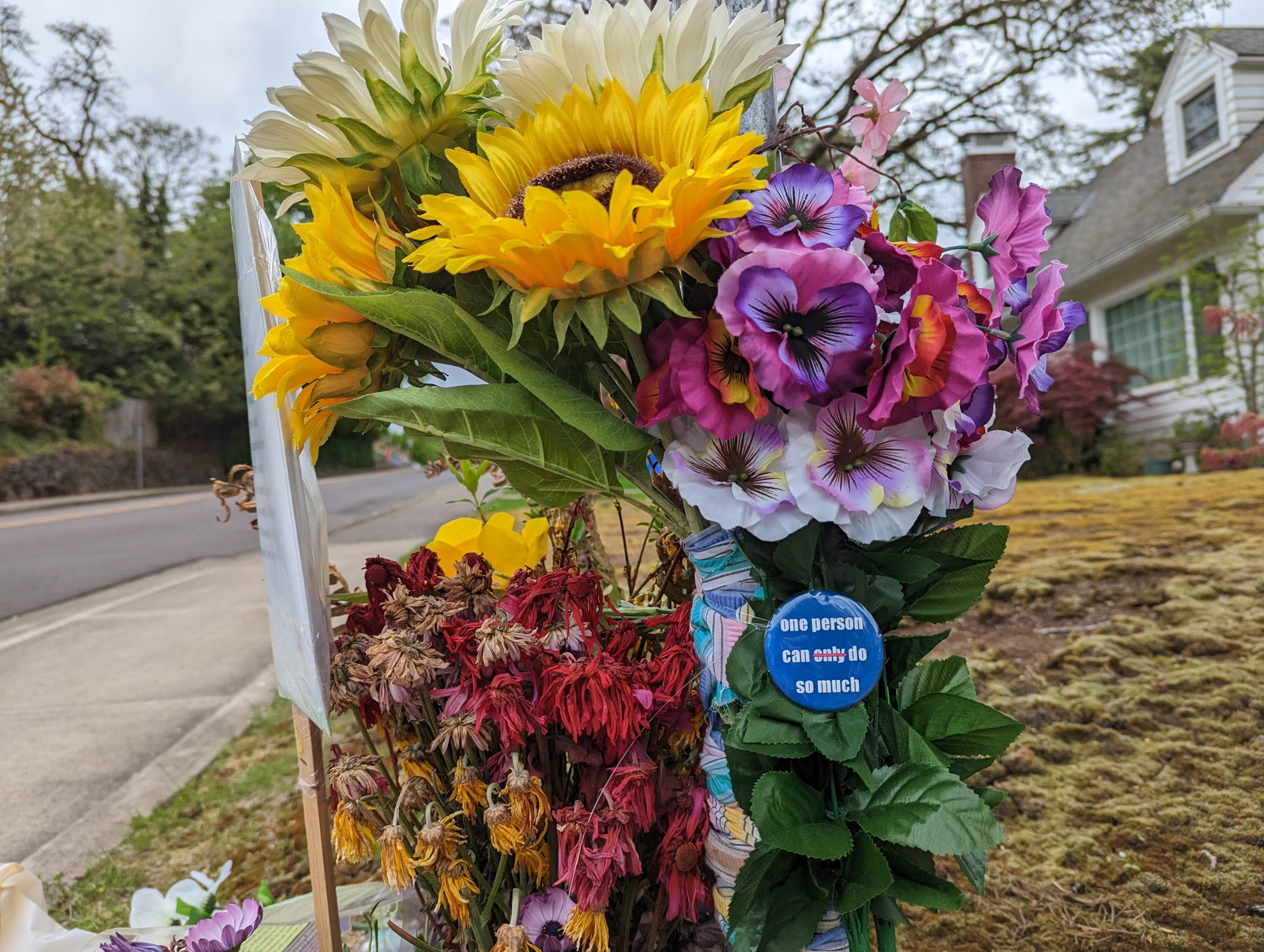
A Marion County grand jury indicted Landis last September on a charge of criminally negligent homicide months after the March 28 collision killed cyclist Marganne Allen at the intersection of Southeast Leslie and High streets.
Landis’ attorneys successfully argued to have the case moved out of Marion County Circuit Court to federal court so the agent could claim immunity from prosecution. That defense is not available in state court. The Ninth Circuit U.S. Court of Appeals in May rejected state attorneys’ efforts to move the case back to state court.
The 21-page motion says a suspected drug trafficker’s sudden turn onto a south Salem street set off a chain of events that led to Landis running a stop sign, causing Allen, who had the right of way, to collide with the side of his truck.
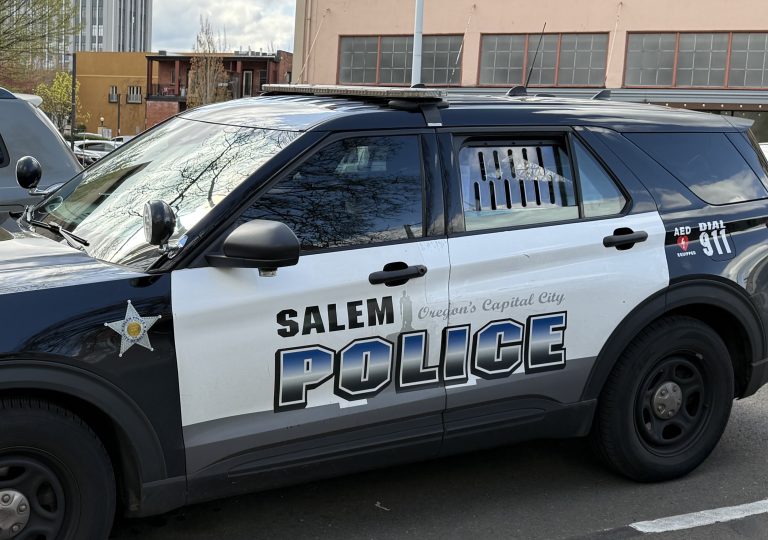
Landis was working as part of a Salem task force including DEA agents and Salem officers deputized with the federal agency. On the day of the crash, the group was surveilling a new target suspected of trafficking large amounts of fentanyl to Salem.
The target was driving erratically, breaking traffic laws, which meant officers had to frequently switch who was following closest behind to avoid being detected, the filing said.
Just before the crash, the suspect made an unsignaled turn from Southeast Liberty Street onto Southeast Mission Street, crossing a lane of traffic.
“The unexpected turn presented a risk of the officers blowing their cover –presenting safety risks to themselves and the public –as they would likely be detected if they crossed over the same lane of traffic to make the turn,” the motion claimed.
Several officers close to the suspect opted not to follow. The turn meant officers further behind had a greater urgency to catch up to the team, according to the filing.
Four DEA agents and three Salem police officers were following the suspect that day, earlier court filings showed. A map Keizer police made as part of their crash investigation showed two officers were about four blocks behind the suspect just before the crash.
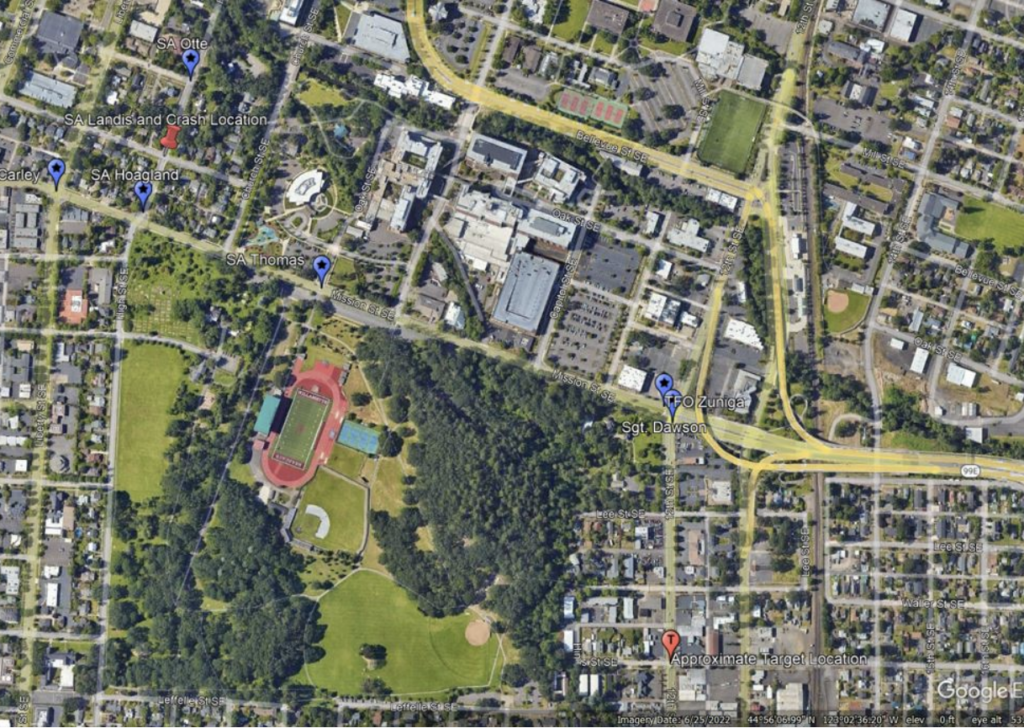
Landis at that time was one of the officers furthest from the suspect. He drove east on Leslie Street.
“Although subsequent investigation revealed significant visibility issues at the intersection that was the scene of the crash that occurred moments later, Agent Landis was not familiar with the neighborhood or the intersection of Leslie and High, where the accident occurred,” his attorney wrote. “Attempting to regain his position within the surveillance team and knowing that multiple other agents were also out of position, Agent Landis approached the intersection, applied his brakes, slowed his vehicle, and entered the intersection below the posted speed limit but without coming to a complete stop at the stop sign. At the time he entered the intersection, Agent Landis believed it was safe to do so. He did not see the cyclist, who at the time was riding her bicycle downhill on High Street.”
The motion claims Landis was following DEA policy by running the stop sign, noting that officers frequently disobey traffic laws by speeding, turning without signals and running red lights or stop signs to stay in position during surveillance missions.
“While acknowledging that public and agent safety is paramount, the policy empowers agents and officers to make those decisions in the moment,” the filing said.
Landis’ attorneys argued that the agent is entitled to immunity “unless no reasonable officer in the situation would have acted in that manner,” citing federal court precedent.
State attorneys have until Sept. 13 to respond to Landis’ move and press for taking him to trial on the original criminal charge before a federal judge.
RELATED COVERAGE:
Federal judges clear way for DEA agent to claim immunity
Fate of DEA agent’s criminal prosecution now rests with appellate judges
DEA agent disputes state’s appeal, insists on seeking immunity in bike crash
New records show drug cartel ties, DEA agent’s actions leading to fatal crash
State asserts DEA agent has no federal immunity for fatal Salem collision
Judge says DEA agent’s duties could justify dropping charge in fatal cyclist collision
DEA agent admits role in fatal cyclist collision, seeks federal immunity
DEA agent faces state felony charge in death of Salem cyclist
Video shows driver ran stop sign in fatal collision with Salem cyclist
Contact reporter Rachel Alexander: [email protected] or 503-575-1241.
A MOMENT MORE, PLEASE– If you found this story useful, consider subscribing to Salem Reporter if you don’t already. Work such as this, done by local professionals, depends on community support from subscribers. Please take a moment and sign up now – easy and secure: SUBSCRIBE.

Rachel Alexander is Salem Reporter’s managing editor. She joined Salem Reporter when it was founded in 2018 and covers education, economic development and a little bit of everything else. She’s been a journalist in Oregon and Washington for over a decade and is a past president of Oregon's Society of Professional Journalists chapter. Outside of work, you can often find her gardening or with her nose buried in a book.