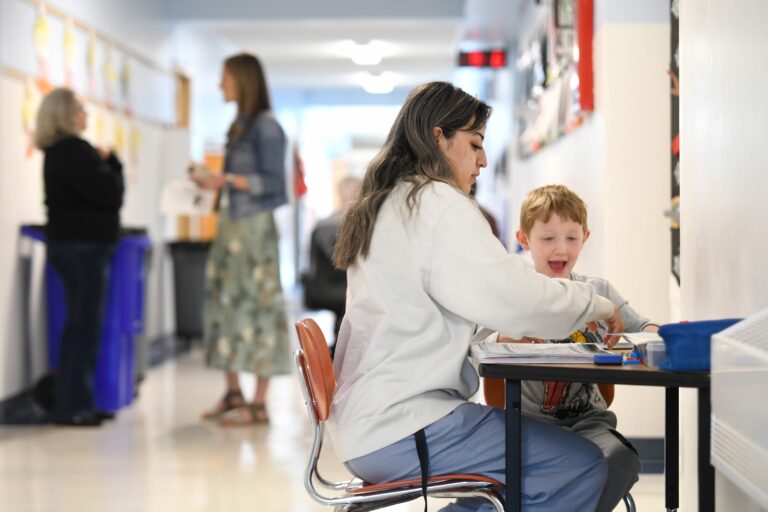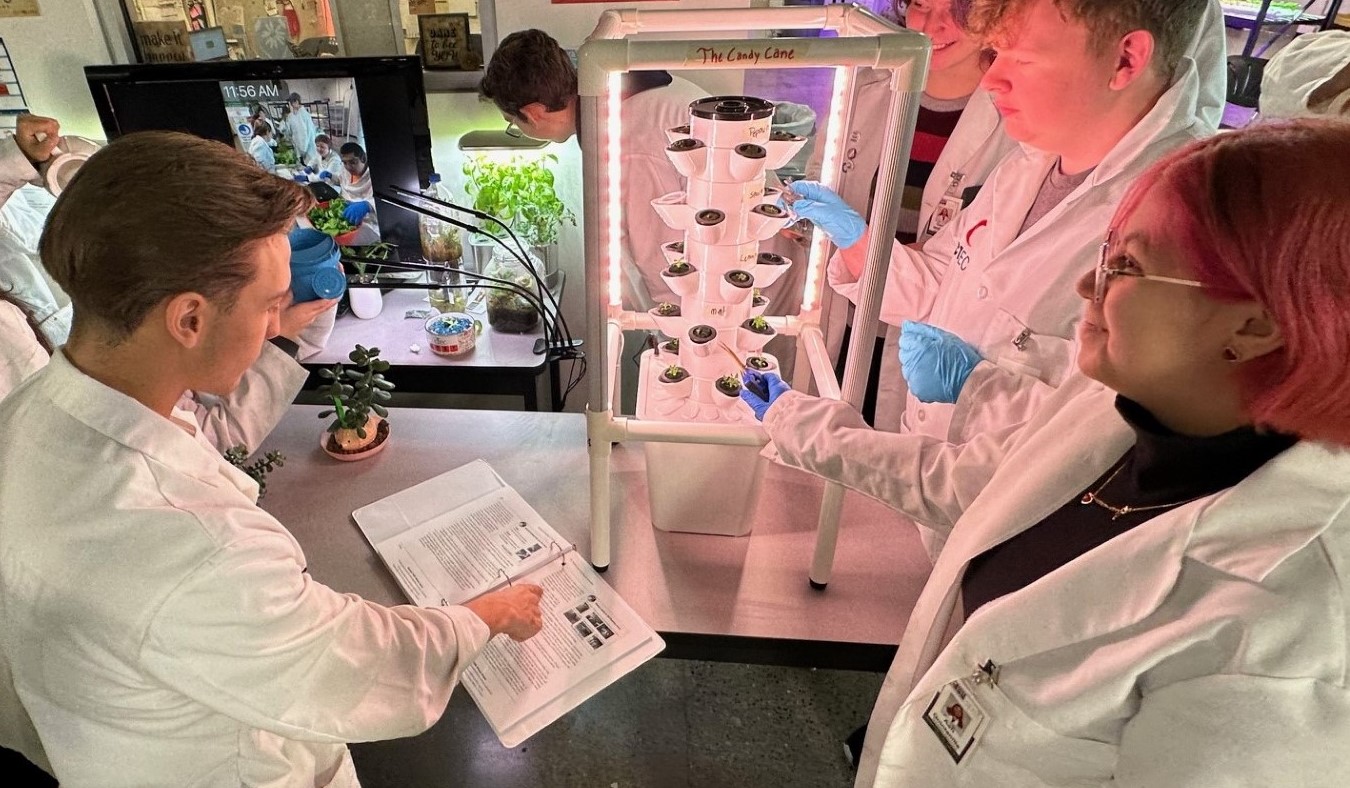
Kids at Washington Elementary School will be able to grow their own salads this spring with some help from nearby high schoolers.
Students in the Career Technical Education Center’s sustainable plant science and technology program will work with the elementary school. Seniors will develop a curriculum and teach lessons at Washington on plant nutrients, food handling and managing an aeroponic grow tower, which uses only water and nutrients to grow plant without soil.
“We’ve noticed a lot that there’s a big disconnect with people in general, especially young folks, about where their food comes from, where it’s grown or raised. We really want to build that awareness with students,” said Jasmine Filley, a teacher in the plant science program.
The project is funded by a $1,000 grant from the Maps Community Foundation, the charitable arm of Maps Credit Union. Filley is using the money to buy a grow tower for the elementary school to use as part of the lessons.
It’s one of 21 grants awarded to Salem teachers this month for classroom or school projects intended to broaden students’ horizons or give them access to materials they otherwise wouldn’t have. The program had a record nearly 200 applicants this year, and gave 41 grants totaling $35,000 to teachers in Marion and Polk counties.
At Parrish Middle School, Kevin Loss is using the grant to build a “sensory solarium” in the school greenhouse.
Loss teaches special education and said some of his students have difficulty transitioning from home life to school. Some autistic students struggle with the feel of a pencil in their hands.
“That transition leads to them having really incredibly hard days at school and when they walk in the door…that sets the whole day up for failure,” he said.
He’s seen how simple exercises that engage their senses, like writing in sand or feeling a plant, can help students be successful in school.
“It really smooths over that invisible hump,” he said. “It really gets their mind and body ready for things they don’t do much at home.”
Schools around Salem have added rooms in recent years intended to help kids take breaks, do sensory activities and calm down so they can focus in class.
“Parrish didn’t have the room for it and being an older building, space is a premium here,” he said. So he came up with the sensory garden idea.
He plans to put a variety of tools and activities in the school’s greenhouse, which is outdoors but sheltered from the elements.
Loss has used some of his classroom supply budget to get a sand table, measuring spoons and rakes. With the Maps grant, he plans to build a raised platform so students can stretch or do yoga, and a UV resistant box to store stretchy bands in.
Loss hopes the space will be an asset for any teacher or student at Parrish who might benefit from it.
“Kids are madder than ever right now. They’re coming to us with a whole boatload of mental health conditions,” he said. “Trying to kind of defuse these emotional time bombs we have sitting in classrooms, it’s going to take reinventing the wheel a little more and not relying on the same thing we always did.”
At Auburn Elementary School, teacher Kassandra Paige is using a Maps grant to help her students learn to manage money through lessons and a field trip where they get a chance to run a small town.
“Financial literacy is so important – it’s kind of part of their everyday life in adulthood,” Paige said.
The grant will pay for many of the school’s fourth and fifth graders to participate in BizTown, a series of 12 week lessons followed by a simulation in Oregon City. It’s a cost the school, which serves mostly low-income families, otherwise couldn’t afford.
At the event, students get a job, earn a paycheck and get to learn how a small town works through activities like making commercials for their business or running for town council.
Paige said her students were excited when representatives from Maps showed up with a giant check for the project.
“It’s important for them to see that experience as well – that people in their community believe in them,” she said.
Contact reporter Rachel Alexander: [email protected] or 503-575-1241.
SUPPORT OUR WORK – We depend on subscribers for resources to report on Salem with care and depth, fairness and accuracy. Subscribe today to get our daily newsletters and more. Click I want to subscribe!

Rachel Alexander is Salem Reporter’s managing editor. She joined Salem Reporter when it was founded in 2018 and covers education, economic development and a little bit of everything else. She’s been a journalist in Oregon and Washington for over a decade and is a past president of Oregon's Society of Professional Journalists chapter. Outside of work, you can often find her gardening or with her nose buried in a book.