Christy Perry used to spend her recess organizing her second grade teacher’s desk in Reedsport, on the Oregon coast.
It was one way she helped around the classroom, teacher Marti Pepiot recalled – but Perry didn’t just cozy up to teachers. Even as a child, she had a knack for connecting with people and finding ways to include everybody.
“Everybody was her friend,” Pepiot recalled. “She truly liked everybody and they knew it was genuine.”
Fifty years have gone by, but Perry’s leadership style has remained constant as she’s left her small hometown to teach, run schools and eventually lead Oregon’s second largest school district.
Perry, 57, retires Friday after nine years at the helm of the Salem-Keizer School District through a pandemic, a major construction push and a tumultuous period of discontent over racial equity and school safety that at times led to open conflict with her elected bosses on the school board.
She did it while earning Oregon Superintendent of the Year in 2020 and becoming a finalist for the national award.
Under her leadership, the district improved high school graduation rates by nearly 10 percentage points, opened and then expanded a model career education center and quintupled the number of dual language elementary schools where students learn in both English and Spanish.
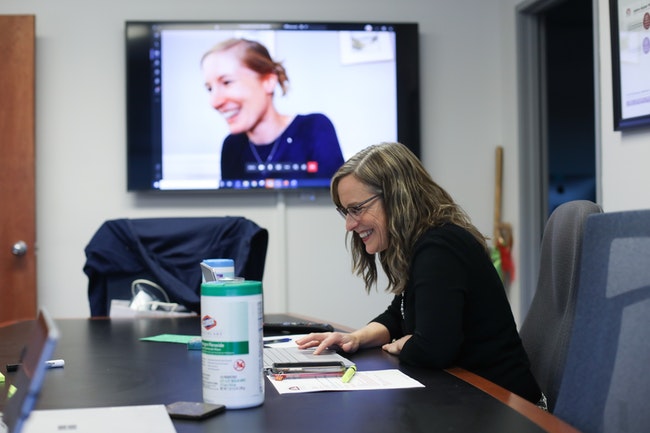
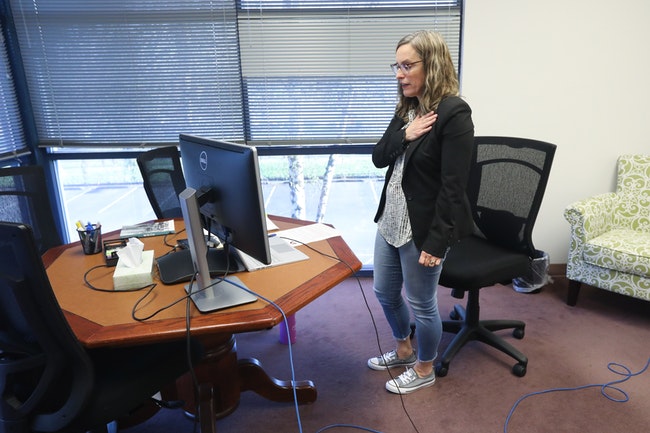
Though her work is often serious, Perry is informal and even playful in her interactions with others. She makes a point of wearing Converse sneakers and jeans and encourages high school students to text her their thoughts on how the district could improve.
During the pandemic, she recorded herself dancing — badly, according to some top administrators — during staff meetings and took song requests from teachers in an effort to lighten the mood during a stressful time.
Perry instituted a practice of hiring high school students who publicly criticized the district to work in the communications office, seeking their input on policies and helping manage outreach to students.
Salemites who have worked with her say her time at the district has been marked by a collaborative style focused on personal relationships and mentoring others, even while guiding the education of 40,000 students and overseeing 7,000 employees.
“Community engagement is probably at an all-time high within the district,” said Tom Hoffert, CEO of the Salem Area Chamber of Commerce.
Perry retires as state tests show just one in four third-grade students can read proficiently – a number that’s been stagnant since her arrival and fallen since Covid. It’s an issue she wishes she’d done more to correct, and will likely be a key focus for her successor.
Her departure comes as public education has been increasingly politicized, and the district’s teacher union is pushing for changes they say are long overdue to reduce the number of administrators across the district and prioritize help for teachers.
Beginnings
Perry can’t explain how she knew she wanted to be a teacher.
The desire predates her earliest memories, and she frustrated her siblings by constantly wanting to play school.
Neither of her parents completed college, but both put an emphasis on her education. A close family friend, Marlene Tymchuk, who Perry described as a second mother, was Oregon Teacher of the Year in 1980 and an early influence.

Perry got pregnant ahead of her junior year of high school and missed the first few weeks of the school year as she considered moving away. She ultimately returned to Reedsport and gave birth to her daughter Lisa in 1983, returning to school right after.
Decades later, Perry still tears up describing the help she received.
Her health teacher was also her Lamaze coach and another teacher found a family to adopt the baby. The adoption was closed, and Perry didn’t get in touch with her daughter until years later.
Perry said the support she received from teachers shaped her view of the difference caring educators can make.
“Just because you are pregnant in high school doesn’t mean you can’t finish and finish strong,” she said.
After graduating from Western Oregon University, she taught fifth and sixth grade in the Perrydale School District and in Salem until 1992, then moved into administrator roles with gifted and talented programs.
Her first principal job was at Lyle Elementary School in Dallas, starting in 1998.
“She fell in love with that and staff fell in love with her,” said Dave Voves, the former Dallas superintendent who hired Perry.
She was known for spending time in classrooms and made local headlines when she agreed to spend a full day atop a playground slide if students hit a fundraising goal for new equipment. Students raised over $13,000 in a jog-a-thon, the Polk County Itemizer-Observer reported.
When Dallas’ superintendent retired, Perry was the obvious choice to take over, former Dallas leaders said.
“She was a rising star right from the get-go,” said Bob Ottoway, who served on the Dallas board that hired Perry in 2005.
Dallas Superintendent Steve Spencer, who Perry hired as Dallas High School principal, remembered sending a girl home because her jeans had more holes than fabric, going against the school’s dress code. The girl’s father, a tall man with an intimidating presence, demanded a meeting with the superintendent.
Spencer said he was terrified ahead of the meeting, but tension evaporated when the 5-foot-3 Perry walked confidently out of her office. She addressed the student: “Hey, cute pants. Probably not appropriate for school. What can I do to help you?”
For Spencer, that was an early model for interacting with parents and students on difficult topics.
Coming to Salem
When the Salem-Keizer School District sought a new superintendent in 2014, Perry didn’t apply. She was at home recovering from a concussion sustained after a fall while running.
The district opened up applications again after a failed national search. This time, Perry applied.
She got the job in part because of her extensive experience with Oregon operations, but also because of her leadership and communication skills, said Jim Green, the chair of the board that hired her.
Perry set three early priorities: improving school buildings, improving graduation rates while lowering the dropout rate, and building relationships in a district too large for her to know everyone individually.
“How do I lead with people first and kids first, and take care of all the business functions? Because you can easily get too far one way or the other,” she said in an interview.

Perry focused on getting acquainted with people within the district and outside.
The approach defined her work. At Perry’s retirement party, many colleagues told stories of “five o’clock phone calls” from Perry at the end of a particularly difficult day.
Those who have butted heads with Perry at times say they appreciate her personable nature.
Tyler Scialo-Lakeberg, president of the Salem-Keizer Education Association, is now leading the union through bargaining a new contract. She has criticized district leaders for an increase in administrators during Perry’s tenure, resulting in too many people dreaming up ideas to improve classrooms without enough teachers to implement them.
But Scialo-Lakeberg said Perry has always been easy to approach with concerns. When the union raised something, “she would respond and fix it.”
Even when they were at odds, Scialo-Lakeberg said she would sometimes text Perry encouragement during particularly difficult school board meetings. The two shared jokes to help them stay awake when presentations dragged into the night.
Perry said she makes time to reach out to one or two people a day to check in with them, squeezing in calls while driving or in brief breaks between meetings. She typically works from 7 a.m. until 8 or 9 p.m., using her drive back to Dallas for those personal connections.
“I rarely walk in the door and I’m not still on the phone,” she said. “If I’m thinking about somebody when I lay my head on the pillow, the next morning I start with a text.”
Perry came in as the district contracted with Mountain West Investment Corporation to build the Career Technical Education Center on Northeast Portland Road.
She quickly became involved in setting up the first programs, working closely with Jason Tokarski of Mountain West.
“This was something very new – this wasn’t like this tried and tested pattern of how to build a school,” Tokarski said. “No matter what she was wading through, she never lost focus on what was best for kids. She would bring that mentality to our interactions and it was quite infectious. You get inspired by that.”

CTEC now provides programs for high school juniors and seniors in 10 fields including construction, cosmetology and culinary arts, with about 400 graduates per year. It’s a program that earns near-universal acclaim, even from Perry’s detractors.
“People travel from all over the nation to look at the work CTEC is doing to prepare people for careers straight out of high school,” said Hoffert. “That is a powerful, powerful legacy that she leaves behind.”
Graduation improves, reading stagnates
Perry worked to see more students graduate high school, coinciding with a push by Gov. Kate Brown to raise the state’s graduation rate, which was one of the lowest in the country. Earning a diploma was an “exit point” that she saw as a key part of what schools should be focused on.
At the end of Perry’s first school year in 2015, just 72% of district students earned a high school diploma in four years. At McKay and North Salem high schools, with the district’s highest share of low-income students, only 68% of students graduated on time.
Perry led an effort to boost those numbers, hiring graduation coaches whose job was to follow up with students who were close to graduating but struggling with their last few credits.
She created a district office of equity, access and advancement, hiring Black and Pacific Islander workers to shepherd students from those communities across the finish line. Graduation rates for Islanders and Black students, which had been persistently low, climbed to record highs by 2019.

While graduation rates regressed slightly since the pandemic, they remain far above when Perry took office.
She hasn’t had such success in improving the share of students who can read at grade level, particularly in elementary school.
In some schools, like Four Corners Elementary in southeast Salem, just 15% of students can read proficiently, according to state data.
“That is a crime,” said Eduardo Angulo, co-founder of the Latino parent advocacy group Salem-Keizer Coalition for Equality, which has for years pushed for improvements to reading instruction at a local and state level.
Perry said that persistently poor reading is her biggest regret as a superintendent. She said in the years since she took over, there’s been a clearer consensus about the “science of reading” – teaching strategies based on how kids learn to read, which includes phonics.
When Perry learned to be a teacher, she was taught using older methods research have shown don’t work as well. That’s true of many district teachers, she said.
When she came to Salem, the district didn’t have a reading curriculum. She worked to adopt one in 2015, then added a phonics component in 2018. She’s also pushed to standardize school schedules and materials used since the district has a high mobility rate — about 15% of elementary students end the school year in a different school than they started.
“We had schools without the same numbers of minutes of instruction that we’ve had to clean up over my time,” she said.

She said she was hampered by the pandemic, the late inclusion of high-quality materials in Spanish, and the amount of time it takes to change systems in a district the size of Salem-Keizer, she said.
Hoffert said such challenges are present in districts across the state.
“To place that solely on a superintendent is a little bit challenging for me. There’s a lot of levels that go into education and they start at a very young age,” he said.
Knowing what she knows now, Perry said she would have acted earlier to get a strong phonics curriculum in place. Looking back and understanding what she could have done better has been a constant in her time leading the district, she said, and she’s confident the district now has a strong literacy plan in place which her successor can implement.
Bilingualism and equity
The district’s expansion of bilingual education and helping Spanish-speaking students learn is an accomplishment many Salem leaders cited about Perry’s tenure.
But she came to Salem with little experience in bilingual education or the needs of the district’s thousands of students of color and 13,000 native Spanish speakers.
Ahead of Perry’s tenure, groundwork advocating for bilingual classrooms and schools had been laid through by outside groups like the Salem-Keizer Coalition for Equality, a Latino parent advocacy organization, and by the small but growing ranks of Latino educators in the district.
Many said that, in Perry, they found a superintendent willing to listen.
Olga Cobb was principal at Chavez Elementary School when Perry visited during her superintendent interview process. Perry made time to actually talk to teachers in the building, even when that wasn’t on the schedule.
“She kind of left people behind, the very important people that were walking around with her, to focus on us,” Cobb said at Perry’s retirement. “And she kept asking us: what are the things that you want to change and why do you want to change those things?”
Cobb is now the district’s assistant superintendent for elementary education, where she’s working to expand the number of schools offering Spanish and English instruction.

Perry early in her tenure started programs to pay for education for Spanish-speaking students who wanted to become teachers, and classroom aides who wanted to earn teaching licenses. If the district was going to expand bilingual programs, she said, it needed more teachers to teach those classes.
Angulo, the co-founder of the Salem-Keizer Coalition for Equality, said the rapid expansion of bilingual programs in recent years is due to advocacy from Latinos inside and outside the district, including Salem-Keizer’s first Latino school board members elected in 2021. But he credits Perry for taking on the project.
“That’s on her leadership – having the planning, the resources for 26 schools in three years. That’s humongous for Latinos. And for white kids,” he said. “How did that happen? Christy Perry listened to what her diverse board members were telling her – we need this to happen now.”
As a white educator coming from a majority white community, Perry said she knew from the start she wouldn’t always know what schools needed. She developed connections with people who “had the trust to pick up the phone and call me.”
Perry’s handling of equity and racial discrimination in schools has been among the more divisive points of her superintendency, particularly in the aftermath of George Floyd’s murder. At the time, local activists pushed to remove police officers from schools – a move Perry took on her own authority months later.
In the summer of 2020, she gave a speech chastising some on the school board, including Chair Marty Heyen, for not listening to the experiences of students of color who were speaking about ways they’d been harmed by the presence of officers and the criminal justice system.
Heyen called Perry’s speech “highly insulting” and said it marked a turning point from having a good relationship with Perry to feeling she couldn’t trust the superintendent.
“All the things that people were upset about – I followed our board rules, I did what I was supposed to do. It was just a bunch of emotional stuff. They need somebody to be the scapegoat,” Heyen said.
Outside the school system, Salem leaders said Perry stepped up to lead during the pandemic without shunting challenging or unpopular decisions to the board.
“She tackled adversity at the board level with incredible grace and poise,” Hoffert said.
As classes remained online in the fall of 2020, Perry prioritized reaching out to students, encouraging educators to offer “care and connection” as students’ home lives became even more central to their ability to learn.
But Perry’s decision in March 2021 to remove police did little to quell tensions. Youth activist group Latinos Unidos Siempre said Perry wasn’t doing enough to address disproportionately high suspension and expulsion rates among students of color, and criticized her for spending more on school security officers after removing police.
Conservative school board members and some district employees and parents said Perry’s decision to remove police made schools less safe and left educators ill equipped to deal with students acting out. Some also said training for teachers at the time focused overly on equity and cultural diversity when teachers were struggling to offer lessons on Zoom.
Perry said critics of her handling of equity work make some fair points.
“People thought that was too much of a focus and (online instruction) wasn’t. There’s a piece of that that’s true,” she said. “People will also say we didn’t go far enough in our equity work and there’s pieces of that that are true.”
She tried, she said, to keep the focus on relationships and showing care for students — the principles she said guide her when decisions become challenging.
A legacy
Perry intends to spend more time with her husband, children and grandchildren in her retirement, though she’ll continue working behind the scenes on some unfinished district projects as new superintendent Andrea Castañeda takes over July 1.
Perry’s reach extends beyond Salem to teachers, principals and superintendents she’s mentored across Oregon.
“She was really seen as a leader of female superintendents across the state,” said Green, the executive director of the Oregon School Boards Association.
As she’s prepared to leave, Perry’s top administrators said she’s only worked harder, trying to close out last-minute projects and ensure things are in good shape for her successor.
“What I want you to know most is how much I learned from you – our Salem-Keizer students, our families, and our educators,” Perry said in a June 23 farewell video. “It is because of many of you that I leave this role confidently, knowing our schools will continue to thrive under Superintendent Castañeda’s leadership.”
Contact reporter Rachel Alexander: [email protected] or 503-575-1241.
SUPPORT OUR WORK – We depend on subscribers for resources to report on Salem with care and depth, fairness and accuracy. Subscribe today to get our daily newsletters and more. Click I want to subscribe!

Rachel Alexander is Salem Reporter’s managing editor. She joined Salem Reporter when it was founded in 2018 and covers education, economic development and a little bit of everything else. She’s been a journalist in Oregon and Washington for over a decade and is a past president of Oregon's Society of Professional Journalists chapter. Outside of work, you can often find her gardening or with her nose buried in a book.