New Trump administration policies on homelessness ask Salem providers to follow methods they say don’t work

Since October, federal money has helped some of the most vulnerable women in Salem move off of the streets and into a home.
Coral House, a collaboration between Church at the Park and Northwest Human Services, is a home for women who are especially at-risk on Salem’s streets. Priority is given to those with circumstances like a history of domestic violence or a history of health problems leading to emergency room visits.
They can stay at Coral House as long as they need.
Its future is now uncertain after the Trump administration announced a plan to cut two-thirds of federal money for permanent supportive housing programs, which fund apartments for formerly homeless people with disabilities.
The cuts put around 170,000 formerly homeless people at risk of returning to the streets nationwide, according to the New York Times.
That comes amid a drastic federal shift in homelessness policy that shirks decades of precedent and promotes policies that local providers say will worsen the homelessness crisis. It sets the terms for money that, last year, put over $4 million toward housing and helping homeless people in the Salem area.
On Thursday, Nov. 13, the news came to Salem providers in the form of a 128-page notice from the U.S. Department of Housing and Urban Development outlining requirements for applicants seeking a share of $3.9 billion in federal funds for homeless services next year.
Rather than prioritizing established services and leaving much of the funding decisions in the hands of local boards, the administration will prioritize short-term programs and those that require people to work and be sober before getting housing. Those are less effective approaches to reducing homelessness, according to a HUD review in 2023 and decades of research.
New federal guidelines would also reward programs located in areas that ban public camping and that increase camp sweeps.
The federal changes come at a time where Salem business owners are pushing local officials to reduce the presence of homelessness downtown.
Salem Mayor Julie Hoy is leading a statewide initiative petition filed last month seeking to make it easier for cities and counties to remove homeless people and their belongings from public spaces under Oregon law. Hoy, who signed it as an individual, has since claimed the effort has nothing to do with sweeping camps.
Under the federal notice, programs that get funding would also have to comply with federal immigration enforcement and can’t acknowledge transgender identities. Trans people experience disproportionately high rates of homelessness.
“Pretty much as expected, by which I mean awful,” Jimmy Jones, executive director of the Mid-Willamette Valley Community Action Agency, wrote in an email to local service providers hours after the notice came out. “Single most catastrophic thing to happen to homeless services in 40 years.”
Jones’ agency, the largest homeless services provider in the Salem area, received over $2 million from the federal grant process last year to house and support people in the community.
Along with the big changes came a short turnaround to adapt.
Providers and local governments typically seek federal homelessness money in a two-year cycle. Local providers who already had money promised for 2026 instead have to apply to keep running programs, with a deadline of Jan. 14.
Organizations won’t learn if they got federal money until June. That means some providers may need to scramble to fill budget holes during an unexpected five-month funding gap as the federal government processes the new applications.
Jeremy Gordon, chair of the Mid-Willamette Valley Homeless Alliance and a Polk County commissioner, said it’s a very quick turnaround to get application materials in. The alliance is tasked with submitting a joint application for the federal funds on behalf of providers in the community.
“We’ll rise to the challenge, but the compressed timeline increases administrative pressure at the exact moment we’re trying to keep services stable for people in crisis as social safety net services change and are cut,” Gordon said.
New priorities
The Trump administration’s approach to homelessness, favoring arrests and programs with high barriers to entry, has been clear to providers in Salem for months. In April, some raised concerns to Salem Reporter about phrasing in new contracts that indicated a shift toward funding shelters that would require sobriety, discourage LGBTQ+ programs, encourage faith-based services and require cooperation with immigration authorities.
In July, an executive order directed federal agencies to prioritize money for programs in places that ban public camping and make it easier to force people into mental health treatment.
Jones said the administration is taking advice from national organizations with a history of criminalizing homelessness, including the Cicero Institute which supported a Tennessee bill that made camping on public land a felony.
He also said there’s a general widespread public anger toward people in poverty receiving government support.
“It’s just a perfect storm of bad actors, ill-informed people who think that they know how to solve this problem and a bunch of folks who haven’t learned the lessons of history and know why these older models of pain, shame, punishment and coercion have failed,” Jones said.
In a statement announcing the policy changes, HUD Secretary Scott Turner said the previous approach encouraged “dependence on endless government handouts.”
“We are stopping the Biden-era slush fund that fueled the homelessness crisis, shut out faith-based providers simply because of their values and incentivized never-ending government dependency. These long-overdue reforms will promote independence and ensure we are supporting means-tested approaches to carry out the president’s mandate, connect Americans with the help they need and make our cities and towns beautiful and safe,” Turner said.
The announcement also said the new policy “cracks down on DEI, gender ideology extremism and the misuse and abuse of taxpayer dollars on illegal aliens,” using an acronym for diversity, equity and inclusion.
The policy is a reversal from proven-effective approaches supported and expanded on by both Democrat and Republican administrations for nearly three decades.
Mary Frances Kenion, chief equity officer at the National Alliance to End Homelessness, one of the largest homelessness policy advocacy groups in the country, said the road toward implementing housing-first policies began in the late 1980s.
By the mid-1980s, there were around 350,000 people experiencing homelessness across the country, she said. Kenion said the number had swelled during the Nixon and Reagan era, when money was pulled from federal housing programs, and other compounding factors like the widespread closure of psychiatric hospitals without a community alternative for people in need.
In response to the rising numbers of people living on the streets, the U.S. passed some of its first-ever federal policies around homelessness in 1987, called the McKinney-Vento Homeless Assistance Act. It funded temporary emergency shelters.
They then began to overflow, Kenion said.
“Homelessness is not something you can shelter your way out of, no community has ever been able to do this,” she said.
But, the move created an unprecedented federal mindset around coordinating efforts to get people out of homelessness, and in the early 1990s, the housing-first model began picking up traction, spurred by the success of a New York City-based program.
“That’s where we started understanding that giving people homes first and then providing those individualized, tailored services that they needed would provide a much more solid foundation for recovery. So instead of using housing as a reward for recovery, it turned to that foundation and had some really, really strong evidence to support doing so at a larger scale,” Kenion said.
The results were people staying in housing longer, fewer trips to the hospital and less taxpayer spending than traditional treatment-first models. It also showed governments that homelessness could be solved, not just managed, Kenion said.
In the early 2000s, the Bush administration codified these approaches by asking local governments to make plans aligned with “housing first” strategies. Between 2001 and 2008, homelessness declined by about 30% nationwide, Kenion said. The Obama administration then expanded work to coordinate programs and get people into housing faster, she said.
“One was a Republican-led administration and one was a Democratic-led administration,” Kenion said. “Historically, homelessness has been a bipartisan issue.”
Her organization lists rising housing costs, low incomes and limited community resources as the primary drivers of homelessness today.
The Trump administration’s notice, Kenion said, will destabilize funding for organizations, and retreat from the longstanding methods.
“These ideological funding criteria that reward communities for agreeing to a specific administration’s broader priorities is an overreach,” she said.

DJ Vincent, founding pastor of Church at the Park, said he’s seen giving someone housing ahead of requiring sobriety work in the Salem community, especially when there are partnerships between street outreach and housing. He pointed to the U.S. Department of Veterans Affairs, which on its website attributed such approaches with a 52% decrease in homelessness among veterans since 2010.
“Anytime someone is able to secure housing, their other health indicators get stabilized,” Vincent said. “There were models, more prominent in the past, (with) treatment required ahead of getting housing vouchers. And it can be very difficult to stay stable and sober when you don’t have a dependable place to live.”
Jones described homeless services in the 1990s, before the widespread adoption of housing-first, as a staircase to climb.
“When you’re homeless, you started out at the ground level, and so your first step up might be an encounter with street outreach. The second step up might be an emergency shelter. And the third step up might be some kind of transitional shelter, or transitional housing. And the fourth step up might have been a home of your own,” Jones said. “The problem with those steps is that as most people walked up them, they tripped and they fell. And when they fell, they fell all the way back to the bottom.”
People would trip and fall, Jones said, because of barriers like housing costs and drug use, which have only gotten more difficult to overcome in the decades since. Housing costs have far outpaced wages, and drugs have gotten more addictive.
“Expecting people to get clean and sober as a condition for remaining in a program is wildly unrealistic sometimes,” Jones said. “So the likelihood that somebody is going to slip and fall is much greater now than it once was.”
Gordon said his biggest concern about the notice is the cut to permanent supportive housing funds, such as at the Coral House. He called such programs one of the strongest tools available to reduce homelessness, and he expects the cut to have a ripple effect throughout the community.
“These are veterans, people with disabilities, people who might struggle with earning employment based income sufficient to stay housed, given challenges with disabilities, mental health issues and the like. So it’s really the folks that would fall through the cracks … and the programs in Salem have been very successful,” Gordon said.
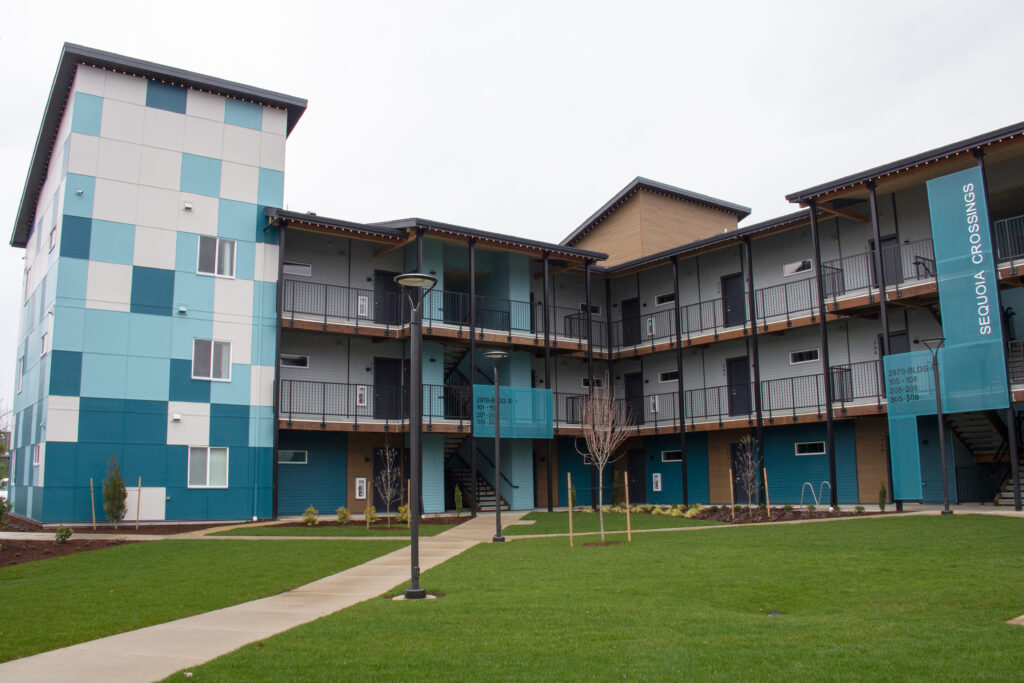
Most other apartments labeled permanent supportive housing in Salem are not expected to be impacted by the federal change, because they get their money through the state. This includes the Evergreen Apartments run by Jones’ agency, and Sequoia Crossings managed by the Salem Housing Authority, according to spokeswoman Sarah Murray.
The state does not plan to cut any of its own permanent supportive housing units, said Oregon Housing and Community Services spokeswoman Delia Hernández in an emailed statement to Salem Reporter.
However, she said, the state requires its funding recipients to also use money from the federal competition.
“At this moment, it is unknown how the changes will impact those operations,” Hernández said. “Now that the (notice) has been released, OHCS is conducting a careful review of the language in the application and continuing to work with the (continuums of care) to understand the impacts of HUD’s new policy directions on local housing and homeless services.
Pressure on local government to conform
Jones said in combination with a short deadline to apply for the pool of funds, the Trump administration supports a heavier usage of an individual application process which would allow-faith-based providers to directly apply for money outside the main competition for funds.
Jones said it’s all designed to move money away from existing services that focus on getting people housed quickly and reducing harm.
“Move money away from those kind of entities, and toward faith-based organizations that have historically had very high barriers that required everything from religious participation to sobriety requirements. Required people to work even if they were disabled, and all kinds of really horrible things,” Jones said.
Jones said it’s unclear, at this point, how the new federal policies will clash with Oregon’s housing-first based priorities and policies like sanctuary laws, which generally forbid local governments from cooperating with federal immigration enforcement.
He said the shift in policy aims to pressure local governments and services to change their practices.
“The theory is that states will change their laws and change their practices and behaviors, because they will be fearful of losing federal funds if they don’t comply,” Jones said.
HUD’s document also said it would cut a large amount of funding previously set to be distributed by local Continuum of Care organizations, like the Mid-Willamette Valley Homeless Alliance, and put it in the national pool.
That means, more often, federal policymakers will decide which Salem organizations should get money for homeless services, rather than a board made up of local elected officials and leaders.
“A lot of those decisions are not going to be as locally driven as they once were, which is problematic, for me,” said Gordon.
Many of Salem’s programs, like at Church at the Park and Jones’ agency, have elements of transitional housing, with a mixture of both housing first and treatment first elements.
Gordon said that makes it hard to say what the full impact of the new federal priorities will be in the area. He said the two camps of housing first and treatment first aren’t as distinct as people believe them to be.
“The way I’m approaching this is that we still need recovery housing in our area. We need transitional housing. These are needs we have. So hopefully between the state and the federal programs, we can make it work for our communities, and that’s really what our goal must be, given the recent constraints,” Gordon said. “But it’s going to be challenging, because it will upend some of the plans and consensus we’ve reached as a provider and leadership community thus far.”
Gordon said the Homeless Alliance will have to adjust to do what’s best for the community, and keep Salem competitive within a larger national pool.
He said the changes will likely bring community conversations about the future direction of services in the community. He said that their values include compassion and supporting evidence-based programs.
“There could be some conflicts with the new federal priorities, certainly, but we’ll work through that as a community,” Gordon said.
Contact reporter Abbey McDonald: [email protected] or 503-575-1251.
A MOMENT MORE, PLEASE– If you found this story useful, consider subscribing to Salem Reporter if you don’t already. Work such as this, done by local professionals, depends on community support from subscribers. Please take a moment and sign up now – easy and secure: SUBSCRIBE.

Abbey McDonald joined the Salem Reporter in 2022. She previously worked as the business reporter at The Astorian, where she covered labor issues, health care and social services. A University of Oregon grad, she has also reported for the Malheur Enterprise, The News-Review and Willamette Week.