Tony Williams found himself stranded in Salem.
The man with a history of mental illness and a fondness for knives had been on a commercial bus bound for his home of Bend.
Like other passengers, he got off during a scheduled stop at Salem’s Amtrak station on Saturday, May 31.
Considered a threat to other passengers, he wasn’t allowed back on.
Little more than 24 hours later, he would be jailed on accusations of stabbing 12 people at the Union Gospel Mission.
An examination of court records shows that Oregon has struggled to deal with Williams for 20 years, both in its criminal justice and mental health systems.
The records tell the story of a mentally ill man cycling in and out of jail and treatment facilities, showing periods of stability when medicated but spiraling out of control again and again.
Records show seven instances since 2004 where police found Williams armed with a knife. He at least twice threatened people with knives and once stabbed a person.
Williams’ life represents Oregon’s mounting challenge of caring for seriously mentally ill people.
The state has a shortage of mental health facilities. The Oregon State Hospital in Salem has been overrun with patients for at least two decades. That leaves communities struggling to humanely care for deeply troubled people.
The recent mass stabbing in Salem was the result of Oregon’s failed mental health system, which is not equipped to deal with people like Williams who are profoundly ill and prone to violence, according to Jimmy Jones, executive director of the Mid-Willamette Valley Community Action Agency. That is one of Salem’s largest homeless service providers.
Those problems often fall on shelters and other underfunded agencies, he said.
“We don’t have the mechanism in this state – or the resources or the structural capacity – to make sure guys like this don’t fall through the cracks and do something terrible,” Jones said.
Williams, 42, has lived in Oregon since he was around 11, according to a 2019 court filing by an attorney representing him at the time.
He lived in Coos Bay as a teenager. His mother and two brothers appear to still live in the area, Coos County court records showed.
Williams attended school through 8th or 9th grade, according to his later plea agreements.
The public record of Williams’ criminal justice problems dates back more than 20 years. He was convicted in 2004, when he was 19, for harassment in Coos County.
That same year, he was convicted of second-degree assault for stabbing a person in a street fight. He was sentenced to 70 months in prison.
Williams was released in early 2010.
In the following three years, he struggled with substance abuse and inconsistently participated in mental health treatment, a probation officer would later say in a report filed in Deschutes County Circuit Court.
Williams moved to Bend in 2016, where he ended up in a confrontation with a police officer after trespassing at a 7-Eleven, according to a charging document filed at the time by the Deschutes County District Attorney’s Office. The officer reported that Williams refused his order to put down a knife.
A state judge ordered treatment, both for his addiction and mental health issues.
But Williams continued to abuse alcohol and drugs while homeless in Bend. He only showed up a few times to his mental health appointments, according to a probation report.
In March 2016, Bend police caught Williams with methamphetamine and a 10-inch fixed-blade knife.
Three months later, police found a steak knife in his backpack. He tested positive for drugs, telling his probation officer that he believed people were drugging him while he slept, the probation report said.
Two weeks later, he walked into an intersection in Bend and charged a driver with a 7-inch mail opener knife, “acting very paranoid and delusional,” according to the probation report.
In September 2016, a judge found that Williams was a danger to himself or others and that he was unwilling or unable to participate in treatment. The judge ordered him to the state hospital.
The hospital cares for around 500 people with mental illnesses and disabilities. People unable to assist their lawyers in their defense against criminal charges are supposed to receive treatment at the hospital. They get care needed so that they can participate in the justice system and understand their legal rights and responsibilities. They make up the majority of patients at the state hospital.
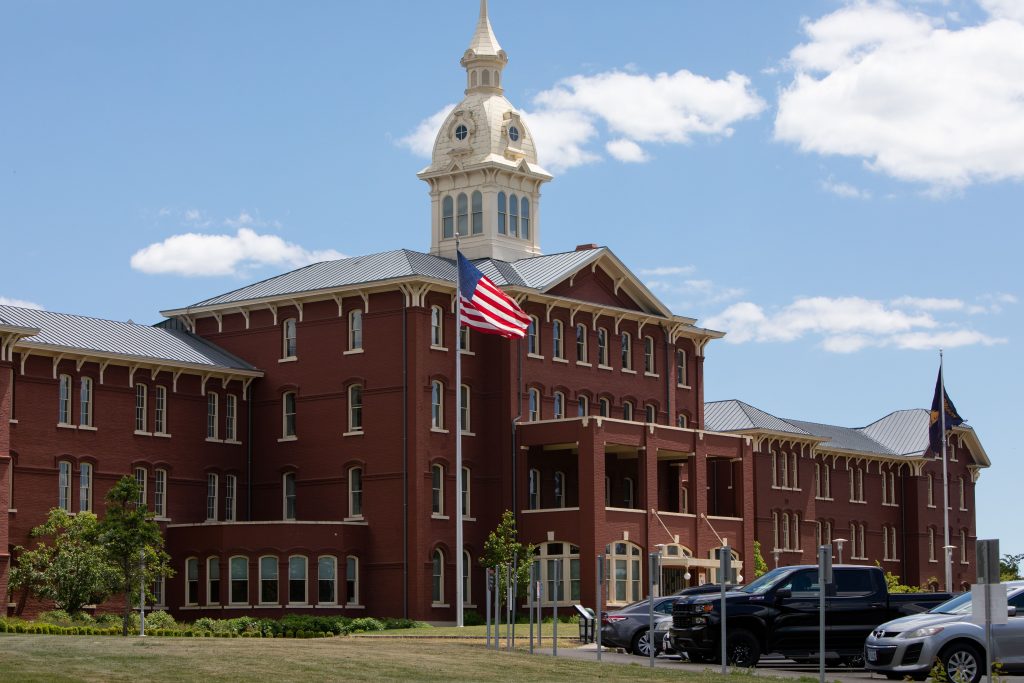
Outside the criminal justice system, a state process called civil commitment allows people whose symptoms could lead to serious violence against themselves or others to be forced into mental health treatment.
In Williams’ case, the judge civilly committed him to the state hospital for up to six months.
He was moved in December 2016 to a psychiatric facility in Bend for another three months and then admitted he had violated his earlier probation, court records showed. A judge extended his probation, meaning he had to continue abiding by conditions imposed earlier.
For over two years, Williams appeared to stay out of legal trouble. He lived at a transitional housing complex in Bend for people with serious mental illness, according to his later jail booking form.
But in May 2019, police responding to a disturbance at a 7-Eleven found Williams with a 10-inch knife, according to reporting at the time by KBND.
Medications stabilized his mental state during his next three months in jail.
“His demeanor has profoundly changed for the better,” an attorney representing him said in an August 2019 court filing.
Meantime, Williams was on a waitlist for a residential mental health facility, a place he could live while getting care. A judge released him from jail and ordered him to report regularly to a treatment team, which helped get him into housing.
Jones, of Community Action, said it’s common for mentally ill people to stay medicated while incarcerated or in a treatment facility, only to be released and find themselves adrift.
“They end up outside, they lose access to their prescriptions or medications, and then they spiral,” he said.
By November 2019, the behavioral health team in Bend warned prosecutors that Williams was not taking his medication as prescribed.
He entered into mental health court in May 2020. For 13 months, he largely complied with his mental health program, according to monthly check-ins with a Deschutes County judge.
Police reports show that in July 2022, Williams threatened a man with a knife and resisted officers when they showed up. A judge again ordered him into treatment.
A year later, Bend police again encountered Williams, walking in the road, yelling at motorists and ripping off his sweatshirt, which was covered in feces. He told police that people were poisoning him.
When officers told him to keep his hands out of his pocket as they talked, Williams said, “I’ll give you my weapon.” He pulled a knife out of the front of his pants and tossed it on the ground. Police arrested him and found he had meth.
A Deschutes County judge ordered Williams’ second stay at the state hospital.
This time, he was allowed to stay just 90 days.
That’s because a federal judge in another case set deadlines for how long patients found unable to assist in their defense can stay at the state hospital. The federal order was intended to address overcrowding. His action has come under criticism from some judges who say it’s created a public safety crisis by forcing violent, mentally ill people either back into the community or to jail without treatment.
As Williams’ release date approached, an evaluator warned the judge that he still would not be mentally fit to proceed.
The judge ordered him to a homeless shelter in Bend to undergo community restoration.
Community restoration is not treatment. It focuses on legal skills and managing medication. It’s intended to help a defendant talk to their attorney and behave in a courtroom.
The judge noted two weeks later, in a December 2023 court filing, that Williams should be in a secure residential facility. Bend had none available.
After five months, the judge found that Williams was mentally fit and sentenced him to time served.
Just a month later, Bend police found Williams blocking traffic after trespassing at a convenience store. A judge found him once again mentally unfit and ordered community restoration.
A judge noted last August that Williams was adamant about not taking medications. But Williams participated for the next three months in restoration. Last November, he was found fit for a trial that is still pending.
Williams’ actions since then couldn’t be readily established. He somehow ended up in Portland last month.
He climbed aboard a bus operated by Pacific Crest. The bus would have left Portland’s Union Station at about noon on Saturday, May 31, and arrived at the Amtrak station in Salem about 1 p.m., according to the company’s website.
The schedule shows a half-hour layover before continuing on to Bend. The one-way fare from Portland to Bend is $60.
Williams got off at the Salem stop. As the driver took a break and fellow passengers waited, Williams approached the bus, tried to force its doors open and “shouted profanities and threats,” according to the bus company’s president, Anthony Ferro.
A confrontation ensued with Salem police. They banned him from the Amtrak property and told him he’d face trespass charges if he returned.
He ended up about two miles away at the Union Gospel Mission, about a 30-minute walk from the train depot.
He spent Saturday night at the Union Gospel Mission in downtown Salem, according to Craig Smith, the shelter’s executive director.
The next night, he decided he wouldn’t be staying again. Employees told him he needed to leave since the shelter was shutting down for the night.
The victims’ ages, injuries and conditions as of Friday, June 6
Four remained hospitalized as of Friday. All are expected to survive, police said.
*37, stab wound to the left arm – hospitalized, in fair condition.
*43, stab wound to the neck which lacerated a major artery – hospitalized, in serious condition.
*55, stab wound to the left shoulder – treated and released.
*31, stab wound to the abdomen – hospitalized, in serious condition.
*26, around nine stab wounds to the face and chest, one of which penetrated his lungs – hospitalized, in fair condition.
*60, stab wound to the center of his back – treated and released.
*59, roughly 4-inch stab wound to the left bicep which penetrated his muscle – treated and released.
*51, stab wounds to the right palm of his hand and left elbow – treated and released.
*32, stab wound to the left shoulder – treated and released.
*57, stab wound to the ribcage – treated and released.
*29, at least one stab wound to the back – treated and released.
*20, laceration which broke the skin across the chest
As he was receiving his bag at the front desk, he pulled a knife and stabbed the neck of an employee working the front desk, according to witness interviews and official statements.
He stabbed several homeless men who rushed to stop him. He then fled out the front door, continuing the rampage.
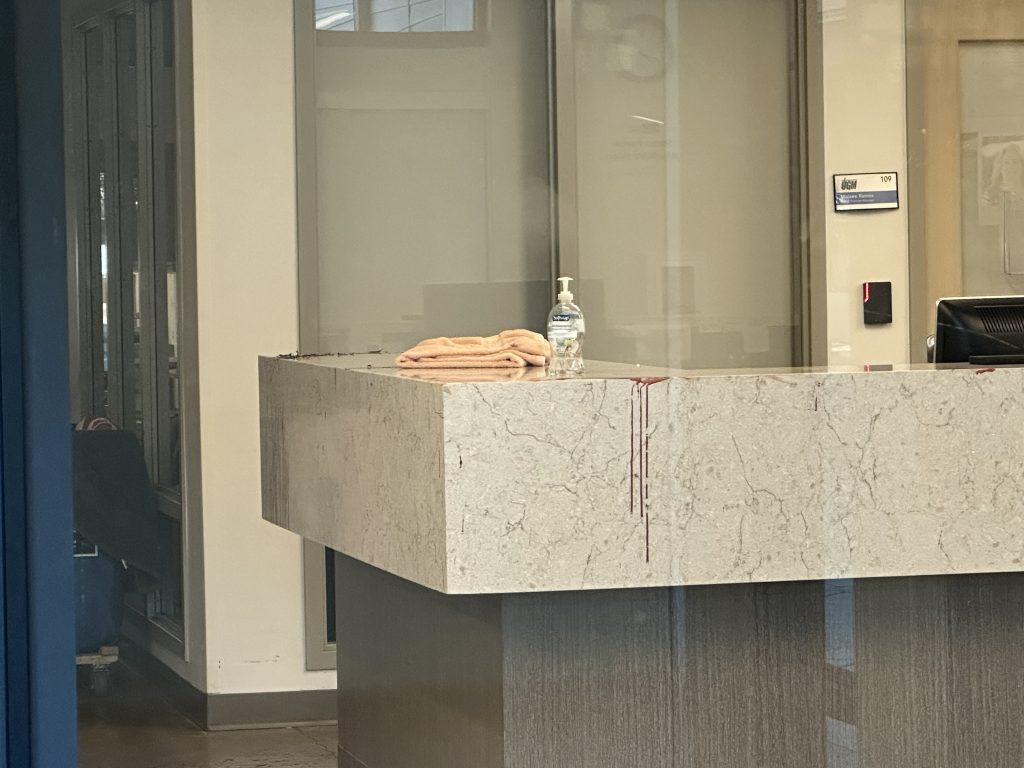
Eleven victims were taken to the hospital. One person was slashed in the face. Two were stabbed in the chest.
Salem police detained Williams on a traffic island as he was walking across the street toward the police station. He had blood on him.
The ordeal lasted less than five minutes.
Williams told officers that he “did it” but in self-defense, according to a police affidavit.
Police reviewed surveillance video from the UGM which showed Williams stabbing the victims “for no apparent reason,” the affidavit said.
They took Williams to an interview room at the police station. When they eventually moved to take him to jail, he struggled with police, drank from a water bottle and spat on officers.
Williams appeared in court on Monday, June 2, and responded to the judge with profane rants and delusions.
On Friday, a Marion County grand jury indicted Williams on five counts of attempted first-degree murder and seven counts of second-degree assault.
Given Williams’ history of mental illness, dangerous behavior and habit of carrying knives, Jones said the mass stabbing wasn’t a shock.
“This was a story a long time in the making,” Jones said.
RELATED COVERAGE:
Critically injured UGM worker shares love as Salem community prays for healing
A place to safely rest becomes a Salem crime scene
How Salem Hospital responded to a mass casualty event
Bend man accused of stabbing 12 during check-in at Salem Union Gospel Mission
UGM closed Monday morning following stabbing of employee, 10 shelter guests
11 stabbed at Union Gospel Mission downtown, suspect arrested
Contact reporter Ardeshir Tabrizian: [email protected] or 503-929-3053.
A MOMENT MORE, PLEASE– If you found this story useful, consider subscribing to Salem Reporter if you don’t already. Work such as this, done by local professionals, depends on community support from subscribers. Please take a moment and sign up now – easy and secure: SUBSCRIBE.

Ardeshir Tabrizian has covered the justice system and public safety for Salem Reporter since September 2021. As an Oregon native, his award-winning watchdog journalism has traversed the state. He has done reporting for The Oregonian, Eugene Weekly and Malheur Enterprise.