SENTENCED TO THE SIDEWALK: In ‘revolving door’ of Salem’s psychiatric unit, getting better is a matter of luck
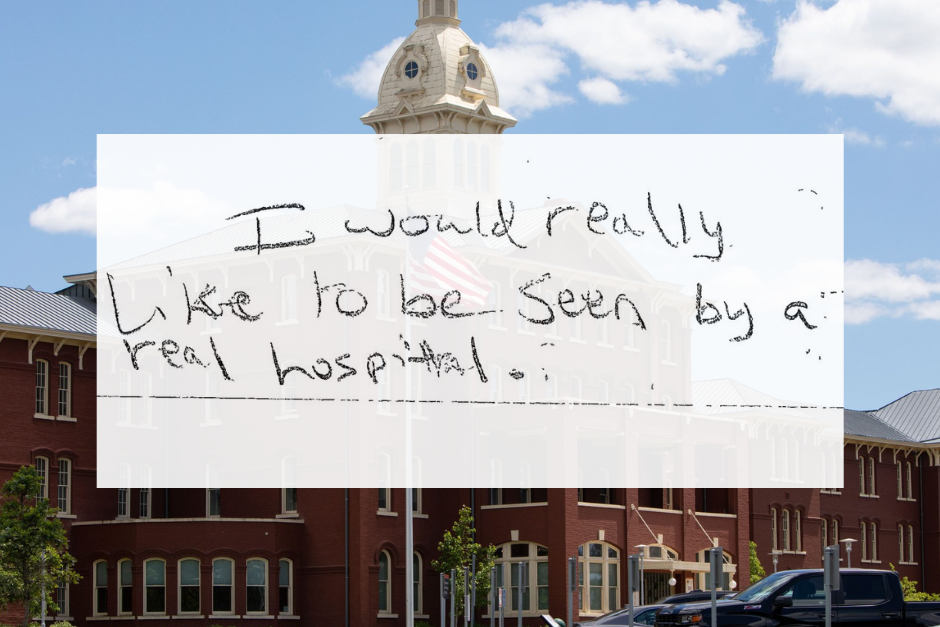
This is part 2 of Salem Reporter’s series “Sentenced to the Sidewalk,” about the failures of Oregon’s mental health and civil commitment system. Part 1 shares the story of Melinda Lou Kayser, a woman who died unsheltered in Salem after being denied commitment. Read part 1 here.
Rick Dezsofi and Dr. Rob Wolf recently had the rare chance to keep a woman out of a vicious cycle of hospitalization without anywhere to go afterward.
She lived outside, had chronic mental illness and needed more long-term care than Salem Hospital’s psychiatric unit could provide.
Dezsofi and Wolf treat hundreds such patients every year. Dezsofi is the hospital’s mental health program coordinator, and Wolf directs the psychiatry department.
Usually, they have nowhere to send unsheltered patients but back out onto the streets with a few days of medication. The woman typically would have been left to manage her severe and persistent mental illness while searching Salem’s streets for food, shelter and safety.
This time, good fortune intervened.
“It just happened, a new adult foster home opened up, and she was… it was luck. She just happened to be hospitalized at the right time,” Dezsofi said.
It’s an occurrence so rare Wolf described it as “a miracle.”
Share your thoughts
We’d like to hear your reactions to Salem Reporter’s “Sentenced to the Sidewalk” series. Send them to reporter Abbey McDonald at [email protected].
Salem Hospital was never envisioned as Salem’s primary mental health treatment facility.
But an investigation by Salem Reporter found the hospital has little choice.
That’s because there is nowhere else to send most patients whose mental illnesses lead them to ignore infected limbs or decline water during heat waves.
There is no system to treat people who refuse help before they get to the brink of death.
Salem Reporter interviewed the doctors, service providers and advocates directly impacted by Oregon’s civil commitment laws, which spell out when someone can be forced into mental health care. The news organization also reviewed published studies and public documents and found:
- Oregon has no functional way to compel long-term mental health treatment for an unsheltered person who is slowly dying because they are unable to care for themselves. Repetitive but brief stints at places like Salem Hospital are often the only care such people receive.
- A half-century of legislative and legal reforms focused on personal autonomy tied mental health care to judges. Tougher standards over time mean people essentially must commit a violent crime before receiving long-term mental health care.
- Years of neglect and a lack of political will to add capacity to mental health treatment leave unsheltered people with little hope of receiving any help before their behavior nearly kills them or leads to an arrest.
Those failures play out daily in the hospital’s psychiatric department.
Rather than being a first step toward healing, it serves as a revolving door for unsheltered patients with serious mental illnesses who receive temporary psychiatric care. That’s often only after they’re brought to the emergency room needing an amputation or to be revived from the brink of hypothermic death.
For Salem’s most vulnerable, the failures are deadly.

Out of options
Salem Hospital runs the busiest emergency department in the state. Of the hundreds that enter through its doors each day, about six to 12 people are seen by the hospital’s mental health evaluators.
Symptoms such as hallucinations, an inability to communicate coherently or delusions may bring them to Dezsofi and Wolf’s department, which has room for 25 patients at a time. Their stay will typically last five to seven days. Hospital staff work to ease them out of their psychosis through a routine including counseling, sobriety and optional medication.
Melinda Lou Kayser was one such patient.
In 2021, the Salem woman had a brief hospital stay after her daughter, Jessica Finnegan, found her in a tent in downtown Salem covered in her own feces and unable to crawl far with a broken hip and severe trench foot.
Finnegan brought her to the hospital for psychiatric care, hoping for long-term help. In the days she was there, Kayser improved. For the first time in years, she carried on a lucid conversation with her daughter.
But the hospital released her with nowhere to go but the sidewalk, leaving her daughter to arrange follow-up care. Most people don’t have such an advocate.
Even with her daughter’s help, Kayser couldn’t handle the housing Finnegan found which lacked the intensive psychiatric care she needed.
Kayser got worse again, falling into the same pattern of neglect. She died four years later, on a sidewalk during last fall’s cold spell, covered with only a tarp.
It’s a cycle too many are stuck in, said Dezsofi.

“We’ll see them over and over,” Dezsofi said. “We have a revolving door.”
He said that the only unsheltered patients who don’t come back through the door are those who social workers were able to place in longer-term care paired with housing. That could be an assisted living facility or adult foster care, where someone can get support to stay stable without needs like food and a place to sleep taking overwhelming precedence.
Those options are few, leaving the fate of people like Kayser to chance.
In a functioning system, patients whose symptoms are still putting themselves or others at risk of harm after a hospital stay would be transferred to a secure psychiatric care facility – such as the Oregon State Hospital – for up to six months.
That longer stay, called civil commitment, happens after an investigation from the county and with a judge’s approval. It’s involuntary for the patient, under the concept that they are not capable of making decisions in their own best interest.
Lynelle Wilcox, who runs the SafeSleep United women’s shelter, said she has not seen any unsheltered person in Salem civilly committed due to an inability to care for themselves. Jimmy Jones, who oversees much of the region’s homeless services, said the same.
Both described watching people deteriorate, their symptoms too disruptive and dangerous to themselves or others to stay in available shelters. Yet, they are still deemed too healthy for civil commitment.
Wilcox watched her friend deteriorate over several years without access to the care he needed.
He was an impeccable dresser, she recalled, and even ironed his jeans. The two would go on hikes together, play disc golf and binge-watch Spanish television, him translating for her.
Two years into their friendship, he told her he was struggling with his mental health.
After a successful round of treatment, he went off his medication. Then he disappeared.
A year later, an unrecognizable man showed up at Wilcox’s shelter. She was shocked to realize it was her friend, gaunt and unkempt. He left before she could talk to him.
Summer came, and on a 100-degree day she passed him while driving. He was wearing three heavy winter coats. She got out of the car, holding water for him. He ran from her.
The next time she saw him, she was able to convince him to sit down and talk. He picked imaginary bugs off his arm. Not insects, he explained. They were spying bugs the Pope had deployed.
Wilcox said she and his family attempted to petition to have him committed. It didn’t work.
“To this day, I wander around and hope I’ll see him. And I don’t know if he’s dead or alive,” Wilcox said.
She’s seen many similar situations.
There was the woman who wore different makeup for different personalities, who would urinate on herself in the hope it would deter rapists on the street. When she began throwing rocks at cars, Wilcox hoped it was enough to get her committed. It wasn’t.
Another woman believed that stalkers were digging underneath the shelter, and wanted the staff to do something to prevent them from popping up out of the ground. Another had to be removed because she couldn’t stop moving from bed to bed, tucking sleeping people in against their wishes.
None of these people were violently dangerous, but neither could they care for themselves.
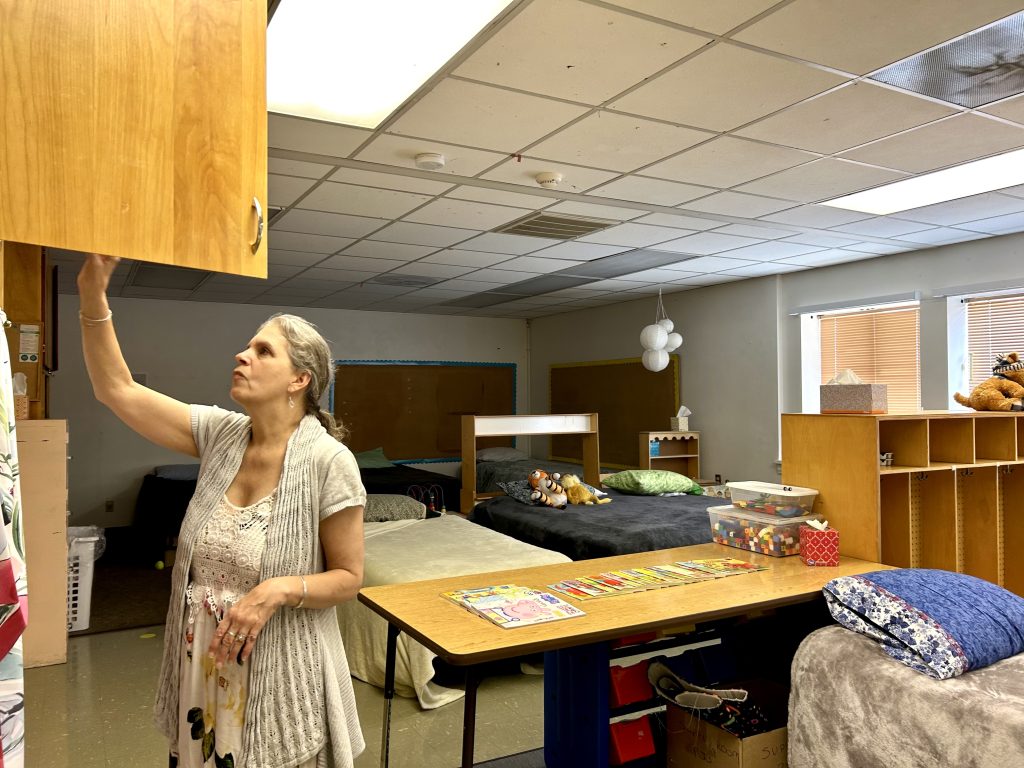
A half century of reforms left Oregon with a system that isn’t designed to help such people.
“People think that if their loved one is mentally ill, or even if they have a co-occurring disorder or maybe they’re an amphetamine addict, that they can be committed,” Dezsofi said. “That doesn’t really happen anymore.”
Salem Hospital is essentially the only open door to psychiatric care for unsheltered people in the community outside of jail. As a result, doctors are stitching up the same people and stabilizing their psychotic episodes over and over again, knowing it will do little to improve their quality of life once they leave the hospital.
“It’s frustrating to be in acute inpatient psychiatric care in 2025 because we’re not able to make anybody happy. And, to me, the biggest linchpin in that unhappiness is the lack of a place for people to go who need longer-term care,” Wolf said.
Building barriers
Oregon’s barrier to admission for long-term psychiatric care is high. It used to be virtually nonexistent.
Before reforms, someone could be locked away for the rest of their life at a family member’s request and with a doctor’s note.
During the 20th century, Oregon State Hospital patients included people considered a “financial burden” to their families or home counties. Someone homeless or elderly could be committed for life.
Inside state facilities, patients endured overcrowding, forced labor and sterilization. The facilities kept people out of sight from the rest of society.
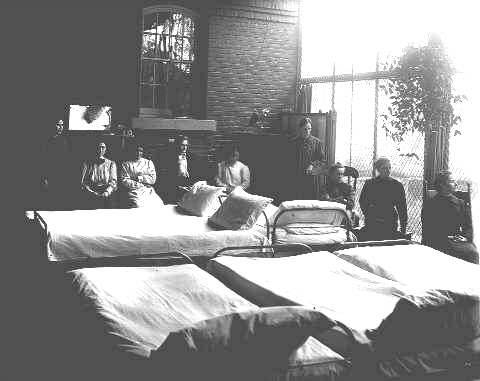
Activists and legislators sought to better protect patients from civil rights violations by having judges decide whether to mandate treatment.
The resulting reforms still determine who qualifies for help. A 1973 change to Oregon law defined a committable mentally ill person as someone posing an “imminent and serious danger” to themselves or others, or “unable to provide for his basic personal needs and is not receiving such care as is necessary for his health or safety.”
The broad phrasing of “basic personal needs” left judges leeway to interpret. They applied the requirements strictly, raising the standards, according to research published in 2022.
Each rejection of someone despite frostbite or dangerous behavior set a higher precedent for investigators to follow. In Salem, most cases — 90% — are rejected by county investigators before reaching a judge.
The 2022 study said it’s likely qualifying cases are not being seen by judges, who could consider them more thoroughly.
“We’re so in favor of autonomy that we’re letting people die.”
Lynelle Wilcox, SafeSleep United director and homeless advocate
Jones, the executive director of the Mid-Willamette Valley Community Action Agency, said the high threshold for commitments came from good intentions, but ended up creating an insurmountable barrier for people like Kayser, who are dying too slowly to qualify for help.
“We don’t want to deprive them of their civil rights. And I agree with all of those things, but those advocates are not looking at people like Melinda, who is living and dying on the street and cannot make the choices that allow her biologically to thrive. So literally, she’s killing herself because she’s not capable of seeking safety,” Jones said.
Marion County investigators said they are now trained by the state to reject anyone who can’t care for themselves from long-term treatment unless it’s clear they’ll die within the “near future,” which has been interpreted to mean the next few days or weeks.
Investigators aren’t medical professionals, and often struggle to get a medical professional willing to testify that the person’s death or serious injury is imminent in court, said Deputy Director Katrina Griffith in an email.
“That threshold — regardless of whether it’s defined in hours or days — is ultimately what determines the ability to take action, and it’s a high bar to meet without clear and compelling medical evidence,” Griffith said.
County staffers said their work would benefit from a clearer definition of imminent, which crisis services director Debbie Wells described as “nebulous.” It’s a concern cited in a statewide report on civil commitment by the Department of Justice published in November.
Investigators said they’d also like more time to do their jobs. Currently, investigators have just three days to make a life-changing decision on whether to move someone’s case forward. The court then has two days to review their findings.
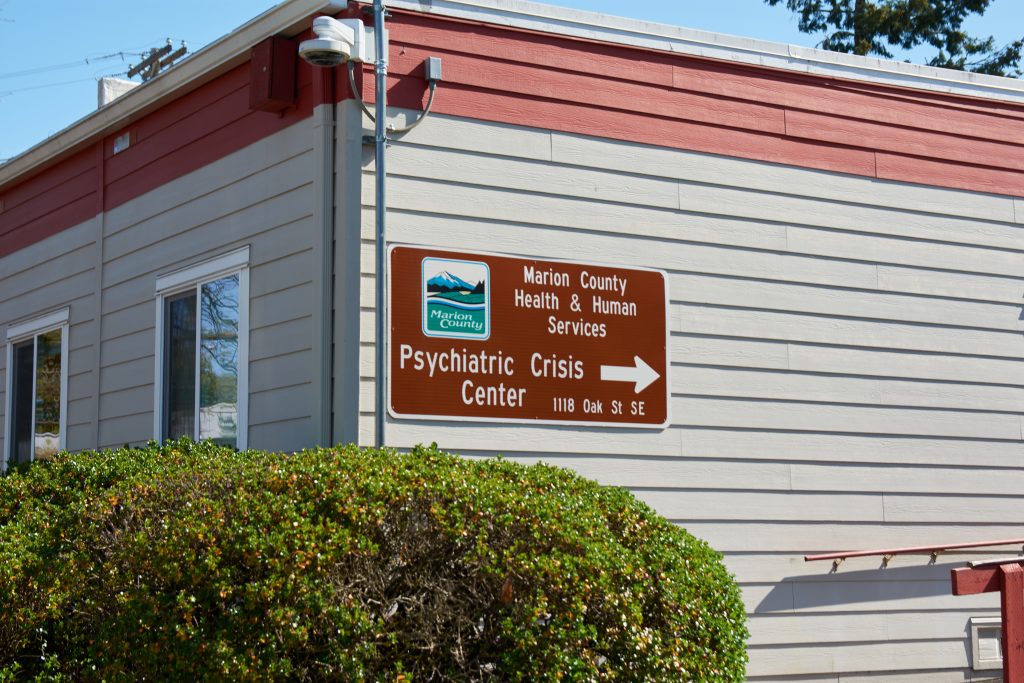
Judge Audrey Broyles, who for years ruled on most of Marion County’s civil commitment cases, said that part of the issue is that investigators often meet people who have been stabilized by medication after a few days in the hospital or jail. Evaluations can’t consider a longer pattern of behavior beyond the moment they meet the patient.
“It is just so frustrating that you can see these people’s history. You can see they have years and years of attempted civil commitments or dismissed civil commitments … and they really are no better off or not in a better position to take care of themselves,” she said.
Wilcox, whose background is in disability advocacy, said she used to support keeping high the bar to civil commitment. She now believes it must be lowered.
“We never want to have it be where it’s easy to commit people and horrifically abuse them. And I never thought I would change my mind because of that background, but this background is showing me how people are falling through every crack and dying on the streets because we don’t have and won’t give the help that they need. Because we’re so in favor of autonomy that we’re letting people die,” she said.
Shrinking availability
Oregon’s overburdened mental health system already lacks space for patients who are clearly at risk of homicide or suicide and must be committed. Some advocates say that discourages investigators and judges from committing people, even if they qualify on paper.
Those gaps are the result of a decades-long failure by lawmakers and health officials to stand up a system that can treat people with severe mental illnesses without locking them away for life.
In response to activism in the 1950s, federal laws pulled funding from state institutions where patients were abused, and offered states money to build community mental health facilities in their stead.
Those laws didn’t provide any guidance on how to make the transition. Fewer than half of the 1,500 community centers the federal government wanted built nationwide by 1980 were funded, according to the Oregon Historical Society.
Oregon fell behind, waiting years to seek federal funding over concerns that the flow of money would be temporary. Fifty years later, the state ranks near last in mental health in the U.S. for its high rates of illness and low access to care.
The mid-Willamette Valley region that includes Salem has secure treatment space for 106 people, and needs at least 36 more spaces, according to a June 2024 Oregon Health Authority study. The region’s capacity for people who need mental health, addiction treatment or both is just 440 — one third of what the state estimates is needed.
”I really do attribute that to (Oregon Health Authority),” Broyles said. “I think that they have been really remiss in not using their funding to stand up these secure residential treatment facilities that we so desperately need.”
Oregon Health Authority spokeswoman Amber Shoebridge said past efforts to expand such care include supporting legislation that in 2021 put $230 million toward statewide capacity increases, and has worked to increase the workforce.
Most treatment slots now go to criminal defendants, who have priority care at the state hospital and, once discharged, tend to fill up community treatment options.
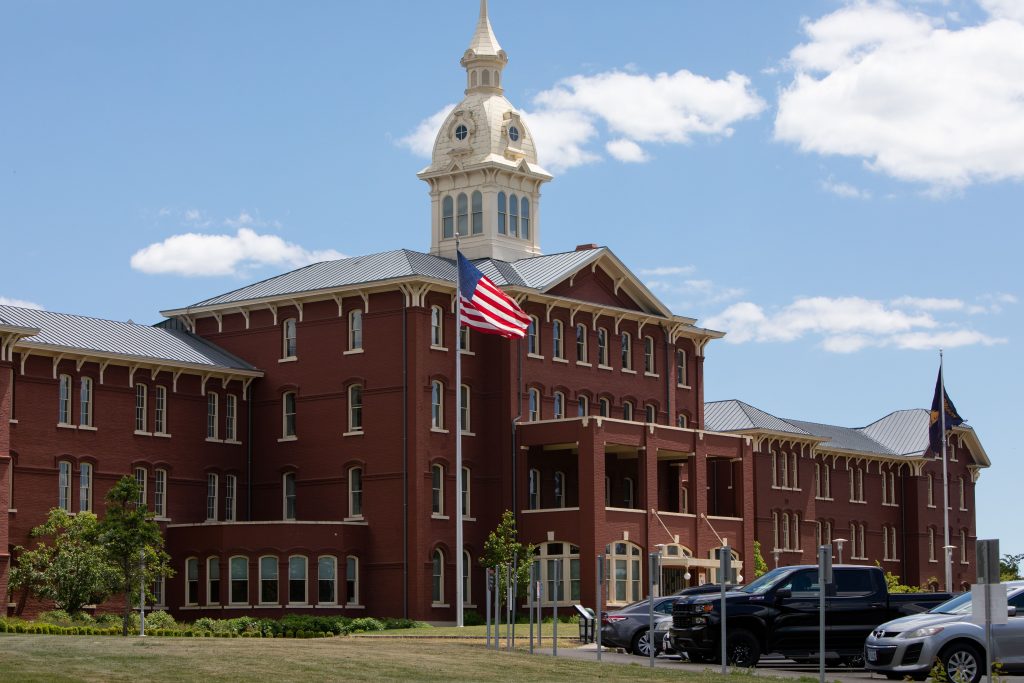
In 2015, Salem Hospital’s behavioral health unit held 103 people during a civil commitment. That year, they transferred 23 patients to the Oregon State Hospital.
In 2024, they civilly committed 35 patients, and transferred zero to the Oregon State Hospital.
Since 2020, Salem Health has sent just one person to the state hospital, Dezsofi said. That patient, in January 2021, was a special case – he assaulted staff.
A federal court ruling in 2022 further restricted who could be sent to the state hospital. That decision effectively limited high-level care for people accused of a crime.
Two people with the same diagnosis can have different outcomes depending on their behavior during a psychotic episode. The person who threatens to kill a stranger with a knife has a better chance of getting long-term treatment than the person dying of dehydration after refusing to drink water they believe is tainted by the government.

“So the state hospital now in Oregon is really a forensics facility. It’s for individuals who have committed a crime and have been assessed as potentially suffering from a mental illness, and so they go to the state hospital. The civil commitment patients are really left out on the lurch on this one,” Wolf said.
The Oregon Health Authority in 2023 moved the court to expedite its state hospital admissions for qualifying civil commitment patients who remain an “ongoing high risk” to themselves or others. Shoebridge said that has allowed for more such patients to be admitted. But the vast majority of patients there are accused of crimes, a status called aid and assist.
On an average day in March 2025, 383 patients at the Oregon State Hospital were there under aid and assist orders, and 27 patients were there after being civilly committed, according to Shoebridge.
Wolf believes that the shortage of treatment slots at the state hospital causes investigators and judges to reject eligible patients from civil commitment, knowing that there won’t be a place for them if they’re committed.
“If we had access to long-term care, the rest of it would probably get a lot better,” Wolf said.
Broyles said she’s never dismissed a qualifying case over concerns of a lack of space for treatment.
“Around the state, are there judges that think that? I’m sure there are. Because you just get worn down after a while. So I do think that the counties get frustrated because you put in all this work and then nothing ever happens,” she said.
Disability Rights Oregon is an advocacy group whose lawsuits led to the federal court rulings affecting hospital stays. Tom Stenson, the group’s deputy legal director, said that the physical lack of capacity to treat people who need it is the largest issue with the system.
He said making it easier to commit people from Salem’s streets won’t end up helping more people.
“People who were not lining up to make sure that the services existed to support people … are now militating for ‘Let’s make the law tougher,’ as if the law is the problem. It’s pretty clearly not. It’s pretty clearly the problem that the system is overloaded and can’t handle the number of people being civilly committed now,” he said.
County investigators say their goal is not to institutionalize people or put them in the hospital.
“We really want to help people be successful in the community,” said Ann-Marie Bandfield, project manager of the county’s behavioral health crisis services.
But that requires resources that don’t exist.
The rest of their lives
With the state hospital limited, communities such as Salem don’t have many choices to help people like Melinda Lou Kayser. As their conditions worsen, the pressure to find care leads to more efforts for a court-ordered intervention.
Some advocates, such as Stenson of Disability Rights Oregon, believe the state should invest more in earlier care.
“If we focus too much on people who are totally decompensated and really, very, very, very sick and just say, ‘We need more ways to treat people who are very, very sick’ – which we certainly do – then we are missing the opportunity to catch people before they get very, very, very sick,” he said.
He noted that six months of treatment at the state hospital costs $300,000. An apartment with supported care costs $25,000 a year, he said. The Oregon Health Authority confirmed that cost.
“With enough psychiatrists, with enough antipsychotic drugs, you can stabilize anybody for six months,” he said. “That’s not the hard part. The hard part is: what do you do with the rest of their lives?”
Kayser appears never to have had that chance.

Decades before her death from neglect on a Salem sidewalk, Kayser asked to be committed for mental health treatment in Roseburg.
She was refused, and instead was charged with drug possession. When she stabbed a roommate a year later, she received only enough treatment to prepare her to behave in a courtroom.
Later, as a senior living in Salem, she briefly got help with housing. But without intensive support to stay on her medication or ongoing treatment, her behavior got her evicted.
She was subsequently arrested several times for trespassing while sleeping on a sidewalk and throwing things at passersby. A hip injury and arthritis left her largely immobile.
None of those experiences resulted in long-term psychiatric treatment. As she deteriorated, Kayser stopped wanting help.
When her daughter found her on the streets once again in August 2024, she recorded the scene to build the case to get a judge to order her mother into treatment. In the video, a nude and injured Kayser is mumbling on a Salem sidewalk, implying she doesn’t want police or an ambulance to come.
Jones wasn’t surprised by her resistance.
“After her life experiences, her unwillingness to accept help and her insistence to refuse makes a lot of sense,” said Jones, who directs homeless services programs in Salem.
He said with earlier care, Kayser might have handled supportive living arrangements at age 30 that she couldn’t abide when she was 60. He’s seen it happen.
“Maybe they don’t go out and become super successful, or they don’t turn into millionaires, but they’re able to kind of keep pushing through life and take care of themselves. And the difference between that story and Melinda’s story is random. It’s basically just bad luck,” he said.
Jones said the state and its people have to do better.
“It demeans all of us when injustices like this happen, where vulnerable people are left to die alone, painfully and in fear, just because the rest of us throw up our hands and say we’re uncomfortable or we don’t care enough to solve it,” Jones said.
In Kayser’s case, the answer from county workers at one point had been to give her a business card listing resources.
“For a lot of homeless clients, certainly with those conditions, certainly Melinda and others, you might as well be giving them a business card to the moon,” Jones said.
In “Sentenced to the Sidewalk” Part 3, learn what options for change lay ahead. Read Part 3 here.

Contact reporter Abbey McDonald: [email protected] or 503-575-1251.
A MOMENT MORE, PLEASE– If you found this story useful, consider subscribing to Salem Reporter if you don’t already. Work such as this, done by local professionals, depends on community support from subscribers. Please take a moment and sign up now – easy and secure: SUBSCRIBE.

Abbey McDonald joined the Salem Reporter in 2022. She previously worked as the business reporter at The Astorian, where she covered labor issues, health care and social services. A University of Oregon grad, she has also reported for the Malheur Enterprise, The News-Review and Willamette Week.