Western University of Health Sciences Lebanon Oregon

COLUMN: Comfort and safety during an emergency
CERT update

We’re looking to schedule a new Community Emergency Response Team training class sometime this coming fall. The class will still be held each Thursday evening over a six-week period, with a bonus exercise on the Saturday following the last class. If you want to be added to the waiting list to be the first to know when dates are set, please reach out to me at [email protected].

Practiced, not perfect

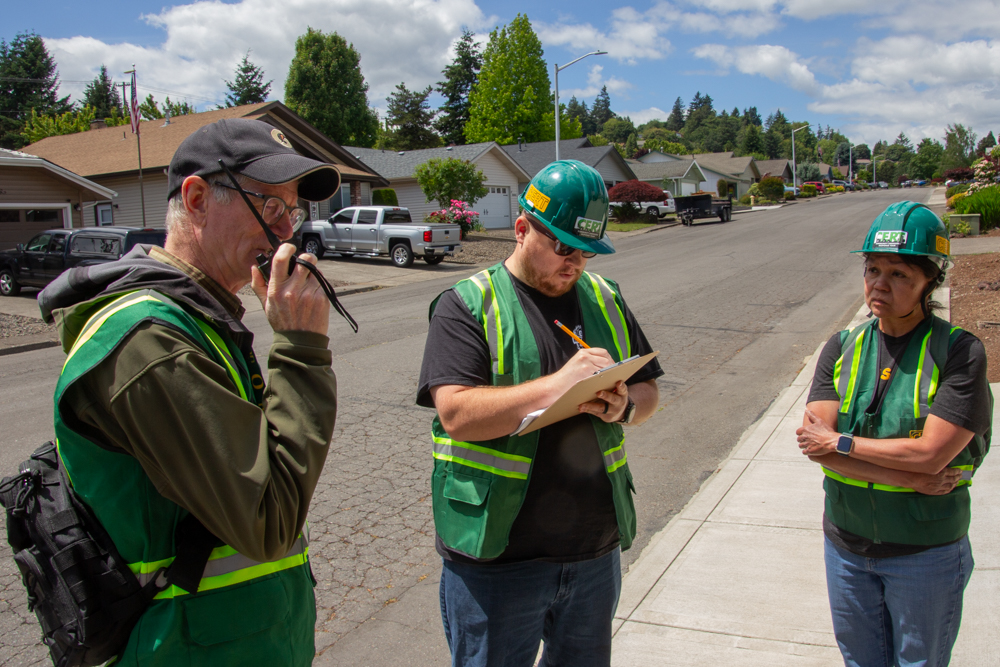
While the spring class was postponed, our current members weren’t idle. On Saturday, May 30, Salem CERT participated in a deployment exercise coordinated by Portland NET (their version of CERT) and our own West Salem Team. Over 300 CERT members signed up statewide, including teams from Happy Valley, Tigard, Yamhill County, Woodburn, Cannon Beach, Nehalem Bay and South Lincoln County.

Western University of Health Sciences Lebanon Oregon

During this exercise, we simulated a response to a major earthquake. In West Salem, we managed 37 different “injects,” plausible scenarios we could face, including performing simulated triage and first aid for more than 35 “survivors.” In our after-action debrief, the consensus was clear: we learned something of what a real deployment could look like and how to handle multiple competing priorities at once. We are already looking forward to doing this again this fall.

Salem CERT responding during a practice simulation of a major earthquake on May 30, 2026. (MARK WARDELL photo)

The shelter plan

In the emergency management world, we often talk about “sheltering in place.” This means turning your home into a self-sustaining sanctuary when the world outside becomes chaotic. However, a house is only a shelter if it remains dry, safe and manageable. In a Cascadia-level event, your home might survive the shaking, but it will face immediate challenges: broken windows, compromised utility lines and a total loss of climate control.

A solid shelter plan is about active maintenance. It involves identifying the “safest room” in your home, usually an interior space with the fewest windows, and having the supplies on hand to “seal” it if air quality becomes an issue or if you need to create a micro-climate to stay warm in the winter. It’s about more than just the four walls; it’s about the systems you put in place to manage waste, maintain body temperature and protect yourself from the physical hazards that a damaged building can present.

The psychology of comfort and safety

We also need to consider the “comfort factor.” When the grid goes down, your home can quickly become a dark, stressful environment. A major part of sheltering is lighting and energy. Psychological resilience is tied directly to your environment; being able to see your surroundings and maintain a “normal” energy level with quick snacks can be the difference between a household that stays calm and one that panics.

By gathering your PPE (Personal Protective Equipment), organizing your food and building your emergency sanitation facilities now, you are removing the “friction” of a disaster. You aren’t just “staying home,” you’re managing a recovery.

When ‘home’ is no longer the best option

While our goal is to stay within the familiar walls of our own homes, we must also recognize when those walls are no longer safe. If you smell gas, see major structural cracks in the foundation or load-bearing walls or if a fire breaks out that you cannot immediately contain, your plan must shift from ‘Shelter in Place’ to ‘Shelter Nearby.’ This is where your Go-Kit and your PPE become your mobile sanctuary. Nearby sheltering might mean setting up a tent in your backyard or a sturdy vehicle, away from falling hazards like chimneys or power lines. The ‘Shelter Plan’ isn’t just about a physical building; it’s about the mindset of maintaining a safe, dry and protected environment for your family, wherever that needs to be.

The ‘2 Weeks Ready’ roadmap: June edition

Week 21: The DIY Porta-Potty You don’t need a plumbing system to maintain dignity. For under $10, you can build an “on-the-go” toilet. The Kit: A 5-gallon bucket, a heavy-duty trash liner, and a pool noodle (cut to fit the rim) for a seat.

  • Pro-tip: You can go the extra mile by using the “two-bucket” system we discussed last month or by adding a layer of kitty litter to manage odors and moisture.

Week 22: Quick Energy Snacks Recovery is hard work, and you’ll need calories that don’t require cooking. Stock up on granola, raisins, peanut butter and almonds.

  • Pro-tip: These have a long shelf life, are quick to grab and easy to store. Focus on high-protein options to keep your stamina up.

Week 23: PPE Safety starts with what you wear. Gather these items into one central location: safety glasses, heavy-duty work gloves, sturdy shoes, a hard hat and a bright safety vest.

  • Pro-tip: In the aftermath of an earthquake, there will be broken glass and debris. Having your PPE in one “grab-and-go” bag prevents injuries before they happen.

Week 24: Sunscreen (The “Outdoor” PPE) Sunscreen is essential medical protection, even when it’s cloudy.

  • Pro-tip: This is especially important for children and those taking medications that increase sun sensitivity. Remember to check the expiration dates on your bottles, as the active ingredients break down over time.

Coming up in July

Next month, we will take a look at Unit 7: The First Aid Plan. We’ll discuss how to build a medical kit that goes beyond a simple box of Band-Aids. Our roadmap will focus on sterile dressings, antiseptics, and essential medications. We’ll also have an update on our local Salem CERT events, including a look at our summer schedule.

June “2 Weeks Ready” Checklist

  • [ ] The Shelter Plan: Inspect your home for potential hazards (unsecured bookshelves, etc.) that could affect your “Safe Room.”
  • [ ] Week 21: DIY Toilet: Assemble your bucket, liners, and pool noodle seat.
  • [ ] Week 22: Snacks: Stock 14 days of high-energy, no-cook snacks.
  • [ ] Week 23: PPE: Consolidate your gloves, glasses, and sturdy shoes in one place.
  • [ ] Week 24: Sun Protection: Add fresh sunscreen to your emergency kit.

Salem Reporter publishes a regular column from Mark Wardell, West Salem team leader for Salem’s Community Emergency Response Team, focusing on emergency preparedness and planning.

If you have any questions about this article, preparedness in general, or if you’d like to inquire about joining CERT or scheduling a CERT presentation for your organization, please don’t hesitate to contact me, Mark Wardell, at [email protected].

SIGN UP: Independent reporting gives Salem a stronger voice and holds those in power accountable on issues ranging from homelessness to health care. Be part of that work by becoming a subscriber. Subscribe today.

STORY TIP OR IDEA? Send an email to Salem Reporter’s news team: [email protected].

Born and raised in Portland, Oregon, Mark lived there most of his life before moving to West Salem in 2018. After moving to West Salem, he joined the Community Emergency Response Team (CERT), a FEMA program sponsored locally by the Salem Fire Department. Currently he is the Team Leader in West Salem, and part of the CERT Advisory Group for the city. Mark writes about emergency preparedness for Salem Reporter.

Leave a Reply

Western University of Health Sciences Lebanon Oregon
Baha'is Faith of Salem Coffee and Conversation Series Ike Box Cafe Salem Keizer Oregon
Steller Landscapes Salem Oregon

Create a free account, or log in.

Gain access to read this article, plus limited free content.

Yes! I would like to receive new content and updates.