A dozen Chemeketa Community College employees race from Mount Hood to the Oregon Coast
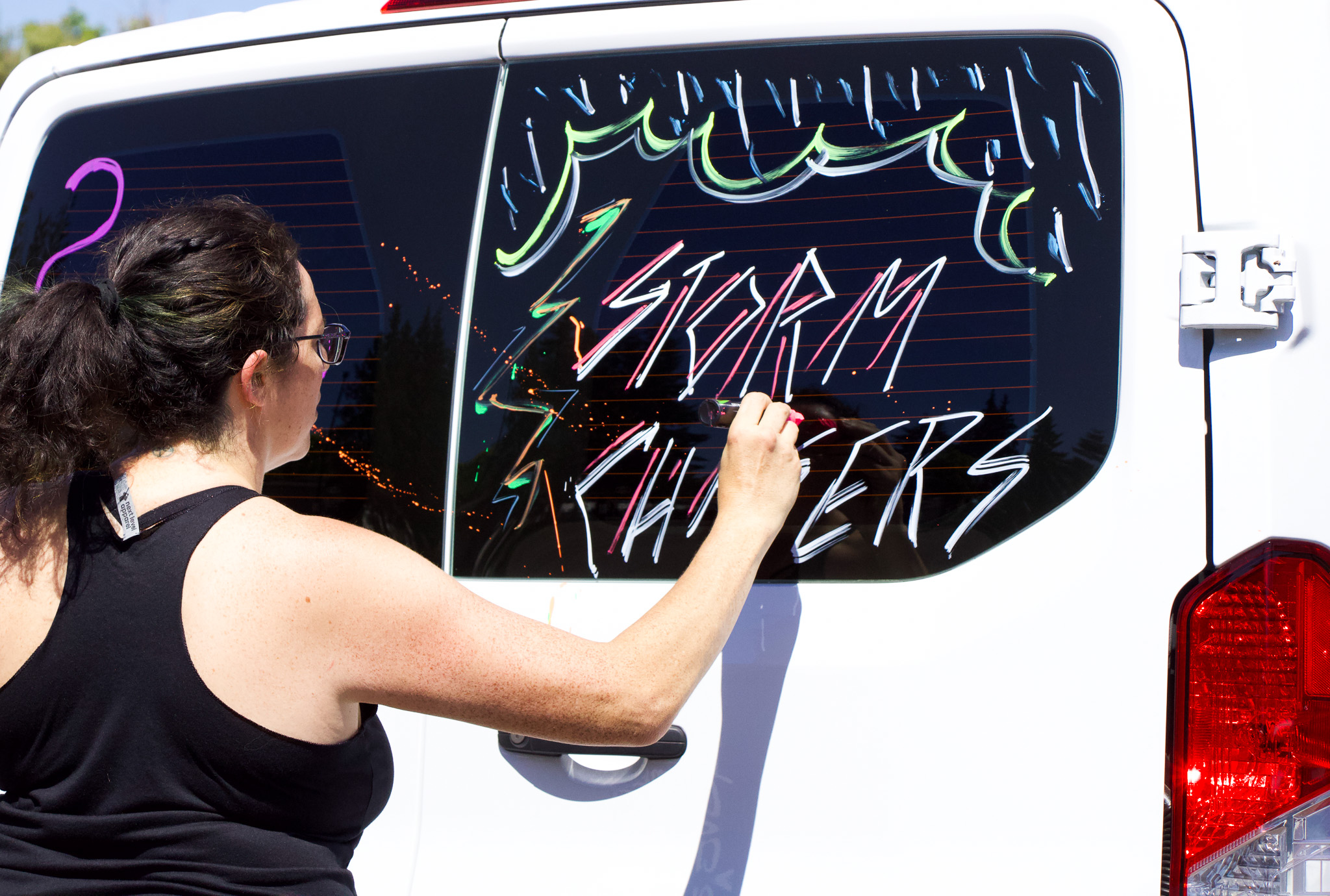
Two vans decorated with clouds, lightning bolts and the “Chemeketa Storm Chasers” name will roll out Friday morning as the Chemeketa Community College relay team embarks on the Hood to Coast race.
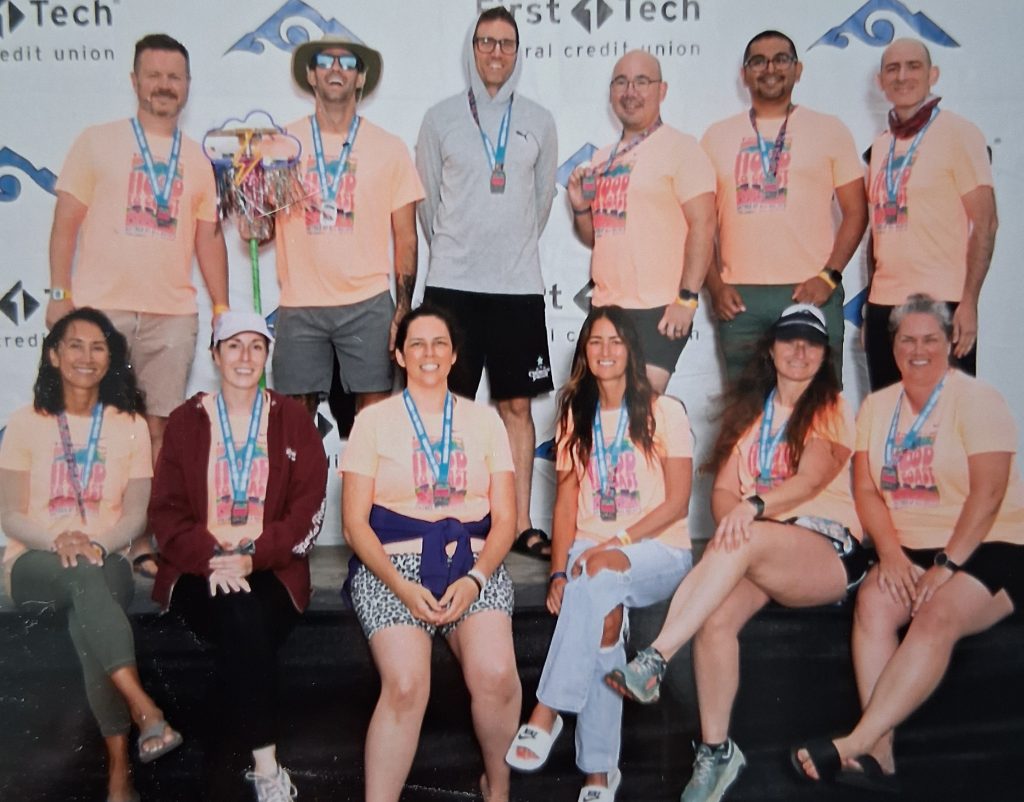
The relay team, which has been around for over 20 years, includes a dozen current and former Chemeketa Community College staff. They leave Salem at 3 a.m. Friday to compete in the annual 196-mile relay, starting on Mount Hood and ending in Seaside around 36 hours later.
The Providence Hood To Coast Relay, held each August, hosts 1,000 teams of eight to twelve runners each year. Getting into the race is competitive, with spots selling out for the past 37 years.
Each member of the Chemeketa team will run three separate legs of the race, ranging from four to eight miles. The race spans Friday morning to Saturday afternoon, with racers running all day and all night.
While many Storm Chasers find the nighttime runs peaceful, a scary encounter from last year is hard to forget.
While running on a forested road at night during last year’s race, Jessica Wright stopped in her tracks when she heard a low growl. When she looked towards the source of the noise, a pair of cougar eyes gleamed back at her through the dark.
Wright smartly chose not to run and yelled “Stop!”, scaring the animal away.
Wright has run with the Storm Chasers for around six years. Despite last year’s scare, she is racing again and isn’t afraid of doing another night leg.
“Running at night has never bothered me, I’m a country girl,” Wright said.
Wright is from Molalla. She now lives in Tillamook and teaches sixth grade following 12 years working at Chemeketa on high school partnerships.
This year’s team includes eight current Chemeketa staff, including faculty and advisers, and four former employees. They’re backed by two volunteer drivers, three volunteers monitoring the course and two volunteer cooks who will prepare a meal for the team at the end of the race.
Racers are divided between two vans supplied by the college. They will sleep, eat and pass time in the vans between runs.
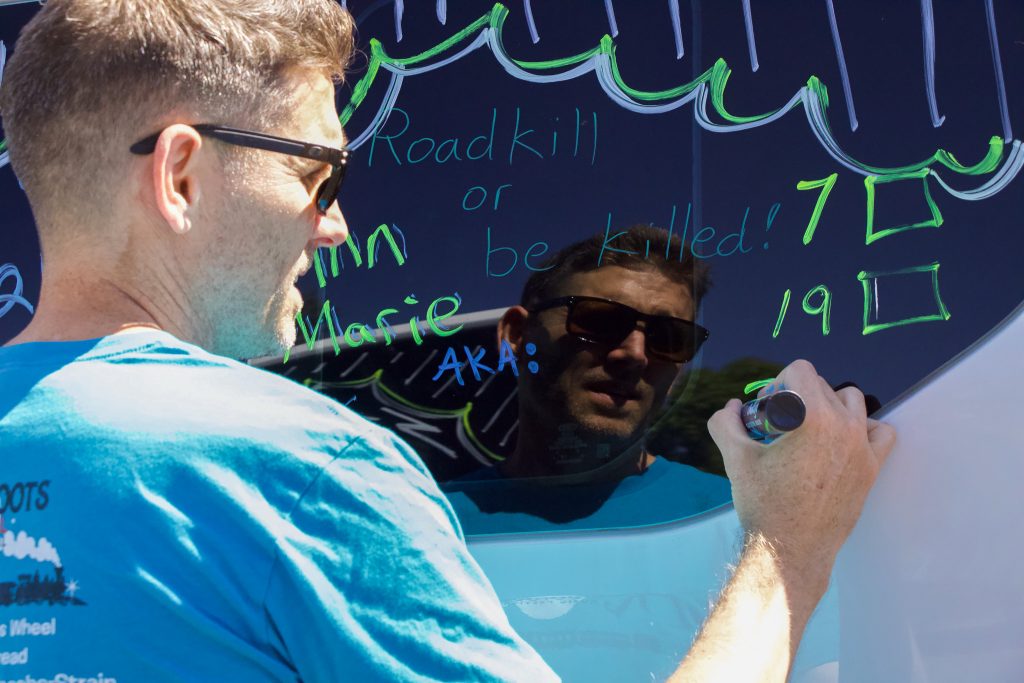
After a Storm Chaser finishes a leg of the race, they record their “road kills” in marker on the side of the van. It’s a tradition for the team, where racers count how many runners they pass along their stretch, and tally them up at the end.
Vans stop at one of three designated fields where racers have time to eat and, for some, get a little sleep. There, Storm Chasers use lighted cloud signs to spot each other in the dark.
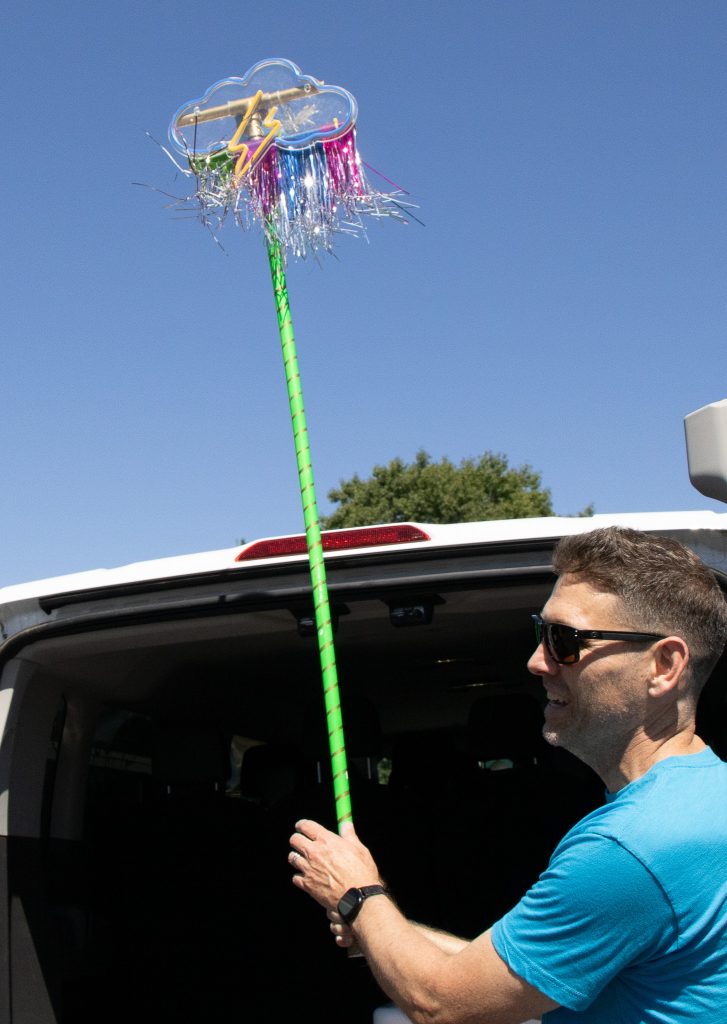
Some racers will sleep on the chairs in the van or on each other’s shoulders.
GED program instructor Bryan Rollins usually tosses a pad in the field just outside of the van to sleep on, or merely rest his eyes. Rollins, who has been on the team for eight years, often only gets two to three hours of sleep between Friday and Saturday.
There are few opportunities for runners to shower during the long race. Sometimes, they just have to settle for a quick wipe down.
A former Chemeketa vice president opens her Lake Oswego home to racers in the first van, who can shower, eat and fit in a quick nap there. Some high schools also offer showers to racers for a small fee.
“It can get stinky in the van,” Rollins said. “Bring lots of deodorant.”
When they’re not sleeping in the van, runners listen to music, read and chit chat.
Paco Hadley, an academic adviser, likes to bring juggling balls with him to pass the time.
Hadley took up running just a few years ago, and said he finds it much more difficult than unicycling – a sport he has been doing for some decades. Still, this will be his second time running Hood to Coast with his Chemeketa colleagues.
The toughest part, he said, is the lack of sleep.
Hadley is also recovering from a sore Achilles tendon.
“As long as I can make it through the first run, I might be sore for the second run, and I’m almost positive my Achilles tendon is going to hurt for the third run,” Hadley said. “But at that point, it doesn’t matter, because then I’ll be done, and then I can take a month off or whatever to recover.”
Exhausted, sore and admittedly “not actually a big fan of running,” Hadley still enjoys the relay for the chance to connect with his colleagues.
Rebekkah Barnett, an oncology nurse and nursing instructor at Chemeketa, will run Hood to Coast for the first time this year. She has been trying to do the race for over a decade now.
As well as achieving a longtime personal goal, Barnett is looking forward to the camaraderie, setting a good example for her students and supporting cancer research.
Through donations, team fundraising and sponsorships, the race generates thousands in funding for cancer research each year.
“This is also a really cool opportunity to show my students… what it can look like as a nurse, to not only be active in your community, but also be involved with organizations who are forwarding cancer research.”
Barnett’s family will meet her in Seaside Saturday to cheer her across the finish line.
Hadley will be running the final leg of the race this year. Before crossing the finish line, he will be joined by his fellow racers so they can all cross the line together.
The team’s goal is to finish with a time under 37 hours, so they can be entered into lottery for next year.
After crossing the finish line and taking photos, the team has another annual tradition of running to the ocean to touch the water, officially marking the end of their odyssey.
Have a news tip? Contact reporter Hailey Cook: [email protected] or (208) 515-4097.
A MOMENT MORE, PLEASE – If you found this story useful, consider subscribing to Salem Reporter if you don’t already. Work such as this, done by local professionals, depends on community support from subscribers. Please take a moment and sign up now – easy and secure: SUBSCRIBE.
Hailey Cook covers healthcare for Salem Reporter, from the city’s only hospital to local outlooks on health insurance coverage. She joined the newsroom in 2025, following the completion of an internship through the University of Oregon’s Charles Snowden Program for Excellence in Journalism. She also works as a photojournalist, capturing community events, government meetings and other gatherings.