Salem will speed up water system upgrades to prepare for Detroit Reservoir drawdown
Salem city councilors on Monday authorized fast-tracking a number of water infrastructure projects to safeguard the city’s drinking water supply in preparation for a deep drawdown of the Detroit Reservoir meant to improve fish passage scheduled for next year.
All city councilors voted in favor of declaring an emergency, which will run through Dec. 2026, with the exception of City Councilor Vanessa Nordyke who was absent.
The emergency declaration means the city can move faster than it would be able to under normal circumstances to secure contracts and begin a number of resiliency and expansion projects for the city’s water system.
While the U.S. Army Corps of Engineers has told the city the drawdown is coming in the fall of 2026, city officials said they will consider filing suit against the corps to hopefully stop the action. Despite that, proceeding with the water infrastructure projects in preparation for the drawdown is also about not wasting any time and working to increase the system’s resiliency, city officials said.
Where does Salem get its water?
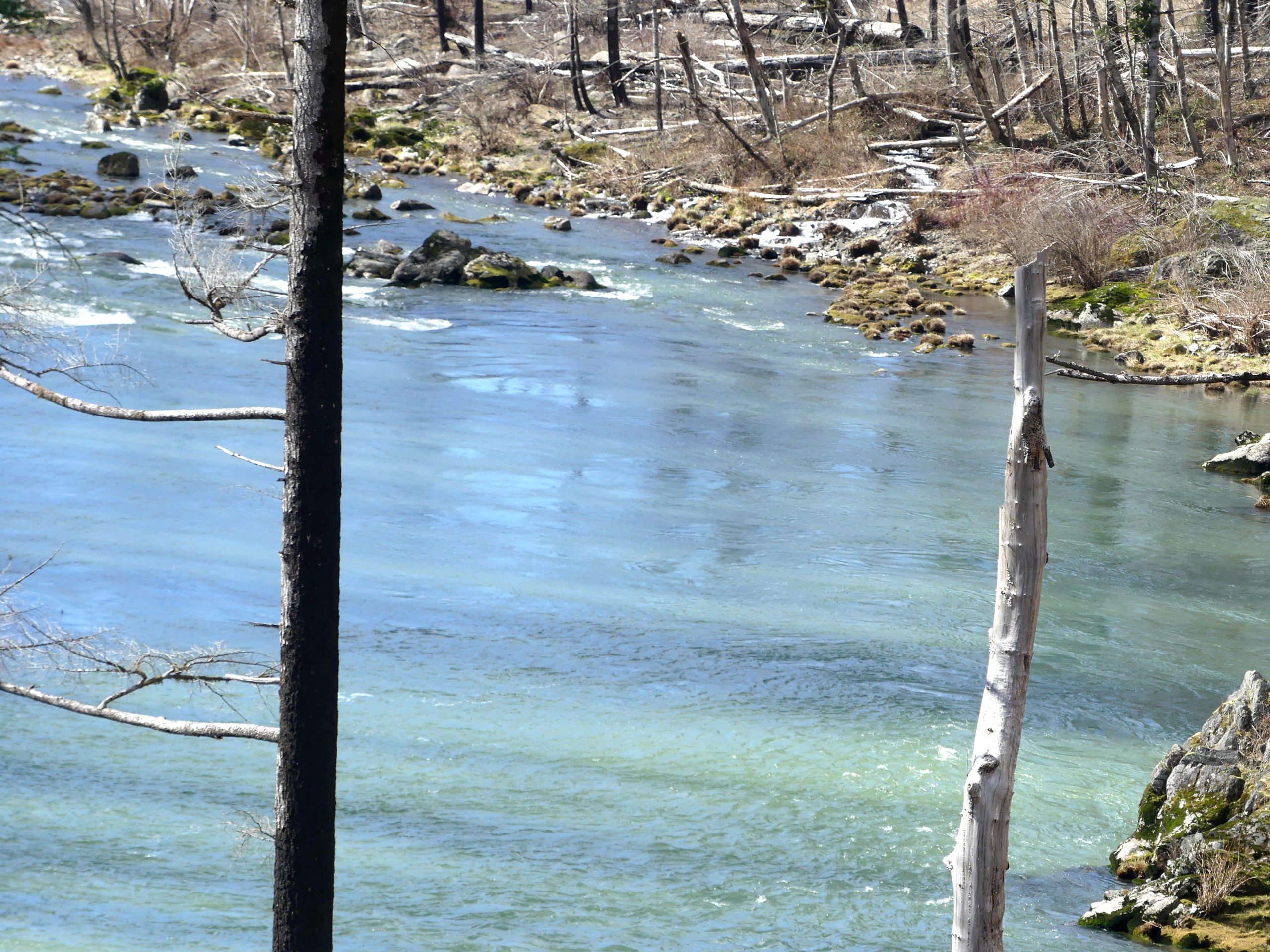
Salem gets its water from the North Santiam River which flows down from Mount Jefferson. It’s collected and cleaned by the Geren Island Water Treatment Plant located 27 miles downstream from the Detroit Dam.
The treated water then flows into the Franzen Reservoir near Turner before being pumped into homes and businesses in Salem, according to a presentation on Monday night from city officials.
Salem has backup water sources including reservoirs, groundwater wells, the aquifer storage and recovery system, and water from Keizer’s system.
The maximum amount of water the city could pull from its backup sources if the occasion called for it would be 21 million to 23 million gallons per day, Allen Dennen, a city engineer, told councilors. That’s short of the 25 million gallons per day Salem residents use on average during the highest demand in the wintertime, Dennen said.
The Geren Island plant was overhauled about five years ago after toxins seeped into Salem’s water supply over the summer in 2018. While bottled water was a quick fix, city officials sought a more permanent solution to the toxins which were caused by algae blooms in the Detroit Reservoir.
The solution was to increase the city’s utility rates by 3% to help pay for a $56 million overhaul of the water treatment facility. Included in the overhaul was a $40 million ozone treatment facility similar to those used in cities like Wilsonville, Lake Oswego and Tigard. Ozone is dissolved in water and destroys bacteria and viruses.
What will the drawdown do?
On Dec. 26, 2024, the National Marine Fisheries Service issued a biological opinion requiring the U.S. Army Corps of Engineers to conduct the drawdown to give juvenile salmon and steelhead fish a better chance of surviving as they move downstream.
The drawdown means the water level of Detroit Reservoir will be reduced to around 50 feet below its normal minimum winter-time levels, city officials said.
The drawdown will pose a severe threat to Salem’s drinking water system by overwhelming the slow sand filters due to very elevated sediment levels at the Geren Island Water Treatment Plant, a staff report from Salem Public Works Director Brian Martin said.
The drawdown would last 30 days, though issues for the city’s water supply could persist longer, depending on the level of sediment.
“At very high levels, the filters can be ‘blinded’ by fine sediment and quickly become inoperable,” Martin said in his report.
Martin said that in the past, high levels of sediment required the city to stop taking water from the river and to rely on backup sources.
Dennen, the city engineer, provided information to councilors on Monday about the city’s projections and preparations for the drawdown. He brought up a prior drawdown in the Green Peter Reservoir, which supplies drinking water for Sweet Home, Lebanon and Albany, according to the Statesman Journal. That drawdown in 2024 was halted early after the three towns said it was negatively impacting their drinking water systems.
Dennen said the Green Peter Reservoir drawdown caused significant turbidity in the Middle Santiam River.
“They saw peak turbidity values of well over 200 and sustained values of over 100. Remember. 10 is kind of our ceiling,” Dennen said. “There is some hope that the North Santiam drawdown will be different. Every river is different.”
What the city’s doing to mitigate it
Martin said the public works department is currently working on several ways to prepare for the drawdown including developing new groundwater wells, increasing the resiliency of the city’s sand filters, and adding another pump station to the joint water system with Keizer.
Martin said under the city’s standard process for such projects, the work wouldn’t be complete until well after the drawdown. With the fastracked timetable, the projects are expected to be complete by August 2026, Martin said.
How will the city pay for the upgrades?
Martin told city councilors on Monday that the $8 million in projects his department is asking for permission to fastrack comes from the utility fund, which gets its money from water bills. Those funds were already budgeted for water supply mitigation purposes and for resanding the city’s slow sand water filters.
Martin said the projects that will be undertaken under the emergency declaration will take resources away from other less urgent projects that need to be done, possibly requiring a utility rate increase to shore up more funds.
He said whether or not an increase will be needed has yet to be determined. Any utility rate increase would have to be approved by the council.
What else is Salem planning?
Right now, city officials are focused on concerns that Salem might not have enough water next year to meet demand for Salem residents after the drawdown begins.
“Could we oppose it? Could we fight it? I think those will be discussions that will be upcoming. But any time you enter into something like that, there is no certainty,” Martin said. “If we hold off on doing anything with the hope that, ‘Hey, we are going to beat this and stop it,’ and it doesn’t happen, we just lost all the time from actually trying to get ourselves prepared.”
Martin told councilors that the previous drawdown of Green Peter Reservoir caused tens of millions of dollars in damage to local water systems prompting affected communities like Sweet Home and Lebanon to file suit against the government.
Martin said while unlikely to succeed, his department will work with the Corps to try and get extra funding to help pay for the city’s upgrades to its drinking water system.
Contact reporter Joe Siess: [email protected] or 503-335-7790.
A MOMENT MORE, PLEASE – If you found this story useful, consider subscribing to Salem Reporter if you don’t already. Work such as this, done by local professionals, depends on community support from subscribers. Please take a moment and sign up now – easy and secure: SUBSCRIBE.

Joe Siess is a reporter for Salem Reporter. Joe joined Salem Reporter in 2024 and covers city hall but also loves surprises. Joe previously reported for the Redmond Spokesman, the Bulletin in Bend, Klamath Falls Herald and News and the Malheur Enterprise. He was born in Independence, MO, where the Oregon Trail officially starts, and grew up in the Kansas City area.