Keizer woman champions new state law after web harassment

A Keizer woman who lived in fear for years over manipulated internet images of her and her daughter has now helped establish a new crime in Oregon.
Legislation making it illegal to disseminate “a digitally created, manipulated or altered depiction that is reasonably realistic” is now awaiting signature by Gov. Tina Kotek. House Bill 2299 passed the House 56-0 and cleared the Senate on May 14 by a 30-0 vote.
“This is the mission I was put here to do,” said Kristi George, a retired banker from Keizer.
The legislation modifies existing law dealing with unlawful dissemination of intimate images, catching up with changing technology. The crime is punishable by up to a year in jail and a fine of up to $6,250.
George has been the voice for change as legislators in recent weeks considered the change, testifying before committees.
She was motivated by events that started in 2009 and involved her then-teenaged daughter.
George said in an interview that her daughter’s high school boyfriend, interested in photography, was looking online for models.
“He stumbled upon this website and discovered photos of my daughter, taken in Disneyland, on a porn site,” George said.
An innocent pose from a family trip has been turned into a lewd suggestion.
“I freaked out,” George said.
She realized only one person could have posted the photo – a family friend from Keizer who had been along on the California trip.
She confronted the man, who lived not far from George’s family home. He denied it, and he did so again when George’s now-husband confronted him. But the photos disappeared from the site.
George said that five years later, she discovered more photos. This time, they included her and her daughter.
“These were on horrible websites, websites for deviant sex, like necrophilia,” George said, referring to sex with a corpse.
“He would Photoshop our heads on dismembered bodies,” she said. “He’d actually write these stories about how he had raped and mutilated our bodies” in an anonymous manner.
George found more than 400 photos scattered across the web. She contacted the Keizer Police Department, which then involved the FBI.
The law at that time didn’t prohibit such manipulated images, involving other people’s bodies.
A detective suggested George confront the family friend, advising that if the man then posted more photos, he could face arrest for harassment.
A neighbor arranged for George and the man she suspected to meet. They sat at a picnic table in Claggett Creek Park. The suspect brought his wife and denied any involvement with the images.
Last year, a detective contacted her to see if she had seen any more images. The case had remained open and he was checking to see if there were developments.
“I finally got to the point that I just couldn’t look for the pictures anymore,” she said.
She said she contacted the state Justice Department, which urged her to contact state Rep. Kevin Mannix, who had advanced anti-stalking legislation over the years.
Mannix, with two other representatives and a state senator as chief sponsors, introduced the House bill.
READ IT: House Bill 2299
“I’ve been working for years to push back against predatory conduct,” Mannix said. “This is another form of predatory conduct that we had not thought about.”
Mannix said the legislation also anticipated abuses of artificial intelligence for predatory purposes.
“We need to be sensitive to how some predators will do awful things,” he said.

George agreed to be a witness before legislators but “I was scared. I’ve been scared for my life and my daughter’s life for years.”
Her daughter, now in her 30s, didn’t want to participate.
“She lives in fear,” George said. “She’s petrified.”
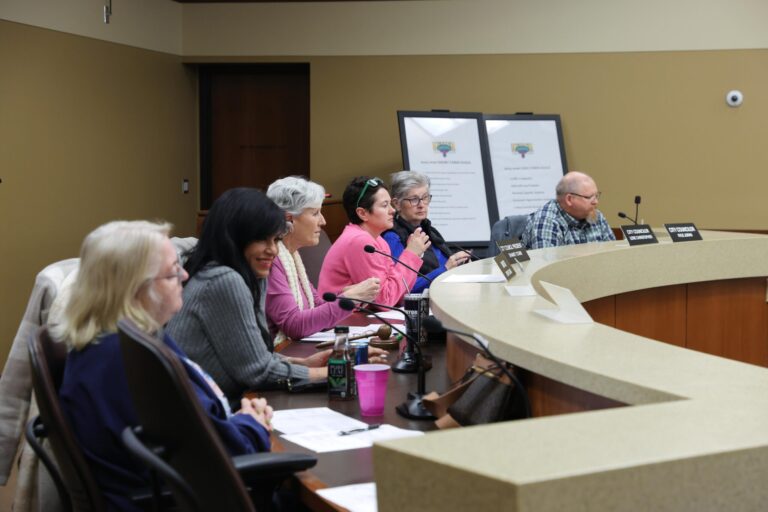
George spoke before legislators on the House Judiciary Committee.
“It was very traumatic,” she said.
She was on the House floor for the vote on April 15.
When enough votes were posted to ensure its passage, “I burst into tears,” George said.
She decided she had to champion the legislation to regain peace instead of worry what her tormentor would do.
“I can’t be afraid of him my whole life,” she said. “I refuse to be afraid of him anymore.”
This article was originally published in the Keizertimes and is reprinted with permission. Contact Keizertimes at [email protected].
News tip? Email [email protected].
A MOMENT MORE, PLEASE– If you found this story useful, consider subscribing to Salem Reporter if you don’t already. Work such as this, done by local professionals, depends on community support from subscribers. Please take a moment and sign up now – easy and secure: SUBSCRIBE.

Les Zaitz is editor and CEO of Salem Reporter. He co-founded the news organization in 2018. He has been a journalist in Oregon for nearly 50 years in both daily and community newspapers and digital news services. He is nationally recognized for his commitment to local journalism.