Salem Clinic says it will stop taking most Medicaid patients starting Jan. 1
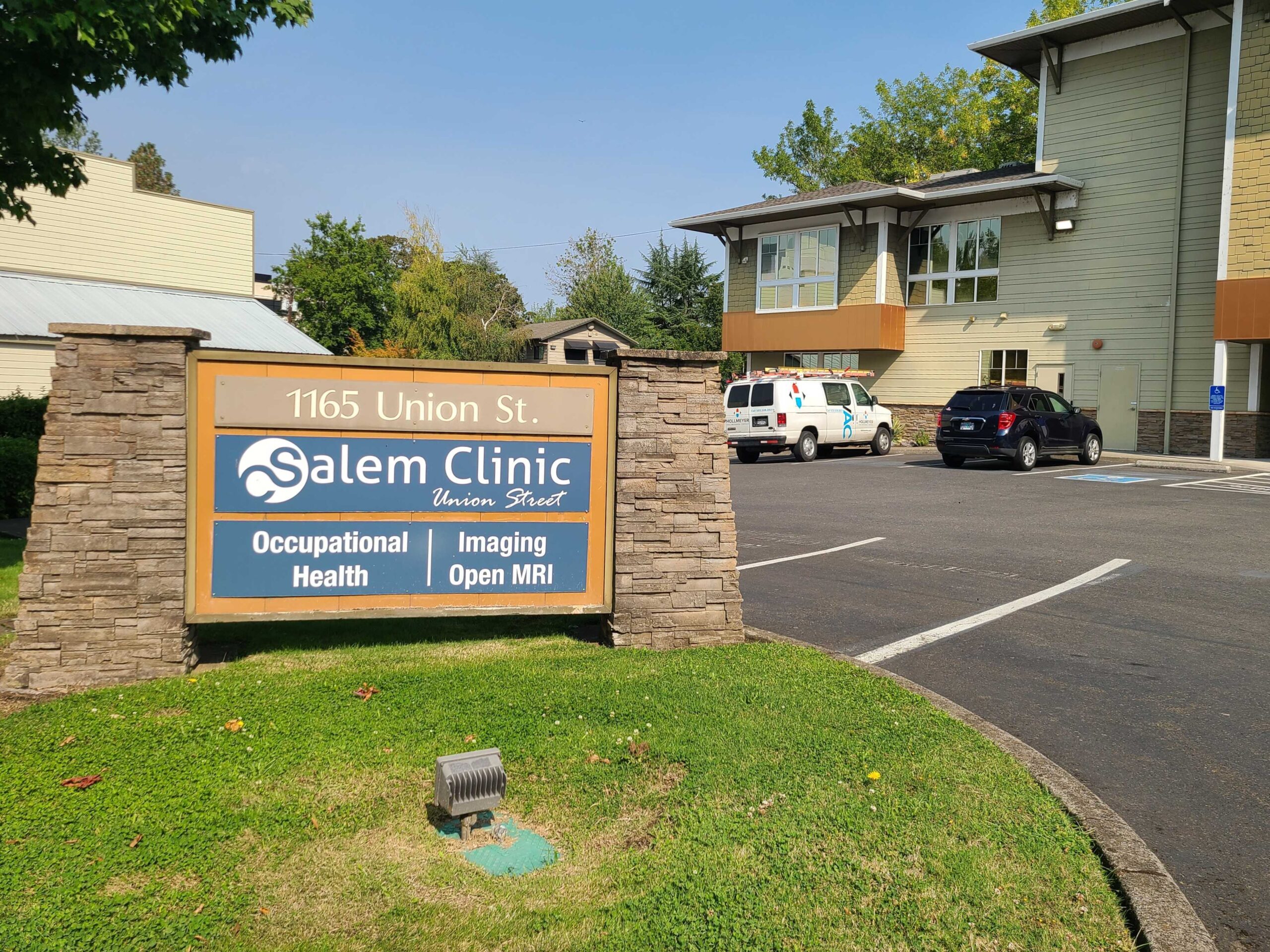
About 10,000 low-income patients who get care at Salem Clinic will soon have to find another doctor.
In an Aug. 26 letter to patients, the clinic said that it will no longer be in-network for Medicaid, also known as the Oregon Health Plan, starting Jan. 1, 2026. The change applies to primary care, urgent care and endocrinology.
The letter followed a failure to reach a new contract between the clinic and PacificSource for 2026. PacificSource is the not-for-profit insurance company that administers the Oregon Health Plan in a number of Oregon counties, including Marion and Polk.
“Over the past three months, we have worked diligently to find an alternative reimbursement schedule, but the options available have proven inadequate,” the letter, signed by the clinic’s board of directors, stated.
The clinic will continue to see Medicaid patients for obstetrics and gynecology.
Salem Clinic has accepted Medicaid for the past three decades. It has over 500 employees and locations in north east, south east and central Salem, as well as two Salem urgent cares and a clinic in Keizer.
READ IT: Salem Clinic’s letter to patients
PacificSource took over coordinating the Oregon Health Plan in Marion and Polk counties after the Willamette Valley Community Health coordinated care organization stepped down in 2019. The company receives money from the state to pay for care for Oregon Health Plan patients.
There are about 168,000 people enrolled in Medicaid in Marion and Polk counties, according to state data.
The rupture comes as some insurers, including PacificSource, are threatening to pull out of the Oregon Health Plan, saying the amount the state pays them to cover patients isn’t keeping up with rising costs. State targets try to limit health care cost increases to 3.4% per year. But negotiators with the Oregon Health Authority recently offered increases over 10% in a bid to keep companies from pulling out of the system.
Ryan Farwell, Salem Clinic’s chief executive officer, said PacificSource informed the clinic in May that it couldn’t continue operating under a 2019 contract, and would cancel their original agreement. They then offered a 40% lower reimbursement rate, Farwell said.
“They canceled the contract with us, and then said ‘Hey, we’d like you to consider doing the same amount of work for roughly half of what we used to pay you to do the work,’” Farwell said.
PacificSource spokeswoman Lauren Thompson said in a Wednesday email that PacificSource sought to bring reimbursement rates in line with community standards.
“The previous agreement included rates that were significantly above those benchmarks. While we understand that any rate adjustment can be challenging, we must also ensure that our payment practices are equitable across our provider network and fiscally responsible for the communities we serve,” Thompson said.
Farwell said their offer wasn’t enough to maintain operations.
“We spent a couple months trying to figure out how we could get paid 40% less and do all the same amount of work. And mathematically, we couldn’t come up with a way to do that that wouldn’t jeopardize, ultimately, the 65,000 lives we care for in the community that are not (Oregon Health Plan), or the thousands of people that eat with paychecks from Salem Clinic,” he said.
By mid-August, he said PacificSource gave them a deadline of Sept. 1 to make a decision. He said Salem Clinic sent them a counteroffer with a less severe drop in rates, which PacificSource declined.
PacificSource, meanwhile, maintains negotiations are ongoing, even as thousands of patients scramble to find new care.
Dan Stevens, PacificSource’s executive vice president of provider and regional partnerships, said in a Sept. 11 interview that he hadn’t seen Salem Clinic’s letter, and that it was still unsettled whether patients would lose coverage there in the new year.
“The short answer is we don’t know yet, because we’re still in active discussions with Salem Clinic, and we’ve been in discussions with them for a number of months with a goal of reaching an agreement for the 2026 year,” Stevens said.
Stevens said PacificSource’s main goal in the discussions is to protect access and affordability for patients, and declined to share particular sticking points in their discussion.
When asked later about Salem Clinic’s letter to patients stating that coverage would end on Jan. 1, Thompson reiterated that contract negotiations are ongoing.
“While we understand the letter may appear definitive, we want to reiterate that discussions remain ongoing, and no final decisions have been made,” she said in a Tuesday email.
Farwell sees it differently.
“In my understanding, there is no ongoing negotiations,” Farwell said. “This is a big part of our business, it’s 20% of our business, so I can’t wait until January.”
Farwell said in an email to Salem Reporter that on Aug. 26, he accepted Pacific Source’s rates for obstetrics and gynecology and ancillary services. Since then, he said there have been a “handful of emails” about language in that contract, but “there have been no conversations regarding rates or additional services other than what was already agreed to.”
He said that Tuesday afternoon, PacificSource emailed Salem Clinic asking for a status report on the review of that agreement.
Thompson said in a Wednesday email that “we’ve been in continued conversations for months, as recently as yesterday.”
Farwell said that the decision had to come sooner so that Salem Clinic can find new patients in the community, and prevent layoffs. He told Salem Reporter he wasn’t aware of any further discussions, which he believes largely ended in mid-August.
“If it is their intent, they’re letting water go under the bridge really fast. Because we are full speed ahead in trying to protect our ability to provide the care we do provide in this community by finding other places and people that are without care,” he said.
That includes reaching out to patients who lost their in-network coverage at Salem Health after its split from Regence BlueCross BlueShield earlier this year.
Farwell said Salem Clinic will see about an 18% reduction in what it’s paid to care for obstetrics and gynecology Medicaid patients, but that he wasn’t sure there were enough alternatives in the community outside Salem Clinic to justify ending the contract.
“I don’t know where they would get some of that care and the babies would be delivered,” Farwell said.
Farwell said Salem Clinic also has a large number of patients getting treatment for diabetes and managing thyroid conditions, but they could not agree on rates for those patients.
“It’s not just a financial transaction. Some of our docs have cared for some of these patients for 20 plus years. So these are real relationships,” Farwell said. “We definitely don’t enter into any sort of conversation like this light-hearted.”
Farwell said he doesn’t know where the Medicaid patients will go, and worries they’re running out of time to find alternatives, and organize who will fill their medication prescriptions in the new year.
“The fact that (PacificSource is) saying that we have ongoing negotiations, or that they haven’t communicated with patients makes me really concerned that they don’t have a plan for where 10,000 patients are going to go,” Farwell said. “I’m not great at playing politics. We’ve just got a lot of work to do, and our passion here is to try to provide the patient the best experience that we can.”
Thompson said in a Wednesday email that PacificSource has not yet issued instructions to members about how to switch providers, because it is still negotiating the contract.
“If there are any updates that affect our members’ access to Salem Clinic, we will communicate those directly and promptly,” she said.
Farwell isn’t sure what they’re waiting for.
“Part of me is concerned that maybe that’s what (PacificSource) intends to do, is come back, and think that ‘Nothing’s done until it’s done,’ but we’ve already communicated to our patients. We sent the letter at the end of August,” Farwell said.
In response to specific points about the contract dispute shared by Salem Clinic, Thompson said that PacificSource values the role independent providers play in serving people on Medicaid.
“We recognize the importance of these partnerships and remain committed to fostering long-term relationships that support both patient access and provider sustainability,” Thompson said.
Farwell said he’s concerned about the future of health care throughout the state. He hopes that the state can figure out how to better fund Medicaid in a way that keeps clinics functional without a decline in quality.
Contact reporter Abbey McDonald: [email protected] or 503-575-1251.
A MOMENT MORE, PLEASE– If you found this story useful, consider subscribing to Salem Reporter if you don’t already. Work such as this, done by local professionals, depends on community support from subscribers. Please take a moment and sign up now – easy and secure: SUBSCRIBE.

Senior Reporter Abbey McDonald joined the Salem Reporter in 2022, where she covers homelessness and housing. She previously worked as the business reporter at The Astorian. A University of Oregon grad, she has also reported for the Malheur Enterprise, The News-Review and Willamette Week.