Education, celebration drive Salem woman’s commitment to healing
About a year ago, Savannah Soliz quit a job that she absolutely loved.
She’d been a project manager and engineer at Advanced Tribal LLC, a Native American-owned and operated construction company, for almost three years. She had to drive back and forth between Portland and Salem every day, but it was worth it.
“I loved the community that I worked with, it was just a blessing to end up at a job where I was surrounded by other Native people,” she said.
But after the March 2024 shooting in Bush’s Pasture Park, where a South Salem High School student died, she was motivated to stay in Salem full time. Her two sons were students at South, and she couldn’t bear the thought of something happening to them.
“My boys went to school with all those kids, and they were friends with both sides — it was really devastating for them,” she said. “That was the bigger eye-opening moment because if that had been one of my babies, I’m two hours from getting anywhere near them.”
She said it “broke her heart” to learn about the shooting after it happened. After the shooting, she was catalyzed to do whatever she could to help support youth of color in Salem.
“I couldn’t help but feel like all these kids — this war that they’ve created — would be avoided if they all really understood their culture,” she said.
Soliz, a citizen of the Klamath and Modoc tribes of southern Oregon, has dedicated her work to connecting Native people in Salem and providing youth with culturally significant experiences, from education to celebration, that they wouldn’t otherwise have access to in the city.
She views her work as a crucial part of fostering intertribal connections for Indigenous people in Salem, who are nearly an hour’s drive away from the closest reservation, the Grand Ronde community. Soliz hopes to provide Indigenous people with connections to identity and work toward healing trauma from generations past.
According to the Oregon Department of Education, the Salem-Keizer School District has more than 1,800 students who identify as American Indian. These students are eligible for services such as academic coaching, mentorship and more through the district’s Native Education Program.
Last year, Soliz was the chair of the Native Education Parent Advisory Committee, where she provided insight into what the best programming for students might be, including scholarship support and Native family nights.
Aside from her work in education, she gives back to her community every year by organizing the annual powwow at the World Beat Festival. She has run the event since its founder, her grandfather, Warner Austin, died in 2019. It’s been a way for her to give back while simultaneously honoring her grandfather.
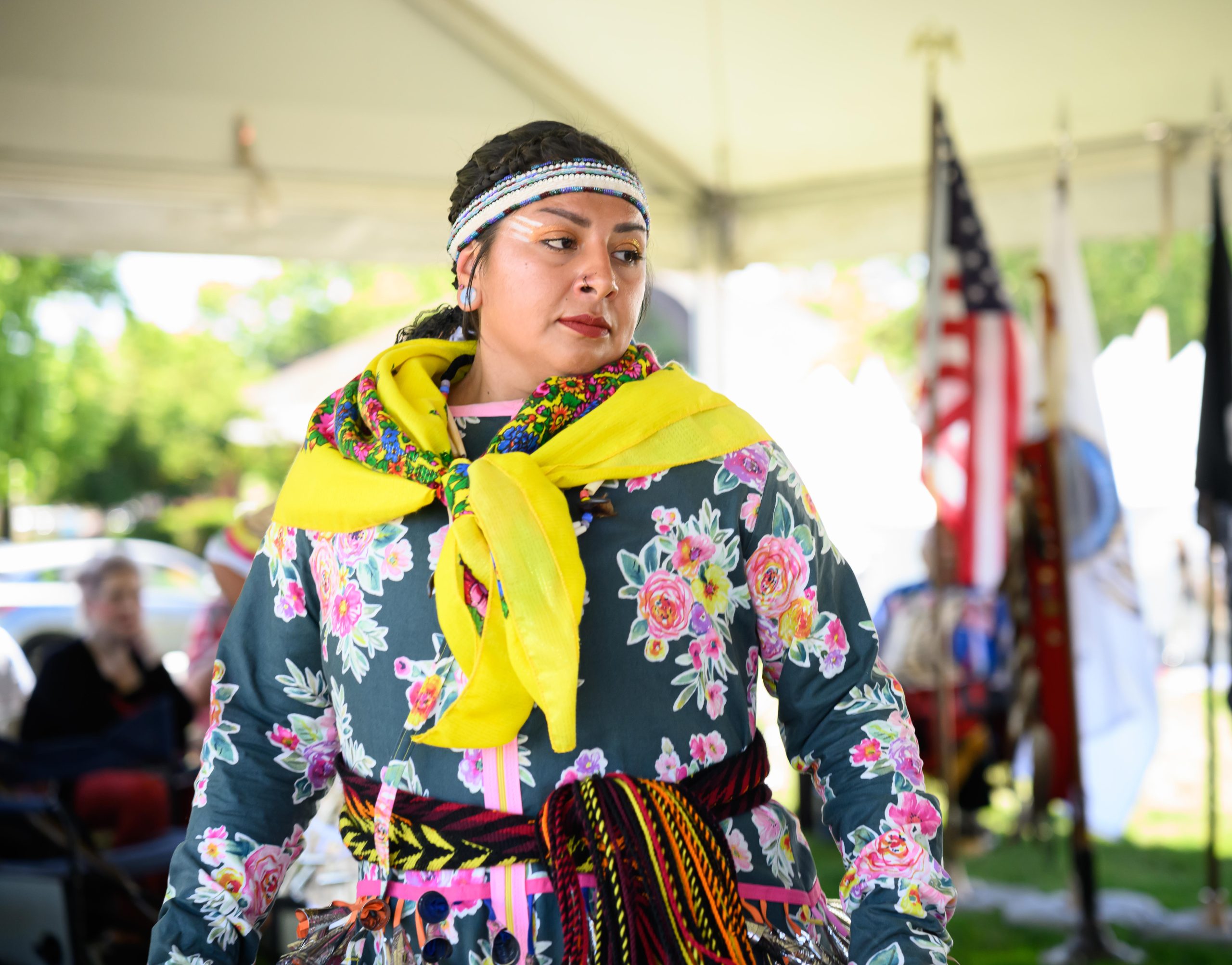
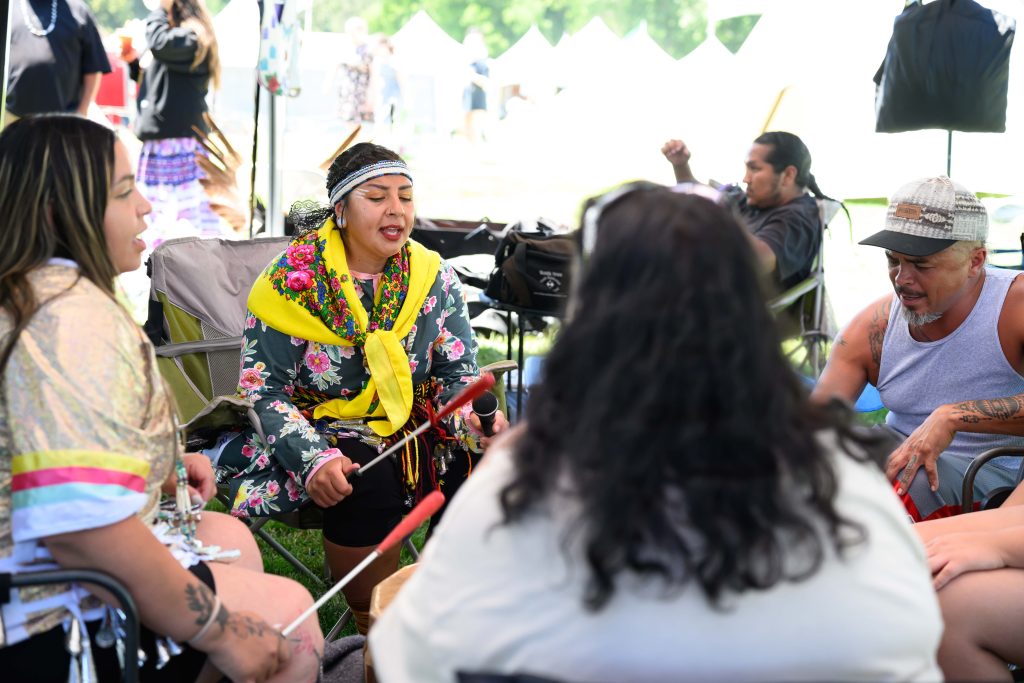
At this year’s World Beat Festival, Soliz was surrounded by family, friends and others from the Native community. She played drums in a women’s circle and participated in a group jingle dress dance. Throughout the powwow, the audience was invited to participate in interactive performances, which were hosted just outside the festival gates.
Kathleen Fish, the co-founder of the World Beat Festival, remembers when Soliz began working with her family to run the powwow.
“It’s just a really nice legacy,” Fish said. “(Warner) touched a lot of people, and then Savannah and her kids and her siblings also are really doing an amazing job preserving their heritage and sharing it.”
Soliz’s efforts across education and celebration of her culture are always in pursuit of honoring those who came before her. Cultural preservation for Indigenous communities, she says, has to support those who are still healing from generational trauma.
“We hurt because we’re so entrenched in surviving sometimes, the worst thing we can do is forget the ones that are most important,” she said.
Grandparents a bright spot
Soliz grew up in Klamath Falls, where she often accompanied her grandparents, Warner and Deborah Austin, to different events. Regalia making, drum practice, educational presentations — you name it, she was there.
While she notes that “things were kind of rough growing up,” she remembers her time spent with her grandparents as a bright spot.
“I wish everyone had my grandparents, in a way, because I think that really did shape who I am,” she said. “The biggest thing is to be given things out of love, and not out of pain and hurt.”
Soliz had three children by age 20: a daughter and two sons. After her husband lost his job when their kids were still young, it became clear that there wouldn’t be any new opportunities in Klamath Falls. They decided to follow in the footsteps of Soliz’s grandparents and move to Salem.
After the move, she continued the educational work with her grandfather, who took up a job as an education technician at Chemawa Indian School. It was “a vocation he loved so much that he refused to retire,” according to his obituary.
“We did the same thing here,” Soliz said. “We were going around to the preschools here trying to get early exposure to young children, to just show them, we’re still here. You know, some people really do think, ‘Oh, you’re extinct.’”
For Soliz, educational work and community support are essential to provide for kids at an early age. But her focus on youth hasn’t made her lose sight of the generations above her.
In the 19th and 20th centuries, Native children were forcibly abducted by government agents and sent to over 500 Indian boarding schools across the country, where they were “beaten, starved or otherwise abused when they spoke their native languages,” according to the National Native American Boarding School Healing Coalition.
“I think that’s why this work is important to show our youth, but also to actively heal, like our 30, 40, 50-year-olds,” she said. “They’re still suffering from the pain of their parents, because it was only a generation before that that their parents were in the boarding schools, and there were unspeakable things that happened to them as children and the ones that made it out, you know, they won’t talk about it.”
That trauma is passed down from parents to children, she said.
“We’re trying really hard to just heal so that our next generations can heal,” Soliz said. “This pain and negative stereotypes aren’t things that we should hold on to anymore.”
Looking to the future
In their spare time, Soliz and her husband Jesse create regalia for friends and family. They learned the tradition from her grandmother and continue to carry it on.
“He is a really talented sewer. Anything that we’ve ever made, we’ve never charged anyone for — we always gift our things. It’s just something that’s kind of a personal choice, just to kind of pay it forward, in a way,” Soliz said.
Her husband recently made a belt for one of Soliz’s little cousins to wear at the World Beat Festival. Soliz says he started it just two days before the powwow, and finished it while they were there.
Soliz stays busy as a community organizer and mom, but that hasn’t stopped her from taking youth-focused education classes at Chemeketa Community College. She plans to earn her associate’s degree before pursuing a master’s in teaching, potentially at the University of Oregon.
“I’d like to follow my grandpa’s footsteps and end up at Chemawa, but I’m just going to see where this takes me and just try and learn as much as I can to support these babies,” she said. “Because I feel like they, not just Native children, but all of these children, they deserve better.”
Contact reporter Mirandah Davis-Powell: [email protected].
A MOMENT MORE, PLEASE– If you found this story useful, consider subscribing to Salem Reporter if you don’t already. Work such as this, done by local professionals, depends on community support from subscribers. Please take a moment and sign up now – easy and secure: SUBSCRIBE.

Mirandah Davis-Powell was an intern for Salem Reporter in the summer of 2025, primarily covering food, farms and agriculture. She joined the newsroom from the Charles Snowden Program for Excellence in Journalism as a reporter from the University of Oregon.