Without cuts or changes, committee signs off on Salem-Keizer School District budget
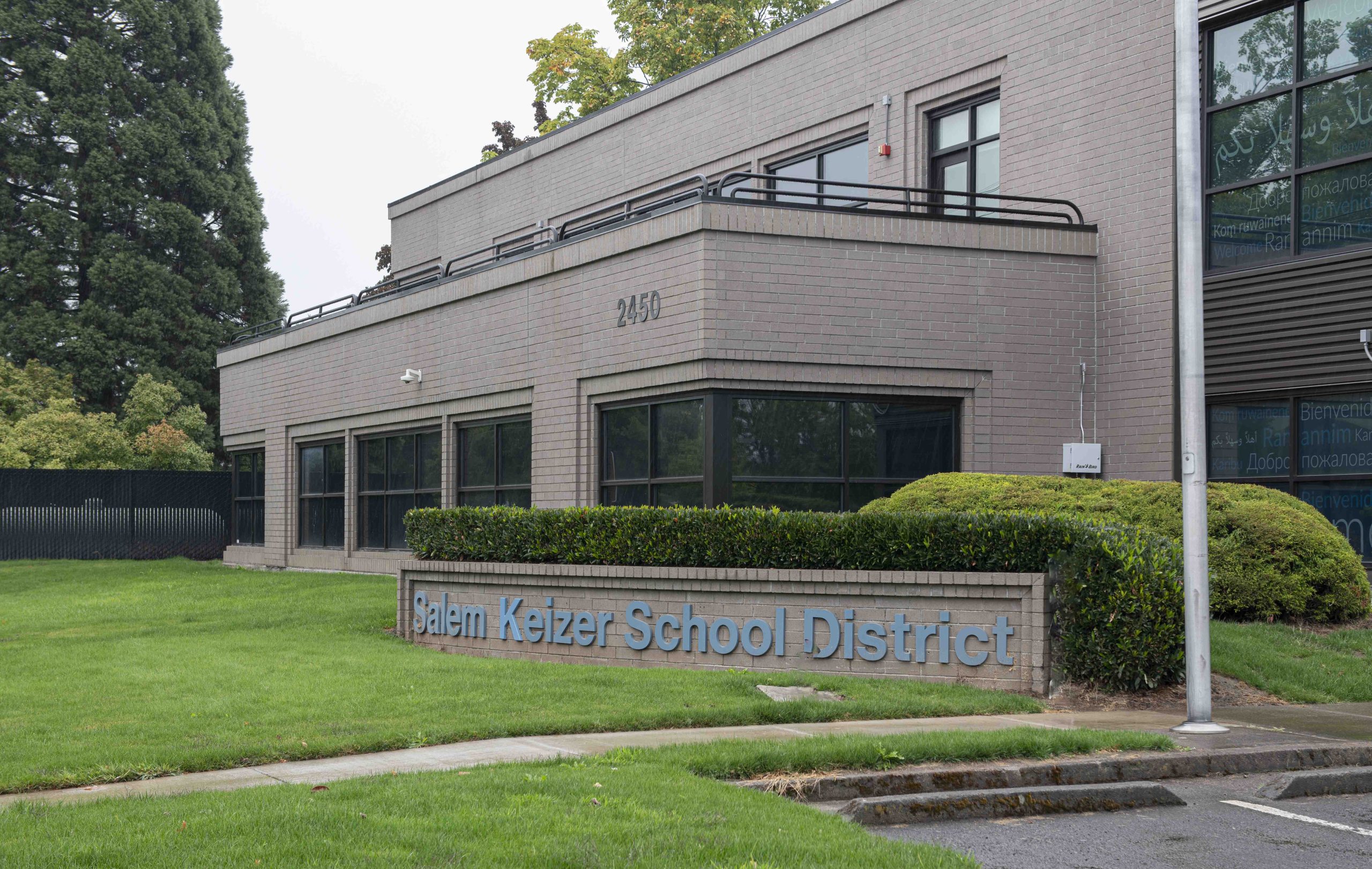
A $1.15 billion budget that will add more help with student behavior and expand dual language programs in the Salem-Keizer School District cleared a committee vote unanimously Monday evening.
The budget now heads to the school board for final approval, unchanged from Superintendent Andrea Castañeda’s original proposal on May 6. It’s an increase of about $25 million over last year’s budget. Most of that money will go toward rising employee wages, benefits and pension costs, but some new positions will be added after $70 million in cuts last year.
Castañeda said the budget was intended to address areas where last year’s budget cuts went too deep.
“We really tried to get it right. We got it, I think, 95% right, maybe more. But I do think when you get it wrong you’ve just got to say it’s wrong and you’ve got to fix it,” she said at Monday’s meeting.
It would add a total of about 66 full-time school employees while shifting some into new jobs.
The additions include special education teachers and other support workers to cover an expansion of the district’s Behavior Intervention Center, bilingual teachers to support the growing dual language program and school security.
The budget adds hours back to library media assistants that were cut last year and restores an administrative position that helped oversee school libraries. That came after library assistants, who run elementary and middle school libraries, repeatedly testified to the school board this year that their workloads had become unmanageable.
Several office positions cut last year in human resources and other overhead were also restored.
The district’s budget committee includes the full seven-member school board and seven other appointed community volunteers.
The group reviewed the budget over a series of three meetings, focusing most of its discussion time on the district’s low reading scores on state tests and whether money could be moved to jobs to help improve those numbers.
Krissy Hudson, a school board director and the committee’s vice chair, proposed eliminating the cost of Cherriots bus passes which are provided free for all students, as well as the district’s equity office and several overhead positions to pay for seven reading specialists — experienced teachers who help elementary school students and coach teachers on reading instruction. Adding the seven positions Hudson sought would have cost about $1.5 million.
That discussion occupied the bulk of a May 14 meeting, but her proposal ultimately failed with fellow school board Director Satya Chandragiri, and budget committee members William Guthridge and Kathryn Jones supporting it.
“You’re hearing a committee that is very concerned with our test scores and where we sit on the national school report card, which is low,” Jones told the superintendent.
Castañeda told budget committee members that it’s unlikely the district would be able to hire reading specialists, even if it added positions, because there is a shortage of teachers with the experience and training needed to fill that role.
If the proposal went through, she said, “we will post positions that we will probably not be able to fill this school year” while laying off people doing work “we desperately need.”
The idea of eliminating bus passes also drew pushback from others on the committee. Those passes cost about $140,000 per year, which the school district pays to Cherriots.
Cynthia Richardson, a retired school district principal and administrator, said bus passes allow students without transportation to attend Saturday school so they can catch up, as well as participate in sports and other activities that keep them engaged.
“If the kids can’t get to school, they can’t learn how to read,” she said.
Several organizers and students with youth activist group Latinos Unidos Siempre also pushed back on the proposal during public testimony at Monday’s meeting, saying access to transportation was a social justice issue and that the district could cut weapons detectors if it’s seeking to save money.
Jones said Monday that after reviewing the district’s early literacy plan, she was satisfied that work is underway to improve reading scores.
“There’s not a lot to do until we get the data,” she said.
The school board will vote on adopting the budget at its June 10 meeting.
Contact reporter Rachel Alexander: [email protected] or 503-575-1241.
A MOMENT MORE, PLEASE– If you found this story useful, consider subscribing to Salem Reporter if you don’t already. Work such as this, done by local professionals, depends on community support from subscribers. Please take a moment and sign up now – easy and secure: SUBSCRIBE.

Rachel Alexander is Salem Reporter’s managing editor. She joined Salem Reporter when it was founded in 2018 and covers education, economic development and a little bit of everything else. She’s been a journalist in Oregon and Washington for over a decade and is a past president of Oregon's Society of Professional Journalists chapter. Outside of work, you can often find her gardening or with her nose buried in a book.