Run by Keizer couple, Soaring Heights reunites families, houses people in recovery
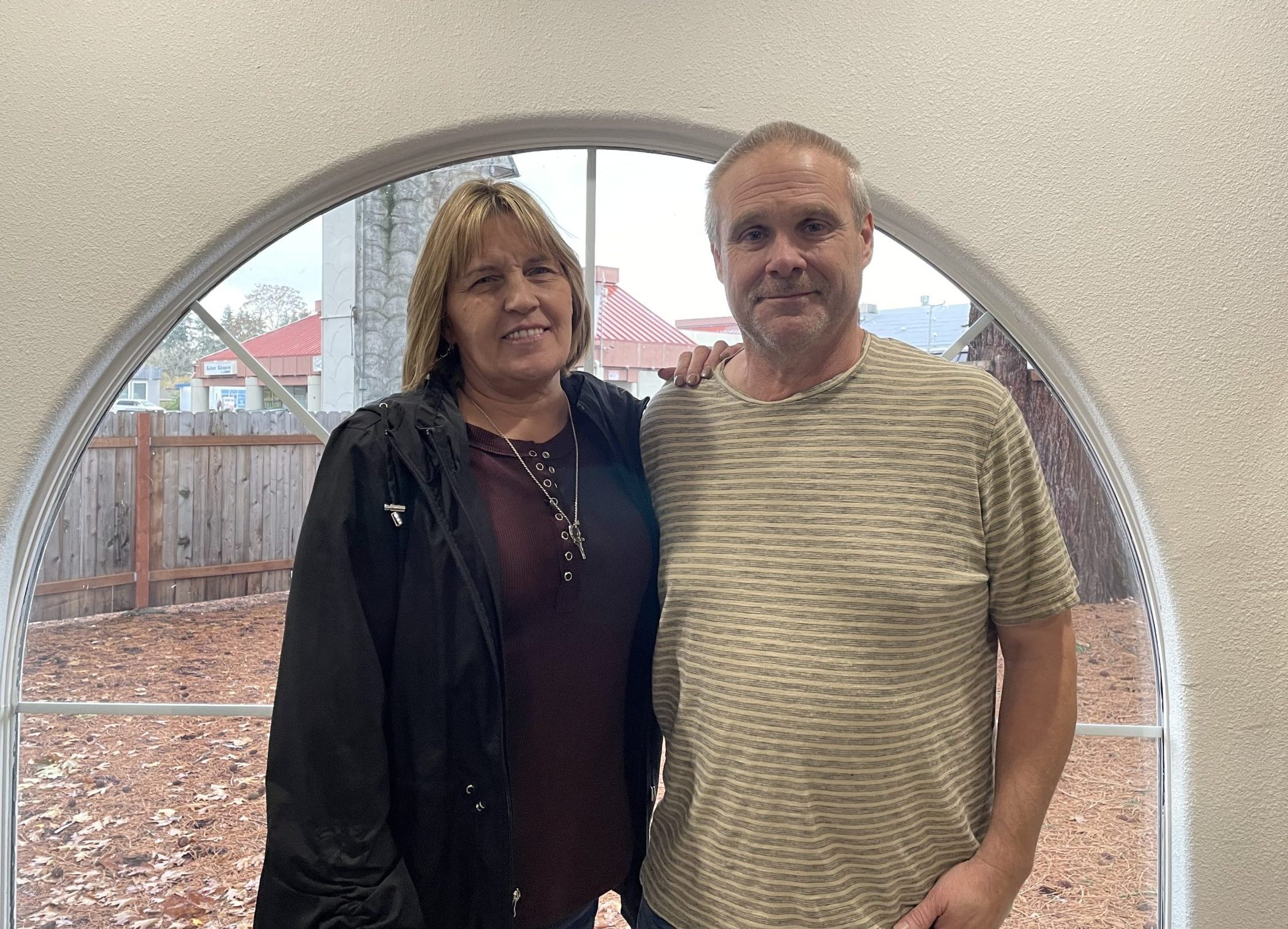
Every time a woman walks out the front door of the Robins Nest house, Victoria Meredith checks in, asking how she’s doing with a smile and a watchful eye.
She says goodbye to each resident, calling them “sweetheart” and “kiddo.”
The brief but sincere affection is one sign of the dedication Meredith and her longtime partner Eric Rasor bring to their work of helping people through the early stages of recovery.
Informed by their own experiences with addiction and recovery, Meredith and Rasor run Soaring Heights Recovery Homes, providing the safety and structure that many people need as they start recovery.
Since 2018, Soaring Heights has offered transitional housing for people in Salem and Keizer who are recovering from substance abuse and need a safe place to live while staying sober.
The program now operates three homes with space for 20 people. A fourth house in Keizer is slated to open later this year with funding from Marion County, which awarded the program $350,000 in 2023.
Meredith said that transitional housing is important for recovery because it provides a safe and structured environment for people, away from old habits and familiar places that could lead to continued substance use.
Soaring Heights also provides constant accountability for its clients, something crucial for people in early recovery, Meredith said.
The program requires people to look for jobs and attend recovery meetings while living in one of the houses. Depending on the client, the program can last anywhere from three to 18 months.
When Soaring Heights opened its first home in Keizer, it had space for eight people and was constantly full, Meredith said. Over the years, she and Rasor have seen a large need in Salem and Keizer for their services.
Around 24 people are currently on the program’s waitlist, according to Meredith, and all 20 beds are occupied.
Over the program’s six years, Meredith and Rasor have helped almost 180 people. They are still in touch with over 100 former clients.
“They learn how to connect in healthy relationships,” Meredith said, referring to the program’s clients. Living in a house with others, she said, teaches clients how to be a community member and communicate with their housemates. Those skills help them when they eventually move out.
A personal calling
Rasor and Meredith first met in middle school and have been a couple for 16 years. They are not legally married, but consider each other spouses.
Like many of their clients, Meredith and Rasor have their own histories with alcohol and drug addiction. Rasor has been in recovery for 17 years and Meredith for 19 years.
“That’s part of the motivation for us, what we do,” Rasor said.
“Plus, giving back is part of recovery,” Meredith added. “It’s a good feeling to watch them make it.”
Soaring Heights’ three main ideas are building a recovery support system, boosting self-sufficiency and reuniting families, Rasor said.
Bringing children back to their parents is something close to their hearts. Both have children from previous relationships.
“I had two DHS cases in my addiction, and it wasn’t easy,” Meredith said. Even once a parent struggling with addiction gets clean, a lack of housing can prevent the state from reuniting them with kids.
Since opening, they have seen over 50 children returned to parents living at Soaring Heights. Meredith and Rasor work closely with Oregon’s Department of Human Services and local family organizations to support their clients in reuniting with their children.
The idea to start Soaring Heights arose when Meredith was working as a counselor for a Marion County Health and Human Services Department treatment program.
Her program offered people with opioid addictions prescription medications to aid in their recovery, a practice backed by science. But that medication sometimes comes with a stigma that people in recovery aren’t really “clean” if they’re taking methadone or other prescription medications.
Meredith saw people in medication-assisted treatment struggle to find housing and wanted to help.
“So in 2016 I was talking to (Rasor), saying, you know, we really should open up a house that would allow medicated-assisted treatment with no stereotype,” Meredith said. “They’re in need, just as anybody else.”
Two years later, the couple leased the program’s first house and used their own money to furnish and run it. In 2022, they purchased the house with a grant from Marion County.
How the program works
While living at one of the program houses, clients are required to look for jobs daily. Rasor said that 95% of their clients find a job within 30 days of starting the program.
Soaring Heights randomly drug tests clients to ensure they are maintaining sobriety, which is also a requirement. The program isn’t punitive, but positive test results can lead to a reworking of their recovery plans.
“Do they need to continue to follow the guidelines and expectations? Yes, but there are going to be times when we say, ‘Okay, wait a minute, back up. Let’s take a breath, and where is it that we need to go next?’” Meredith said. “We don’t want them to fall. We want them to succeed. We’re here to lift them up and walk them forward.”
Soaring Heights’ first home, Oriole House, opened in Keizer in 2018 for women with or without children. Since then, one men’s house and another women’s house have opened. The purchase of the recent woman’s house was funded by Marion County and approved in December 2023.
Meredith and Rasor get many of their clients from referrals by community partners, including county departments and local nonprofits. Rasor said that about half of the program’s clients were homeless before living in one of their homes.
The program’s funding is largely made up of government grants, along with fundraising and contributions. Money goes to buying and managing properties, providing supplies for clients and paying for Rasor and a recovery mentor, their only other employee. Meredith volunteers her time to run the organization.
The program charges each client $500 per month to help cover housing and materials.
Looking forward, Meredith and Rasor hope to open a second men’s home soon and hire a male recovery mentor. The next house they purchase will be with a $450,000 grant they received from Marion County this year.
They are already in the process of setting up a new house in Keizer but have received pushback from neighbors in the area. Neighborhood hesitancy isn’t entirely new for them, Rasor said, but some people incorrectly assume the program will be housing people with histories of violent crime.
Meredith and Rasor background check applicants before accepting them, and will work with those who committed low-level crimes.
“They just make some mistakes and need someone to help rebuild their lives,” he said. “So I think that’s one of the things that we can really do.”
CORRECTION: A previous version of this story incorrectly stated that Meredith and Rasor bought the first Soaring Heights house with their own money. They bought the house with grant money from Marion County. Salem Reporter apologizes for the error.
Contact reporter Madeleine Moore: [email protected].
A MOMENT MORE, PLEASE– If you found this story useful, consider subscribing to Salem Reporter if you don’t already. Work such as this, done by local professionals, depends on community support from subscribers. Please take a moment and sign up now – easy and secure: SUBSCRIBE.

Madeleine Moore joined Salem Reporter in 2024 and reports on a variety of topics including public safety, addiction, treatment and the criminal justice system. She came to Salem after graduating from the University of Oregon in June 2024 with a bachelor’s degree in journalism.